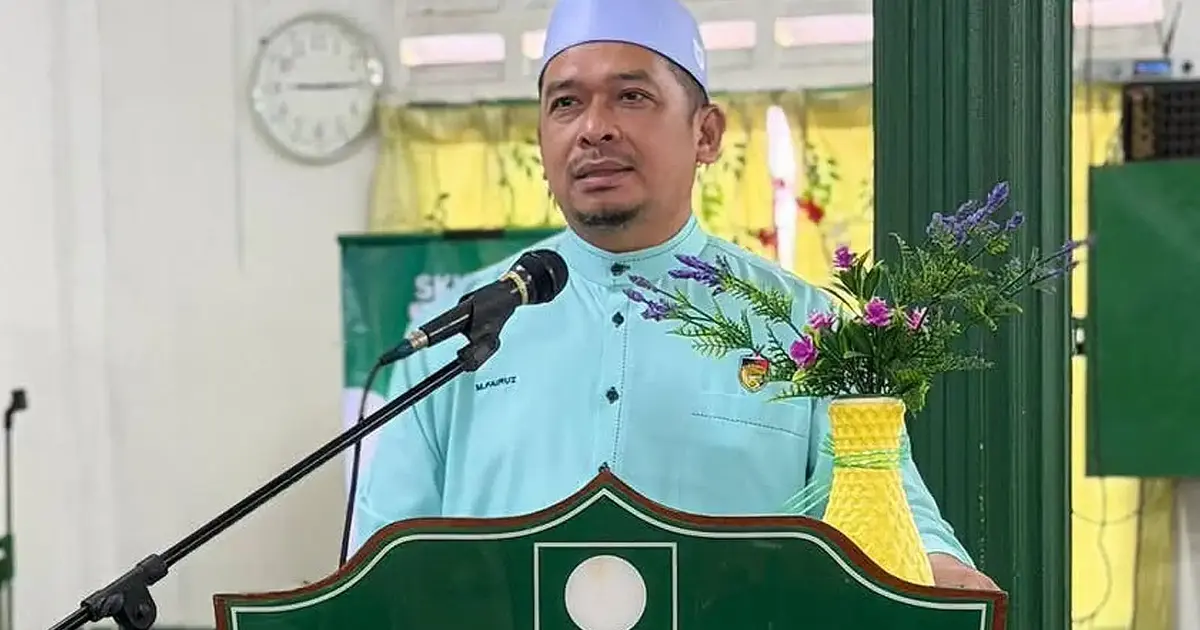
The Pan-Malaysian Islamic Party (PAS) has unveiled an aggressive electoral strategy for Negeri Sembilan, signalling its intention to challenge the Democratic Action Party (DAP) in constituencies the latter has traditionally controlled. State PAS chief Fairuz Isa outlined the party's targeting approach, specifically focusing on seats where Malay voters constitute approximately 40% of the electoral base—a demographic threshold that party strategists evidently believe presents opportunities for mobilisation and gain.
This tactical pivot represents a notable shift in the political landscape of Negeri Sembilan, a state historically characterised by three-cornered contests between Umno, DAP, and PAS. By explicitly naming DAP as a primary opponent rather than positioning itself merely as an alternative to the ruling coalition, PAS is signalling confidence in its ability to dislodge an opposition party that has gained considerable foothold in Malaysian politics over the past decade. The choice to emphasise constituencies with specific Malay demographic profiles suggests PAS has conducted granular electoral analysis to identify vulnerability points where its Islamic-based political messaging and grassroots mobilisation networks may prove most effective.
The strategic rationale behind targeting constituencies with 40% Malay voters reveals sophisticated political calculation. These are not overwhelmingly Malay-majority areas where traditional Umno machinery might dominate, nor are they ethnically diverse plural constituencies where multi-communal appeals typically succeed. Rather, they represent a middle ground—communities with significant Malay populations but also meaningful non-Malay presence—where PAS believes it can compete effectively through targeted messaging while DAP's typically non-Malay voter coalition faces structural disadvantages in mobilising Malay support.
For Malaysian political observers, this development carries implications extending beyond Negeri Sembilan's borders. The state serves as a bellwether for broader shifts within Malaysia's opposition landscape. DAP's performance in these contested seats will test whether the party can maintain its traditional voter coalition while expanding appeal among Malay-Muslim constituencies—a critical challenge that has shaped national electoral dynamics following the 2022 general election. Conversely, PAS's targeting strategy indicates the party views electoral competition with DAP as more winnable than direct confrontation with Umno in constituencies where the latter maintains organisational advantage.
Fairuz Isa's public articulation of this strategy also signals internal confidence within PAS ranks. Rather than adopting the coy positioning typical of opposition parties, PAS leadership is openly declaring ambitions to capture opposition-held seats, suggesting party officials believe electoral conditions favour their advancement. This forthright approach may be calculated to energise party members and grassroots supporters while demonstrating to potential swing voters that PAS represents a viable alternative to the incumbent government.
The timing of this announcement, presumably made with Negeri Sembilan state elections approaching, underscores the preparatory nature of contemporary Malaysian politics. Unlike previous electoral cycles characterised by shorter campaign periods, modern Malaysian elections increasingly feature extended lead times allowing parties to map constituencies, identify target demographics, and test messaging strategies. PAS's identification of specific voter thresholds reflects this professionalisation of electoral operations across Malaysia's political parties.
Negeri Sembilan holds particular significance in the national political narrative as a swing state with competitive three-way contests. The state's mixed urban-rural character and ethnic composition make it representative of broader Malaysian electoral trends. Should PAS successfully capture DAP-held seats in this state, such victories would carry amplified symbolic weight, suggesting momentum that could influence perceptions heading into other state elections or a future general election.
DAP faces a strategic puzzle in response. The party's conventional strength lies in urban, plural constituencies where its secular, inclusive positioning and anti-corruption messaging resonate across ethnic lines. In constituencies where Malay voters comprise 40% of the electorate, DAP typically wins through sophisticated coalition-building that combines strong non-Malay support with minority Malay votes attracted by governance record or personal candidate popularity. PAS's explicit targeting threatens this coalition model by attempting to consolidate Malay-Muslim voters under an Islamic banner.
The broader context matters significantly for understanding this political manoeuvre. Since the collapse of Pakatan Harapan and subsequent realignment of Malaysia's political system, DAP has faced recurrent questions about its capacity to appeal beyond its traditional voter base. Simultaneously, PAS has reinvented itself as a viable governing party following its participation in federal government. Competition between these two parties, one representing the secular opposition and the other an Islamic-based formation, increasingly structures Malaysian electoral competition at state level.
For Southeast Asian regional observers, Malaysian party politics increasingly demonstrates the fluidity possible within democratic systems where coalition patterns remain in flux. Unlike Indonesia's more structured party system or the Philippines' personalistically-driven politics, Malaysia's landscape permits rapid repositioning and strategic realignment. PAS's move against DAP exemplifies this adaptability, suggesting the party perceives changed electoral mathematics that favour direct opposition contest over previous triangular competition patterns.
The implications for Negeri Sembilan voters extend beyond party competition mechanics. Should state elections proceed with PAS actively contesting DAP-held seats, voters will receive clearer differentiation between Islamic-based governance and secular-inclusive governance models. This sharpening of electoral choice may affect turnout patterns and demographic-based voting behaviour, potentially reshaping the state's political composition depending on electoral results.

