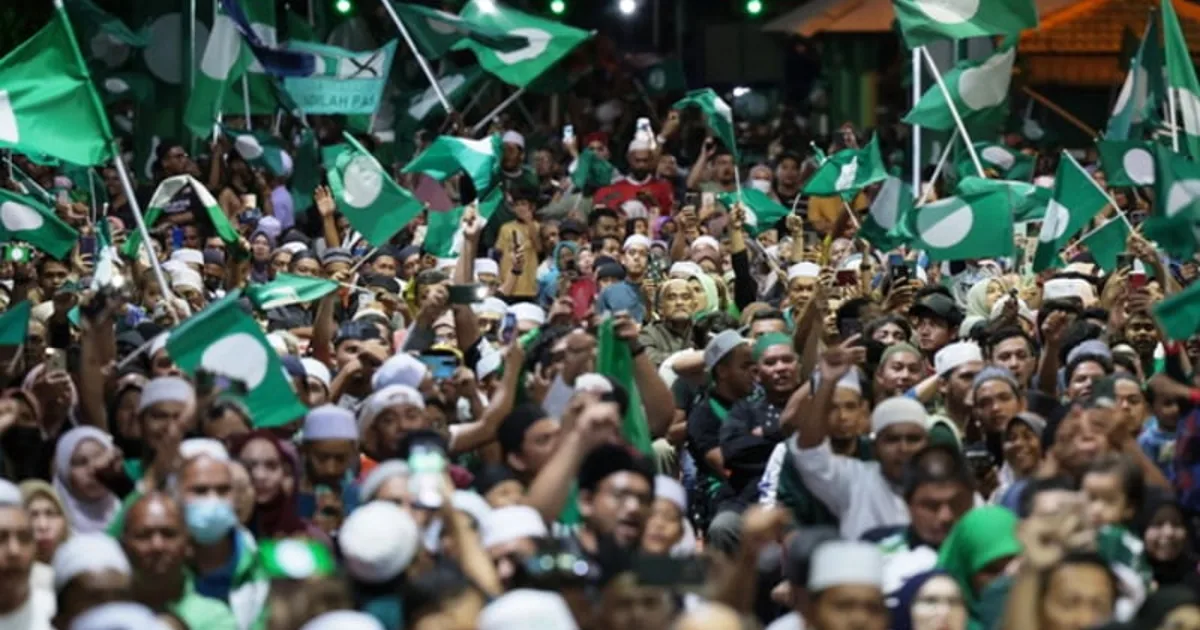
The Islamic party PAS is consolidating its electoral presence by redeploying campaign resources away from constituencies where its coalition partner Bersatu is fielding candidates, according to sources familiar with Perikatan Nasional's strategic positioning. This reallocation represents a coordinated effort within the PN alliance to avoid splitting anti-government votes and to concentrate firepower in constituencies where each party stands the strongest chance of victory.
Under the revised approach, PAS will concentrate its election machinery in seats where the party contests directly or where other Perikatan Nasional component parties are in the running. This strategic realignment signals that the PN coalition is attempting to present a more unified electoral front, a critical consideration in Malaysia's competitive political landscape where vote fragmentation can determine electoral outcomes. The move comes as various coalition partners seek to maximise their collective representation while minimising internal competition that could benefit rival alliances.
The decision to withdraw from Bersatu-contested areas demonstrates how Malaysia's coalition politics requires constant negotiation and compromise among member parties. Perikatan Nasional, which has grown increasingly important as a political force in recent years, must balance the interests of its various components while maintaining enough unity to pose a credible challenge to other alliances. PAS, as one of PN's largest and most influential partners, wields considerable influence in determining how resources are distributed across the coalition.
For Bersatu, this arrangement provides a clear path to consolidate support in designated constituencies without fear of vote-splitting from fellow PN members. The party, which broke away from Umno and has been seeking to establish itself as an independent political force, benefits from this mutual support arrangement. Conversely, PAS gains the ability to focus its considerable grassroots network and organisational capacity on areas where it expects the best returns.
The implications of this strategy extend beyond simple arithmetic calculations about seat contests. Malaysian voters increasingly observe how coalitions manage internal relationships, and perceptions of unity or discord can influence electoral outcomes. A coordinated withdrawal suggests internal discipline and strategic thinking, qualities that political analysts say voters reward when evaluating coalition performance. However, such arrangements also invite questions about whether member parties are effectively ceding electoral opportunities based on internal power dynamics rather than genuine competitive advantage.
This development reflects broader patterns within PN as the coalition attempts to solidify its position against established rivals. Where Umno and MCA coordinate within Barisan Nasional, and where PKR, DAP, and other parties coordinate within Pakatan Harapan, PN's members are learning to operate with similar strategic precision. The arrangement between PAS and Bersatu suggests the coalition is moving beyond ad-hoc electoral cooperation toward more systematic power-sharing arrangements.
For PAS specifically, the withdrawal from certain constituencies allows the party to concentrate resources on Islamic affairs, education, and public welfare issues that form the core of its political messaging. Rather than spreading campaign personnel thinly across numerous contests, PAS can now invest in deeper community engagement in selected areas, potentially improving vote share in competitive marginal seats. This efficiency in resource deployment often proves decisive in Malaysian elections where contests frequently turn on narrow margins.
The Perikatan Nasional coalition, which includes PAS, Bersatu, and smaller component parties, has been gradually improving its electoral coordination mechanisms. This latest move suggests the coalition is learning from previous campaigns where internal competition sometimes undermined collective performance. Such strategic adjustments are typical of developing political alliances that mature through successive electoral cycles.
Within the broader Malaysian political context, this arrangement indicates that PN sees itself as a permanent fixture in the electoral landscape rather than a temporary alliance. Parties invest in long-term coordination mechanisms only when they view their partnership as durable. The resource reallocation between PAS and Bersatu therefore signals confidence that Perikatan Nasional will remain a significant political force in coming years.
For Malaysian voters and observers, such coalition management decisions carry weight beyond immediate electoral calculations. They reflect how political parties balance internal interests with collective goals, a tension that ultimately affects governance quality and policy consistency. Voters in constituencies affected by PAS's withdrawal may wonder whether their local representatives will receive adequate campaign support, while supporters of PN more broadly may appreciate the efficiency gains from reduced internal competition.
The success of this coordinated approach will likely be tested in actual electoral performance, providing a benchmark for future coalition strategies. If the arrangement delivers improved results for PN compared to previous campaigns, other coalition members may adopt similar practices. Conversely, if the strategy produces disappointments, questions may arise about whether sacrificing campaign presence in certain areas was justified by gains elsewhere.

