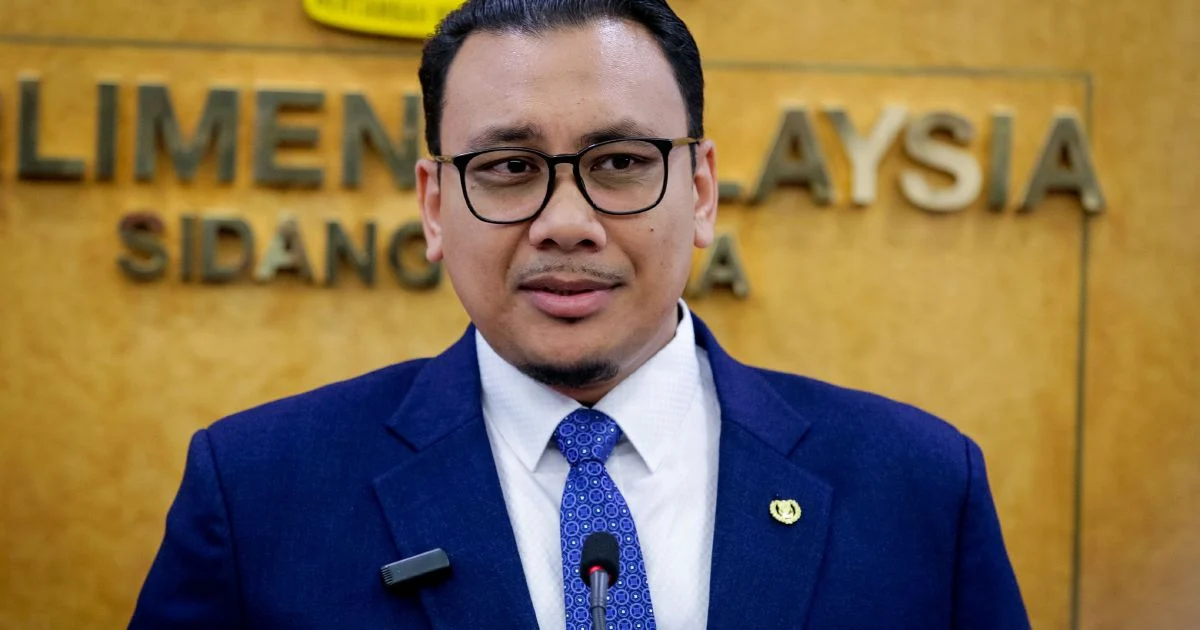
Afnan Hamimi Taib Azamudden, the chief of PAS Youth, has instructed his legal representatives to move forward with proceedings against what he characterises as defamatory remarks made on social media. The controversial Facebook post, which he attributes to a senior figure within the Bersatu party, reportedly contained derogatory comments directed at his father and extended family members. This decision marks an escalation in tensions between the two political factions and reflects the increasingly fraught relationship between Islamist and reformist camps within Malaysia's fractious political landscape.
The incident underscores a broader pattern of personal and familial attacks that have become commonplace in Malaysian politics, particularly as competing parties jockey for position ahead of crucial electoral cycles. Social media platforms, rather than serving as neutral forums for policy discussion, have increasingly become battlegrounds where politicians weaponise personal grievances and family history against opponents. This approach often drowns out substantive debate on governance, economic policy, and social development—issues that most directly affect ordinary Malaysians.
PAS Youth's decision to pursue formal legal remedies rather than respond through traditional political channels signals a shift towards institutionalised accountability for online misconduct. Legal action carries significant weight in the Malaysian context, where defamation statutes provide measurable consequences for false or inflammatory statements. By choosing this route, Afnan Hamimi is potentially establishing precedent for how party leaders might address similar affronts in future, though critics might argue that such disputes could be better resolved through dialogue and apology.
The involvement of Bersatu in this controversy is particularly noteworthy given the party's recent history of internal upheaval and external alliances. Bersatu, which positioned itself as a reformist force during its formation, has found itself navigating complex relationships with both PAS—an Islamist party with substantial electoral support—and the broader Malay-Muslim political establishment. The alleged post thus reflects not merely personal animus but potentially deeper ideological and strategic tensions within the Malaysian political ecosystem.
From a legal perspective, the distinction between protected political speech and actionable defamation remains contested in Malaysian jurisprudence. Courts must weigh freedom of expression against individual rights to reputation and dignity, a balance that has not always been straightforward in previous cases. The specific content of the Facebook post will prove crucial in determining whether Afnan Hamimi's claim meets the threshold for legal liability, a determination that could have implications for how politicians communicate on digital platforms.
The case also highlights how family lineage and ancestral reputation carry disproportionate weight in Malaysian politics, particularly within Malay-Muslim circles where genealogy and historical standing inform political legitimacy. Attacks on one's father or family therefore constitute assaults on identity itself, making such allegations deeply personal rather than merely political in nature. This cultural context explains why Afnan Hamimi's response was swift and uncompromising rather than dismissive or measured.
For PAS Youth specifically, the legal action reinforces the organisation's positioning as a guardian of Islamist interests and family honour within the broader party structure. PAS Youth functions as an important mobilising force for the parent party, particularly among younger, more urbanised demographic cohorts who consume political content through social media. Demonstrating that personal attacks will face legal consequences may strengthen Afnan Hamimi's standing within the youth wing and signal resolve to the broader PAS electoral base.
Bersatu, conversely, faces reputational risk regardless of the legal outcome. If the party leadership endorses or tacitly approves the disputed post, it risks alienating potential coalition partners and moderate voters. If it distances itself too obviously from the alleged perpetrator, it risks appearing divided or weak at a moment when political cohesion within ruling coalitions remains precarious. The party must therefore navigate carefully between protecting members from legal vulnerability and maintaining internal discipline.
This incident also reflects the broader challenge facing Malaysian media and civil society in holding politicians accountable for substantive failures in governance. When political discourse becomes consumed by personal grievances and family feuds, substantive accountability mechanisms—parliamentary questioning, investigative journalism, public scrutiny of policy outcomes—languish in the background. The resources devoted to litigation over insults might alternatively be channelled towards addressing issues affecting Malaysian citizens: inflation, housing affordability, education quality, or healthcare access.
The legal proceedings, assuming they proceed, will likely unfold over months or years, consuming attention and resources while broader political dynamics continue to shift. Malaysian electoral politics operates within compressed timeframes, with coalition formations, government reshuffles, and electoral cycles following rapid succession. By the time courts deliver verdicts, the political landscape may have transformed entirely, potentially rendering legal outcomes symbolically rather than substantively significant.
For Malaysian observers tracking political accountability and institutional integrity, this case represents a test of whether courts can effectively address defamation in the digital age while protecting legitimate political expression. The outcome could influence how politicians conduct themselves on social media and whether legal remedies become normalised tools for responding to political attacks, rather than rare recourses.