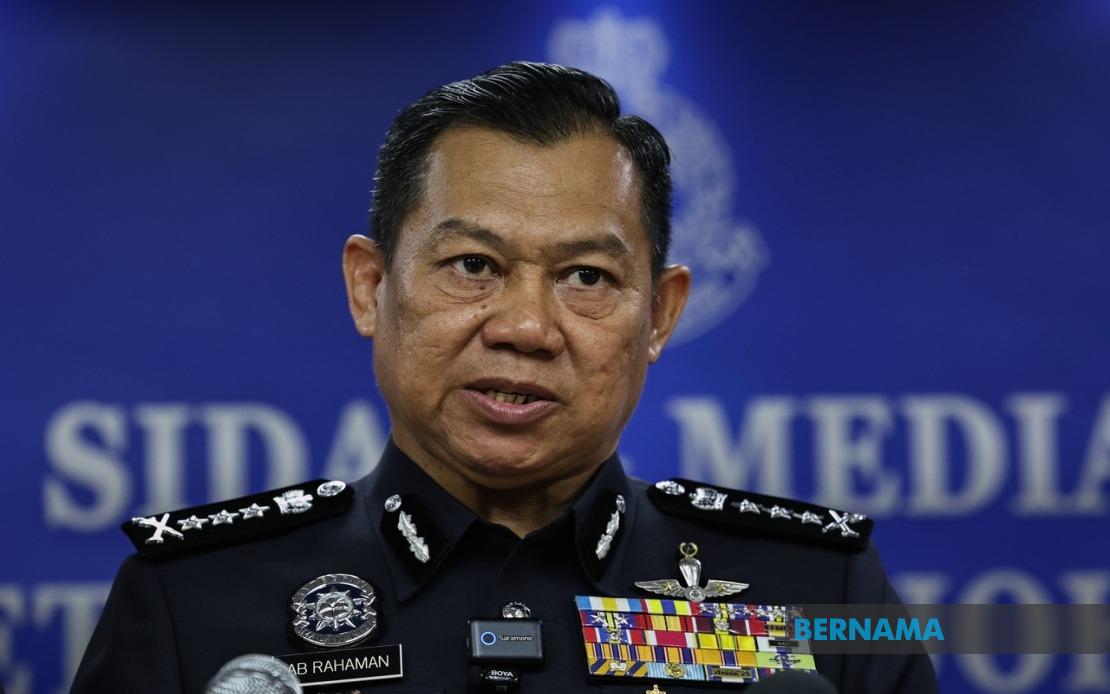
The Royal Malaysia Police is preparing a substantial security operation for the forthcoming Johor State Election, mobilising nearly 12,000 personnel to oversee polling day arrangements and maintain order throughout the electoral process. Johor Police Chief Datuk Ab Rahaman Arsad announced the comprehensive deployment structure during a press briefing at the Johor Police Contingent Headquarters, outlining how the force will distribute its resources across five distinct operational phases as the election cycle progresses.
The phased approach reflects standard practice for major electoral events in Malaysia, where security needs fluctuate based on campaign activities, nomination proceedings, nomination day itself, the polling period, and vote counting operations. By structuring the deployment into five stages rather than maintaining uniform strength throughout, the Johor Police Contingent can concentrate personnel where and when they are most needed, ensuring efficient use of resources while maintaining adequate coverage across all election-related activities and voting centres.
Datuk Ab Rahaman emphasised that deployment numbers remain flexible and subject to revision as operational circumstances dictate. This adaptive posture proves essential in election security management, as unforeseen circumstances, crowd dynamics, or specific intelligence about potential disruptions may necessitate rapid reallocation of personnel. The flexibility embedded in the operational plan allows the force to respond proportionately to genuine security challenges without over-committing resources to lower-risk periods.
Beyond the core 11,926 PDRM personnel, the Johor contingent will receive supplementary support from multiple specialist units operating under the Internal Security and Public Order Department. This integrated approach combines conventional police strength with dedicated paramilitary and specialist capabilities, creating a more versatile security architecture than police officers alone could provide. The arrangement reflects the complexity of modern electoral security, which extends beyond crowd control to encompass armed capability, rapid response capacity, and sophisticated operational coordination.
The reinforcement package comprises 54 officers and 701 personnel sourced from four distinct units: the General Operations Force, which provides trained paramilitary capability for rapid intervention; the Federal Reserve Unit, equipped for larger-scale public order management; the PDRM Air Unit, offering aerial surveillance and rapid deployment options; and the Marine Police Force, ensuring security across Johor's extensive water boundaries and coastal areas. This composition suggests planners anticipate scenarios ranging from isolated incidents to coordinated disturbances, while also accounting for Johor's geographical characteristics, which include significant maritime areas requiring specialised policing approaches.
For Malaysian readers, the scale of this deployment underscores the resource intensity of managing democratic processes in a diverse, geographically dispersed state. Johor, as Malaysia's southernmost peninsula state and a major population and economic hub, requires substantial security infrastructure to protect electoral integrity. The allocation of nearly 12,000 police plus additional paramilitary personnel represents a significant commitment of national resources, reflecting official determination to ensure orderly, safe voting regardless of political tensions or security concerns preceding the ballot.
The deployment strategy also signals confidence in the security apparatus's capacity to manage electoral procedures without excessive militarisation or heavy-handed restrictions that might discourage voter participation. By pre-positioning personnel across five phases rather than imposing blanket restrictions, authorities aim to preserve the accessibility and openness essential to legitimate democratic exercise while maintaining security standards. This balancing act proves particularly important in states like Johor, where competitive politics and substantial populations create both motivation and opportunity for disruption.
Regionally, Malaysia's approach to election security reflects broader Southeast Asian practice of combining police and paramilitary resources for major electoral events. Indonesia, Thailand, and the Philippines similarly deploy substantial personnel, though contexts and scales vary considerably. Malaysia's inclusion of specialist units like the Marine Police Force demonstrates context-specific security planning, acknowledging geographical realities that purely terrestrial deployments would overlook.
The announcement provides reassurance to voters and candidates that authorities are taking security seriously, potentially reducing anxiety among participants who might otherwise worry about their safety during voting or campaign periods. Clear communication about deployment scope and structure contributes to public confidence in election management, an intangible but crucial element of democratic legitimacy. When voters understand that security forces are present and organised, confidence in the electoral process itself often strengthens.
Forward observers will watch how this deployment actually functions across the five phases, and whether the flexible approach successfully adapts to real operational needs without creating bottlenecks or security gaps. The effectiveness of the operation will be measured not merely by absence of major incidents, but by whether the voting process remains accessible, orderly, and perceived as secure by the participating public. Subsequent evaluations by the Election Commission and police leadership will likely inform approaches to future state elections and the eventual general election, making this deployment significant beyond Johor's immediate electoral cycle.
The coordination between PDRM and KDNKA units also reflects organisational maturity in inter-agency cooperation, a persistent challenge in Malaysian governance. Successful integration of different command structures, training backgrounds, and operational doctrines requires careful planning and communication, demonstrating that when electoral stakes rise, institutional cooperation often improves accordingly.