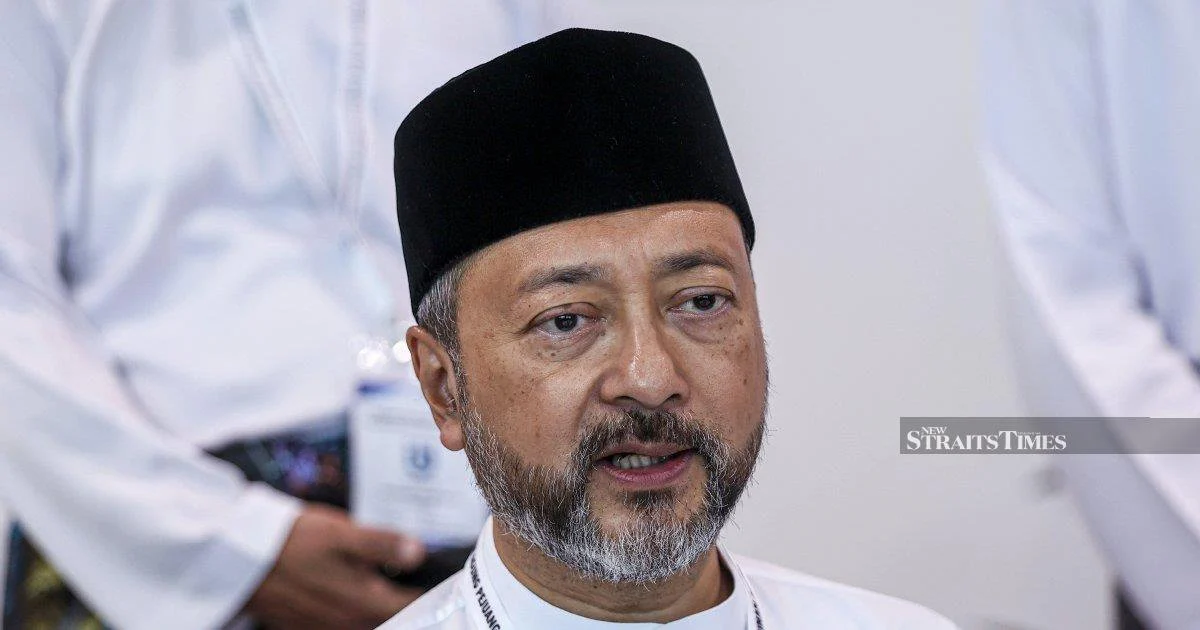
Parti Pejuang Tanah Air's formal integration into Perikatan Nasional represents a recalibration of Malaysia's political landscape, with the party's leadership positioning the merger as a stepping stone toward broader inter-party cooperation aimed at addressing systemic governance challenges. Datuk Seri Mukhriz Mahathir, who heads Pejuang, announced that the coalition's expansion signals an intention to move beyond fragmentation and mobilize opposition resources more effectively, though specific legislative priorities or power-sharing arrangements remain largely undefined at present.
The timing of Pejuang's entry into PN carries particular significance within the context of Malaysian electoral mathematics. With parliamentary representation and state-level assemblies reflecting deepening regionalism and factional splits, the consolidation of opposition or non-Barisan Nasional entities has become strategically necessary to challenge the ruling coalition's dominance. Pejuang, founded by former prime minister Mahathir Mohamad and led by his son, has maintained a modest but symbolic presence in parliament and several state legislatures, particularly in its stronghold of Kedah. Its adhesion to PN expands the bloc's nominal strength while signalling that ideological or personality-driven divisions within the wider non-Barisan ecosystem may be yielding to pragmatic alliance-building.
Mukhriz's rhetoric around national challenges—couched in language about unity and shared purpose—reflects a broader trend among Malaysian opposition parties to frame their coalitions around governance reform and institutional accountability rather than singular policy platforms. This rhetorical shift acknowledges that Malaysian voters, especially in urban centres and among younger demographics, increasingly demand competence and integrity from political actors. By emphasizing Pejuang's commitment to tackling systemic issues alongside its new coalition partners, Mukhriz is attempting to rebrand what might otherwise be perceived as a tactical manoeuvre into a principled consolidation of reformist forces.
The expansion of Perikatan Nasional itself warrants closer examination. Formed in 2019 as a post-election coalition, PN has undergone multiple iterations, absorbing and shedding members as political circumstances shifted. Its core composition has historically included Bersatu, Pas, and several smaller parties, though its electoral fortunes have varied significantly across different state and federal electoral cycles. Pejuang's formal accession adds another layer to this already complex architecture, raising questions about internal coordination, resource allocation, and decision-making processes within an increasingly unwieldy coalition structure.
From a Malaysian governance perspective, coalition proliferation and realignment carry both opportunities and risks. On one hand, consolidated opposition blocs can develop comprehensive policy platforms and present voters with clearer electoral choices. On the other hand, loose coalitions of ideologically divergent parties often struggle with internal discipline, with disputes over candidate selection, campaign messaging, and legislative priorities erupting publicly and damaging credibility. The durability of PN as an expanded entity will depend partly on whether its constituent parties can subordinate sectional interests to collective goals—a perennial challenge in Malaysian coalition politics.
Regional implications of this realignment should not be overlooked. Perikatan Nasional's geographic footprint extends across multiple states where it holds or contests power, particularly in the north and east. Pejuang's traditional base in Kedah and its subsidiary presence elsewhere could either strengthen PN's coherence in certain regions or, conversely, create friction where local party interests diverge. Malaysian states have become increasingly important as laboratories for governance and policy innovation, and the outcome of state-level coordination within PN will significantly influence the coalition's trajectory at federal level.
Mukhriz's invocation of addressing growing national challenges deliberately remains vague, reflecting the reality that PN encompasses parties with competing ideological commitments and policy priorities. Pas, for instance, has long championed Islam-centric governance models, while other PN constituents have emphasised secular, rights-based frameworks. Pejuang itself, under Mahathir's stewardship, has positioned itself as a centrist force concerned with institutional stability and efficient administration. How these tensions are managed—or papered over—will determine whether the coalition functions as a coherent governing alternative or merely as an electoral convenience.
The admission of Pejuang also reflects broader calculations about the 2025 electoral cycle and beyond. With federal elections anticipated within the next two years and state elections scheduled throughout the period, opposition parties are incentivized to consolidate now rather than fragment resources across multiple competing entities. Malaysian political history suggests that divided opposition leads to ruling coalition dominance despite potentially modest vote shares. By joining forces under the PN banner, Pejuang's leadership is betting that concentrated opposition strength—even if internally contested—offers better prospects than autonomous parliamentary representation.
International observers monitoring Malaysian politics note that coalition dynamics in the region often reflect patron-client relationships, personality-driven followings, and regional factionalisms rather than institutional parties bound by programmatic coherence. Pejuang's entry into PN may follow this pattern, with leadership circles and established elites managing party machinery while broader membership engagement remains limited. This structural reality should temper expectations that expanded coalitions automatically translate into strengthened democratic competition or improved governance outcomes.
Looking forward, the success of Pejuang's integration into Perikatan Nasional will be measured not by statements of unity but by concrete coordination on candidate nominations, campaign strategy, and legislative conduct. The coming months will reveal whether PN can function as a cohesive political force or whether member-party interests will continue to override collective commitments. For Malaysian voters and stakeholders concerned with democratic renewal, the real test lies ahead.

