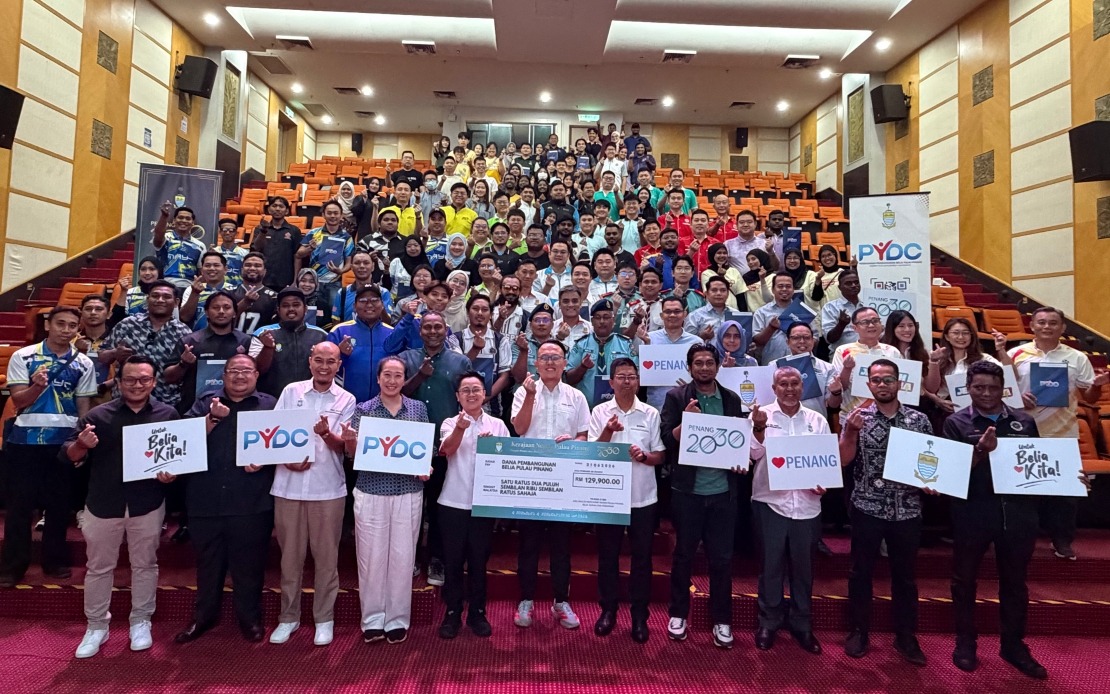
The Penang state government has committed RM129,900 from its Youth Development Fund to back 68 youth programmes being delivered by 48 registered associations across the state this year. The allocation, announced during a State Executive Council Meeting, forms part of a broader RM200,000 youth funding envelope that reflects the state's strategic priority of nurturing young talent and building community capacity through grassroots initiatives.
Daniel Gooi Zi Sen, who chairs the Penang Youth, Sports and Health Committee, described the fund distribution as more than a simple financial transfer. In his view, the money represents institutional confidence placed in youth organisations to transform creative ideas and innovative proposals into tangible social programmes that produce measurable returns for participating young people and their communities. This framing shifts the narrative away from subsidy-dependent models toward partnership and shared accountability.
The 68 programmes supported through this round of funding span multiple developmental domains, deliberately designed to build competencies that young Malaysians need in an increasingly competitive economy and complex civic landscape. Skills training features prominently, addressing gaps in technical and vocational education outside formal schooling. Equally important are initiatives targeting employability and job readiness, recognising that many school leavers and young adults lack practical exposure to workplace expectations and professional networks. Volunteerism activities form another pillar, creating pathways for youth to contribute meaningfully to social causes while developing character and social consciousness. Leadership development opportunities round out the portfolio, equipping emerging leaders with tools to organise, advocate and mobilise within their own peer groups and communities.
For Penang specifically, this initiative carries particular significance in a state that has positioned itself as a progressive, innovation-driven economy. Youth unemployment and underemployment remain persistent challenges across Malaysia, with young people often caught between academic credentials and practical readiness for employment. By channelling resources into diverse programme types rather than a one-size-fits-all approach, Penang demonstrates recognition that different cohorts have different needs and learning styles. Some young people thrive in structured skills workshops, while others develop best through mentorship, peer leadership or community service.
Gooi's emphasis on integrity, transparency and efficient fund management speaks to a wider governance challenge in Malaysian public administration. Youth development funds, while well-intentioned, have occasionally been subject to misuse or poor execution that squanders both money and opportunity. By explicitly requiring recipient organisations to demonstrate rigorous management practices and clear accountability frameworks, the Penang government is signalling that funding comes with expectations and oversight mechanisms. This protective stance guards against reputational damage while setting professional standards for civil society organisations.
A particularly noteworthy aspect of Gooi's statement is his caution against measuring programme success solely through activity completion metrics. Many youth initiatives fall into the trap of equating delivery with impact—counting workshops held rather than skills acquired, or volunteer hours logged rather than sustained behavioural change. The Penang approach invites recipient organisations to think beyond immediate outputs and track longer-term outcomes: whether participants retain knowledge, apply learning in their lives, form lasting networks, and contribute differently to their communities as a result. This outcome-focused philosophy aligns with international best practice in youth development evaluation.
The distribution across 48 separate organisations reflects a deliberate decentralisation strategy rather than concentration through a few large intermediaries. Smaller, community-rooted associations often have deeper trust relationships with young people than distant government agencies and can respond more flexibly to local context and emerging needs. However, this approach also increases administrative burden for government monitors and multiplies the number of organisations requiring support and oversight. The trade-off between reach and manageability remains a perennial tension in decentralised funding models.
For youth associations in Penang and neighbouring states watching this development, the RM129,900 allocation sends mixed signals. On one hand, it confirms that government remains committed to co-investing with civil society in youth development. On the other hand, the per-programme average of roughly RM1,900 is relatively modest, suggesting that organisations must demonstrate resourcefulness in leveraging additional funding, volunteer labour and in-kind support to deliver substantial initiatives. Many successful youth programmes operate on hybrid funding models combining government grants, corporate sponsorship, social enterprise revenue and volunteer contributions.
The timing of this announcement also matters for understanding broader Malaysian policy directions. As the nation navigates demographic shifts, skills gaps and changing employment landscapes, youth development has assumed higher priority across state governments. Penang's initiative reflects this national conversation while demonstrating how state-level autonomy allows for contextualised responses suited to local economic opportunities and demographic profiles. Other states may observe and potentially adapt this model.
Looking forward, the success of these 68 programmes will likely influence future funding decisions. If Penang documents evidence of meaningful participant outcomes, employment transitions, and community benefits, the case for expanding the Youth Development Fund becomes stronger. Conversely, if implementation falters or impact remains elusive, questions may arise about funding mechanisms and recipient organisation capacity. The responsibility now rests with both government overseers and youth associations to ensure this investment yields genuine developmental returns for Penang's young population.

