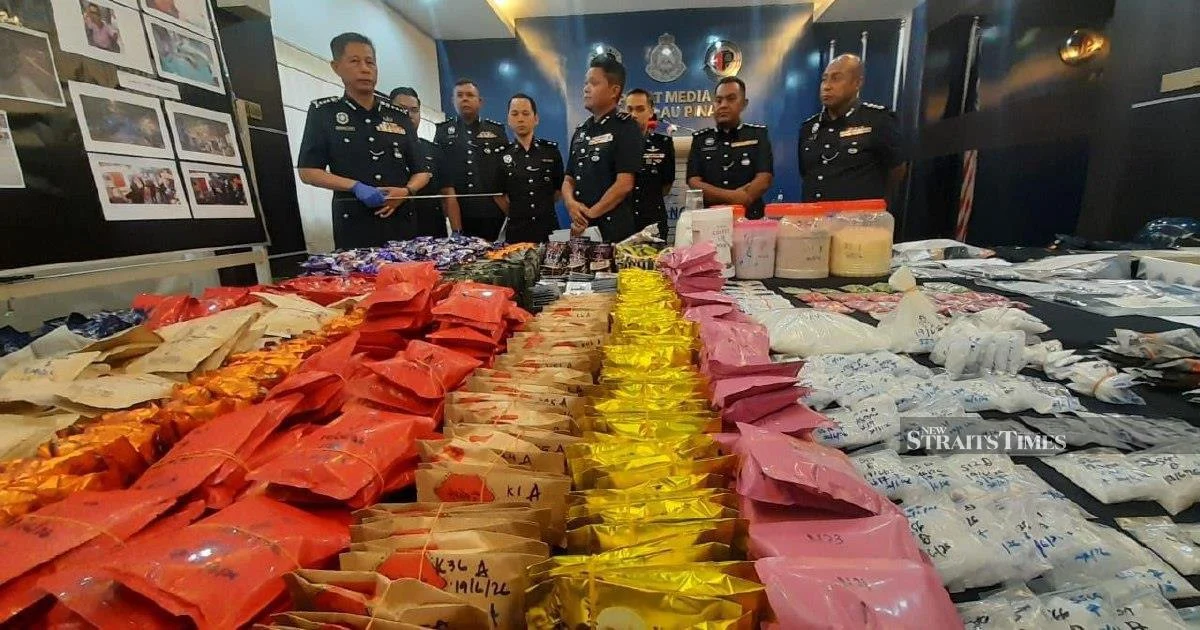
A significant drug trafficking operation has been dismantled in Penang following the arrest of two individuals by state police. The couple were apprehended after officers raided a condominium in Butterworth, where they uncovered an elaborate setup dedicated to processing and distributing controlled substances. The seizure of RM9.7 million worth of drugs marks one of the more substantial drug busts in the state's recent operations and demonstrates the persistent challenges law enforcement faces in combating organised narcotics networks across the northern corridor.
The operation revealed how traffickers continue to exploit residential properties as bases for illicit drug manufacturing and distribution. Condominiums present particular vulnerabilities for such operations due to their relatively anonymous nature, multiple access points, and the challenge they pose for surveillance. The location in Butterworth, a significant economic and population hub across from Penang Island, suggests this trafficking network had selected a strategically positioned venue to facilitate movement of contraband across the state and potentially into other regions.
The scale of this seizure underscores the sophistication of modern drug trafficking organisations operating within Malaysia. The combined value of RM9.7 million in recovered narcotics indicates this was not a small-scale operation but rather an established network with substantial financial resources and supply chains. Such operations typically involve multiple layers of personnel, from street-level distributors to mid-level processors and high-level organisers, each playing specific roles in maximising profit and minimising detection risk.
For Penang residents, this bust illustrates the proximity of large-scale drug operations to residential communities. While the Butterworth condominium seizure may seem geographically isolated, such facilities often serve broader distribution networks that extend into residential neighbourhoods and commercial areas throughout the state. The presence of such operations in what residents typically perceive as legitimate residential spaces raises questions about community awareness and the importance of reporting suspicious activities to authorities.
The arrest of the couple marks another instance where intimate relationships intersect with serious criminal enterprises. The decision to involve a romantic partner in large-scale drug manufacturing suggests either deep personal trust or coercion—factors that law enforcement agencies increasingly recognise when investigating trafficking networks. Understanding the dynamics within these partnerships provides investigators with insights into recruitment methods and operational structures used by larger criminal organisations.
Buttworth's positioning as a commercial and industrial hub makes it a natural focal point for trafficking networks seeking to exploit its logistics infrastructure. The area's connectivity to major transportation networks and its role as a gateway between Penang Island and the mainland create conditions favourable for moving large quantities of controlled substances. This geographic reality means continued pressure from traffickers seeking to establish new operational bases should such networks face disruption.
The investigation that led to this raid reflects ongoing efforts by Penang police to target mid to upper-level trafficking operations rather than focusing exclusively on street-level dealers. This strategic approach aims to disrupt supply chains at critical nodes, potentially reducing drug availability in communities more effectively than dispersed retail-level enforcement. The success of this particular operation suggests police intelligence networks have developed sufficient sophistication to identify and locate significant clandestine facilities.
The RM9.7 million valuation of seized drugs raises important questions about how such figures are calculated and what they reveal about market dynamics. Street-value assessments of seized narcotics typically reflect retail pricing rather than wholesale costs, meaning the actual investment and profit margins involved in this operation were likely lower. Nevertheless, the volume suggests this network had established supply relationships and distribution channels substantial enough to generate considerable illegal revenue.
For the broader Southeast Asian region, such busts demonstrate that Malaysia remains a target for international trafficking networks seeking to establish processing and distribution hubs. The country's geographic position, relatively developed infrastructure, and porous borders make it attractive to criminal organisations operating across the region. Penang's proximity to Thailand and its role as a major port of entry for international maritime traffic compound these pressures.
The investigation's success also highlights the importance of community-based intelligence in disrupting organised crime. Large-scale drug operations cannot function entirely invisibly; neighbours, building management, and delivery personnel typically observe unusual patterns. Encouraging residents to report suspicious activities while protecting informants remains essential for law enforcement agencies seeking to identify and dismantle trafficking networks before they expand further.
Looking forward, this seizure will likely prompt trafficking networks to reassess their operational security and distribution methods. However, enforcement of this magnitude also creates temporary supply disruptions that inevitably affect street-level availability and pricing in the coming weeks. For addiction treatment and harm reduction services, such disruptions can paradoxically complicate their work by creating sudden desperation among users seeking alternative, potentially more dangerous substances.
The arrest and seizure represent tangible progress in Penang's ongoing battle against organised narcotics trafficking, yet the underlying market forces driving these operations remain formidable. Addressing drug trafficking comprehensively requires sustained attention to both supply-side enforcement and demand-side interventions including treatment, rehabilitation, and community education—a multifaceted approach that individual seizures, however impressive, can only partially advance.

