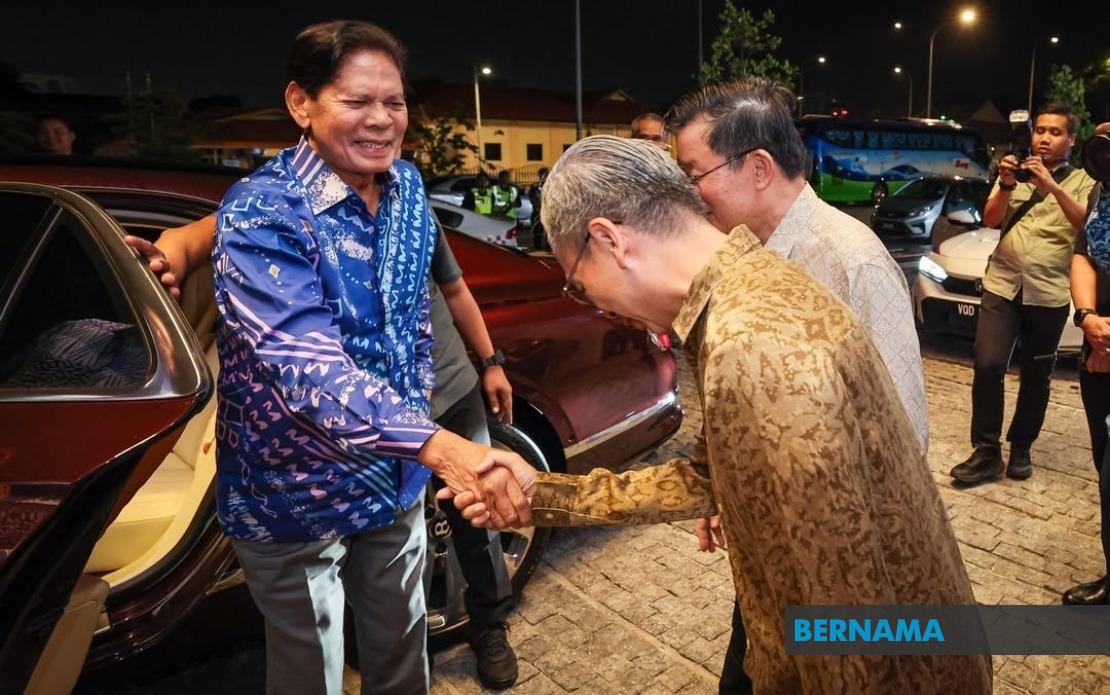
Penang Governor Tun Ramli Ngah Talib hosted a prestigious state dinner on June 19 to recognize media practitioners and journalists from across Malaysia and the broader ASEAN region, celebrating their contributions to the nation's progress. The gathering, held in Butterworth in conjunction with National Journalists' Day (HAWANA) 2026, drew nearly 350 attendees including senior editors, news executives, veteran journalists, and state officials, setting the tone for the main conference to follow. The event reflected the state government's appreciation for the media's pivotal role in national development and governance.
The dinner assembled an impressive cross-section of Malaysia's media leadership and international press representatives. Among the dignitaries present were Penang Chief Minister Chow Kon Yeow, Communications Minister Datuk Fahmi Fadzil, and senior government officials including the Communications Ministry's Secretary-General Datuk Abdul Halim Hamzah. International participants included Timor-Leste's Secretary of State for Social Communication Expedito Loro Dias Ximenes, underscoring the event's regional significance. The gathering brought together not only top executives from Malaysia's major news organizations but also delegations from neighboring countries, highlighting HAWANA's emergence as a meaningful platform for media dialogue across Southeast Asia.
Malaysia's premier news organizations were prominently represented through their senior editorial leadership. Bernama, the national news agency, was represented by Chairman Datuk Seri Wong Chun Wai and Chief Executive Officer Datin Paduka Nur-ul Afida Kamaludin. Media Prima's New Straits Times Group Editor Farrah Naz Karim, Sin Chew Daily Editor-in-Chief Chan Aun Kuang, Star Media Group Chief Content Officer Datin Paduka Esther Ng Sek Yee, and Astro Awani Editor-in-Chief Zaiful Mohd Ariffin all attended, representing the diversity of Malaysia's media landscape across print, digital, and broadcast platforms.
The inclusion of international delegates demonstrated HAWANA's expanding reach and recognition within the Asia-Pacific region. Representatives from Timor-Leste's state news agency TATOLI, Indonesia's cross-border media cooperation body ISWAMI, and the Indonesian news agency ANTARA attended the dinner. This international participation signals that Malaysia's journalism community is increasingly engaging in regional conversations about press freedom, editorial standards, and the evolving media landscape—matters of growing importance as Southeast Asian nations grapple with misinformation, digital transformation, and the sustainability of quality journalism.
The conference itself has attracted approximately 1,000 media professionals from Malaysia and several ASEAN nations to Penang, establishing the city as a hub for regional media dialogue. Prime Minister Datuk Seri Anwar Ibrahim is scheduled to officially open HAWANA 2026 at the PICCA Convention Centre @ Butterworth Arena, lending significant political weight to the gathering. The presence of a sitting prime minister at a journalists' conference underscores the Malaysian government's stated commitment to supporting and recognizing the media sector, though such gatherings also serve as important forums where press and political leadership engage on matters of mutual concern.
The conference theme—'Media Integrity Strengthens Credibility'—addresses one of the most pressing challenges facing news organizations globally and in Malaysia specifically. In an era of fake news, digital disruption, and declining trust in institutions, the emphasis on integrity reflects genuine concerns within the profession about maintaining journalistic standards and public confidence. For Malaysia's media, which operates within a complex regulatory environment and faces competition from online platforms, this thematic focus suggests a deliberate effort by established news organizations to reassert their commitment to accuracy, verification, and ethical reporting practices.
The HAWANA 2026 organizing structure reveals institutional efforts to elevate the gathering's profile and coordination. Bernama serves as the implementing agency under the Communications Ministry, with a working committee chaired by the news agency's CEO and deputy-chaired by the editor-in-chief, ensuring both managerial and editorial expertise shapes the conference. This arrangement reflects how Malaysia's state-backed news infrastructure interacts with the broader private media sector in national initiatives, blending government support with independent journalistic voices.
Beyond the professional conference, the accompanying RIUH Pi HAWANA Carnival extends HAWANA's reach to the general public, bridging the gap between journalists and readers. Expected to draw approximately 30,000 visitors to the PICCA Convention Centre, the three-day carnival features over 24 local creative product brands, 20 food and beverage vendors, and 16 stage performances by Malaysian artists including Exists, Bunkface, and Chelsea Ng, all offered free to the public. This approach democratizes the celebration of journalism and creative industries, allowing ordinary Malaysians to engage with media narratives and understand the profession beyond the newsroom.
The carnival's programming reflects contemporary Malaysian culture and consumer interests, featuring interactive creative workshops that invite public participation. By positioning journalism alongside music, food, and design—elements that define modern urban Malaysian life—HAWANA 2026 attempts to normalize media engagement and demonstrate journalism's relevance to everyday citizens. This is particularly important in an environment where younger audiences increasingly bypass traditional news sources in favor of social media, podcasts, and digital platforms that may lack editorial standards.
From a regional perspective, HAWANA 2026 illustrates Malaysia's ongoing efforts to position itself as a leader in regional media dialogue and standards-setting. The inclusion of ASEAN delegates and the international media participation signal that Malaysian journalism is engaging with peers across Southeast Asia on shared challenges: combating misinformation, adapting to digital economics, maintaining editorial independence, and building audience trust. These conversations are increasingly vital as ASEAN nations face similar pressures from authoritarian information control, commercial disruption, and technological change.
The timing and scale of HAWANA 2026 also reflects Malaysia's media industry in transition. Traditional print and broadcast outlets are reinventing themselves as digital-first organizations, freelance and independent journalism is gaining traction, and new media platforms continually reshape how Malaysians consume information. A major conference bringing 1,000 journalists together allows the profession to collectively assess these changes, share best practices, and advocate for policies that protect press freedom and professional standards.
The gathering ultimately serves multiple purposes simultaneously: honoring journalism as a profession, showcasing Malaysia's media sector to international peers, providing a forum for professional development and networking, and demonstrating government recognition of media's role in society. Whether this support translates into substantive policy actions—such as legal protections for journalists, tax incentives for news organizations, or regulatory frameworks that preserve editorial independence while combating harmful content—will be closely watched by the regional media community and observers of press freedom in Southeast Asia.

