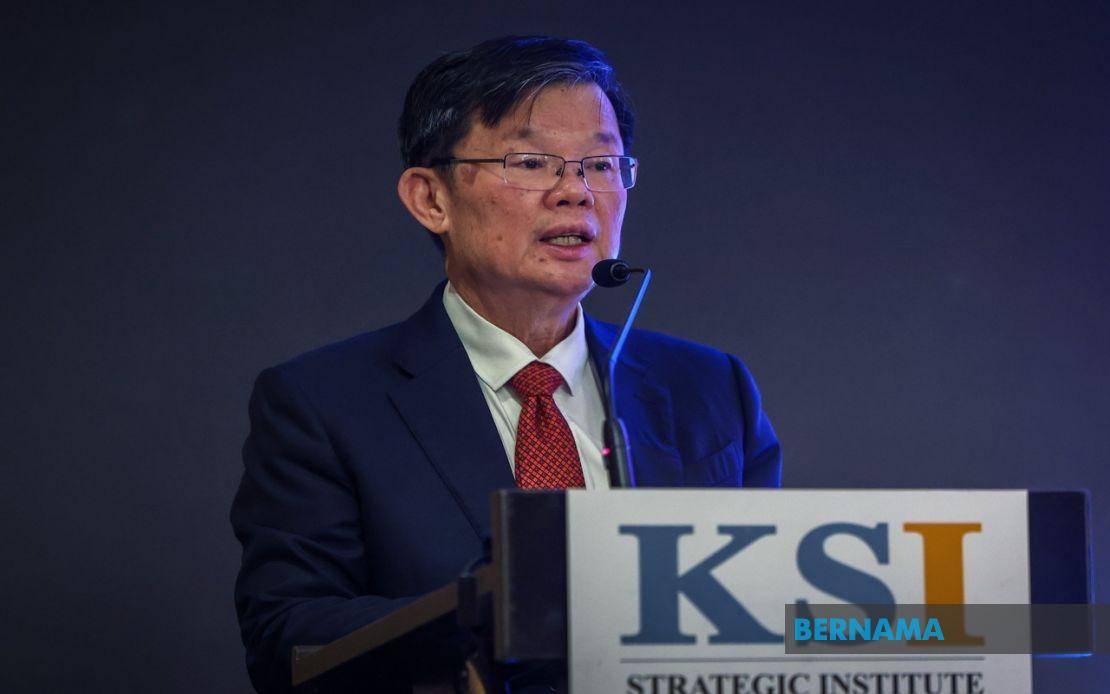
Penang Pakatan Harapan intends to expand its roster of female political contestants in the state's forthcoming electoral cycle, yet the coalition continues grappling with a fundamental constraint: sourcing an adequate pool of qualified women prepared to enter the demanding arena of electoral politics. This tension between ambition and capability emerged from remarks made by party chairman Chow Kon Yeow during his address at the World Women Economic and Business Summit 2026 in George Town on June 15, revealing a persistent challenge confronting not just Penang's ruling coalition but Malaysia's political establishment broadly.
The 30 per cent target for women's political participation, enshrined as a national objective since 2009, remains aspirational rather than achieved. Across Malaysia's legislative bodies, women constitute merely 13.5 per cent of parliamentary seats and 12 per cent of state assembly positions. These figures underscore a yawning gap between stated commitment and on-the-ground reality, a disparity that Chow acknowledged demands urgent recalibration of strategies and intensified action from political actors.
Chow's candid assessment reveals the structural and attitudinal obstacles constraining female political engagement. While acknowledging Penang PH's principled dedication to the 30 per cent benchmark, he identified a critical bottleneck: insufficient numbers of women stepping forward during candidate recruitment phases. The pressures inherent in electoral competition, combined with societal and familial expectations, appear to deter many qualified women from pursuing candidacy despite their demonstrated competence across professional domains.
The apparent paradox merits examination. Malaysia has witnessed remarkable female advancement in education, commerce, engineering, and civil administration, yet this professional prominence has not translated into proportionate political representation. The divergence suggests that barriers to political entry operate differently from those affecting career progression in other sectors. Electoral contests demand personal visibility, willingness to court controversy, fundraising acumen, and tolerance for aggressive scrutiny—attributes that may be discouraged in women through cultural conditioning or institutional disincentives.
Penang's experience carries particular significance for the broader Southeast Asian region. As one of Malaysia's more cosmopolitan and economically dynamic states, Penang's relative difficulty in recruiting female candidates hints at systemic challenges transcending geographical or developmental boundaries. If a prosperous, relatively progressive state struggles with this objective, the implications for more conservative constituencies prove sobering.
Chow articulated three concrete measures political parties should implement. First, institutionalizing the 30 per cent target within formal candidate selection procedures would transform aspirational rhetoric into binding operational guidelines. Second, ensuring balanced female representation on decision-making committees would signal authentic commitment to shared power-wielding. Third, providing systematic mentoring and resource access for emerging female leaders would address gaps in political capital and networks that male candidates often inherit through family or generational connections.
The recruitment challenge also reflects timing asymmetries. Identifying and nurturing qualified candidates requires sustained, multi-year effort beginning well before electoral campaigns commence. Political parties operating in compressed election cycles or lacking institutionalized talent-development frameworks cannot suddenly produce credible female candidates when nominations deadlines approach. Effective solutions demand year-round organizational commitment, not election-season initiatives.
Regional considerations amplify the urgency. Southeast Asian democracies are competing globally for talent and investment, with women's political voice increasingly recognized as a marker of institutional health and inclusive governance. Countries lagging in female political representation risk signalling outdated governance models to potential investors and talent pools prioritizing progressive workplaces.
For Malaysian policymakers and party leadership, Chow's remarks implicitly identify a recruitment pipeline problem requiring patient investment. Universities could better prepare politically-engaged women for candidacy. Civil society organizations could mentor prospective candidates. Political parties could establish mentorship schemes pairing experienced parliamentarians with potential successors, ensuring women benefit equally from such programmes. Media could amplify narratives of successful female politicians, normalizing electoral participation.
The immediate prospect for Penang PH likely involves fielding more female candidates than previously, though probably falling short of the 30 per cent aspiration. Incremental progress—moving from current levels toward the target—may represent realistic near-term achievement. However, reaching 30 per cent nationally would require structural reforms transcending any single state or coalition.
Chow's public acknowledgement of the challenge, rather than dismissing it as resolved, indicates honest reckoning with reality. This transparency could catalyze broader institutional change if other coalition partners and opposition entities adopt similarly frank assessments. The conversation is shifting from whether women should participate to how systematically to enable their participation.
Ultimately, Malaysia's democratic legitimacy and economic competitiveness depend on mobilizing talent irrespective of gender. When qualified women remain underrepresented in political decision-making due to structural obstacles rather than capability gaps, the nation diminishes its collective problem-solving capacity. Penang PH's challenge reflects a broader Malaysian imperative: transforming women's political participation from occasional gesture to systematic organizational practice.