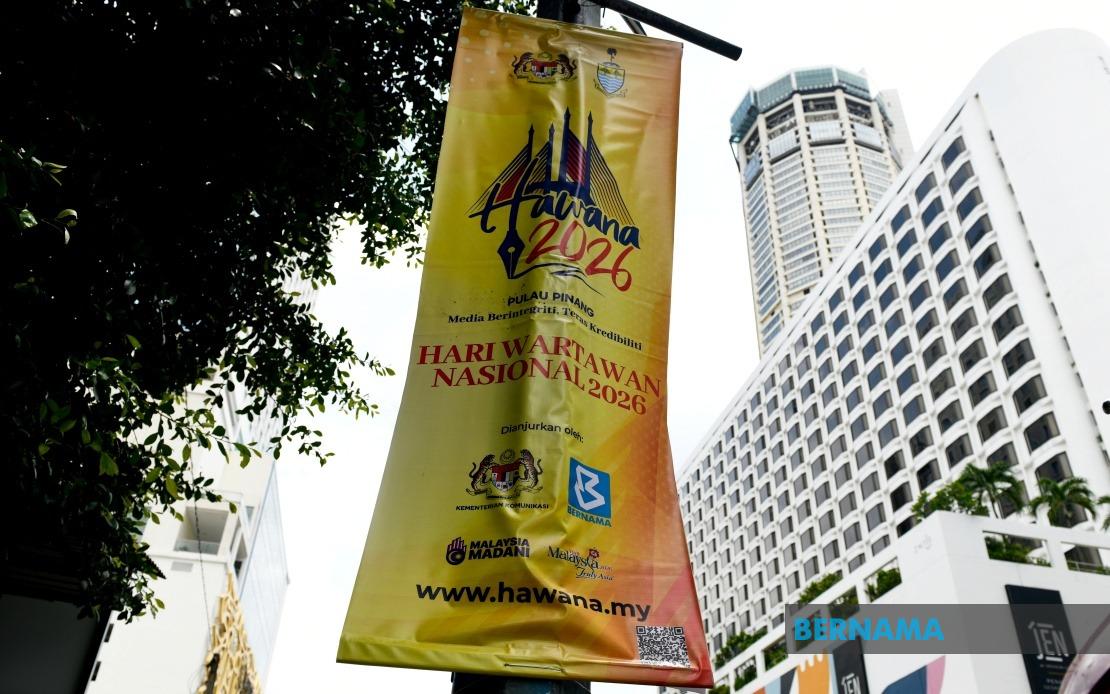
The Penang State Government has thrown its weight behind the upcoming National Journalists' Day (HAWANA) 2026 celebration, with Chief Minister Chow Kon Yeow signalling his confidence in the event's successful execution. In remarks made at a media briefing in George Town on June 18, Chow emphasised the state government's commitment to honouring the vital role played by journalism and media practitioners in Malaysian society, framing the occasion as an opportunity to deepen public appreciation for their professional contributions.
Extensive groundwork has preceded the main event, with Chow disclosing that the state administration has engaged in sustained dialogue with the Communications Ministry over the preceding two to three months. These coordination efforts reflect the complexity of orchestrating a major national event that will draw participants from across Malaysia and beyond. The careful sequencing of preparatory meetings underscores the stakes involved—a high-profile national celebration demands meticulous planning to ensure smooth operations and positive outcomes that reflect well on both Penang and the federal government.
Two significant gatherings bookend the centrepiece HAWANA 2026 Summit. A media dinner honouring Penang Governor Tun Ramli Ngah Talib is scheduled for the day before the main summit, while the summit itself takes place at PICCA Convention Centre @ Butterworth Arena on June 20. The ceremonial opening will be handled by Prime Minister Datuk Seri Anwar Ibrahim, lending considerable governmental weight to proceedings and signalling the administration's regard for the media's democratic role.
The summit is anticipated to convene approximately 1,000 media practitioners from domestic and international sources, transforming Penang into a focal point for the broader regional and national journalism community during the celebration period. This concentration of media professionals creates a rare opportunity for cross-pollination of ideas, networking across outlets and generations, and collective reflection on the profession's evolving challenges and responsibilities in a rapidly changing information landscape.
Underpinning the event is the thematic focus "Media Integrity Strengthens Credibility," a declaration of intent that positions journalism's ethical foundations as central to its societal legitimacy. The Ministry of Communications is spearheading the initiative with Bernama (Malaysian National News Agency) as the implementing partner, leveraging the latter's extensive experience and established relationships within Malaysia's media ecosystem. This institutional arrangement ensures professional execution and grounds the celebration in the practical realities of news gathering and dissemination.
Beyond the formal summit, organisers have engineered a broader cultural activation through the RIUH Pi HAWANA Carnival, a three-day marketplace activation also headquartered at PICCA Convention Centre @ Butterworth Arena. Projections suggest the carnival will draw approximately 30,000 visitors, substantially widening the event's reach beyond the professional journalism cohort to encompass the general public. This expansion transforms HAWANA 2026 from an insular industry gathering into a genuine public celebration of Malaysian media culture.
The carnival's programming reflects deliberate efforts to make journalism and creative expression tangible and interactive for ordinary citizens. Over two dozen locally-based creative product brands will showcase their work, while 20 food and beverage establishments provide sustenance and social anchor points. These commercial components lend the carnival an authentic marketplace atmosphere, moving beyond ceremonial rhetoric to create conditions where public engagement feels organic rather than imposed.
Interactive workshops embedded throughout the carnival programming serve educational functions, offering visitors structured opportunities to explore creative activities and understand creative processes firsthand. This pedagogical dimension acknowledges that media literacy and appreciation for creative industries strengthen when people experience them directly rather than passively consuming outputs. The workshops potentially serve as pipeline-building mechanisms for future journalists and media professionals, introducing younger audiences to possible career pathways.
Entertainment features prominently in the carnival's appeal, with 16 free stage performances scheduled across the three days. The assembled lineup—including Exists, Bunkface, Masdo, Sakura Band, Budak Nakal Hujung Simpang, and Chelsea Ng—represents a cross-generational sweep of Malaysian popular music and entertainment. By incorporating established and emerging artists, organisers ensure demographic breadth, making the carnival feel inclusive rather than oriented toward any single age group or musical taste.
For Penang specifically, hosting HAWANA 2026 presents both ceremonial and economic dimensions. The convergence of national media leaders, visiting journalists from abroad, and thousands of carnival visitors will generate substantial hospitality sector activity, benefiting hotels, restaurants, and transportation services throughout the state during the celebration period. Beyond immediate economic stimulus, successfully executing a nationally significant event enhances Penang's profile as a capable host for major conferences and celebrations, potentially attracting future institutional gatherings.
The event also reflects broader regional dynamics within Malaysian federalism, positioning Penang not merely as a venue but as an active participant in shaping national media culture and professional standards. Chow's explicit state government contribution to the event demonstrates recognition that journalism serves democratic functions transcending partisan politics—a message reinforced through ceremonial participation by constitutional figures and senior elected officials. This framing matters particularly given ongoing global challenges to press freedom and the erosion of institutional trust in many democracies.
The HAWANA 2026 celebration, through its summit format, carnival activation, and thematic emphasis on integrity, ultimately serves as a profession-wide stocktaking and a public affirmation that Malaysian society values the journalistic enterprise. Whether such high-profile celebrations translate into sustained institutional support for journalism and media freedom remains an open question, but the scale and official backing of this event suggest that professional journalism retains symbolic and political importance within Malaysia's governance structures. Penang's role as host transforms the state into a temporary epicentre of this broader national conversation about information, credibility, and the media's democratic responsibilities.