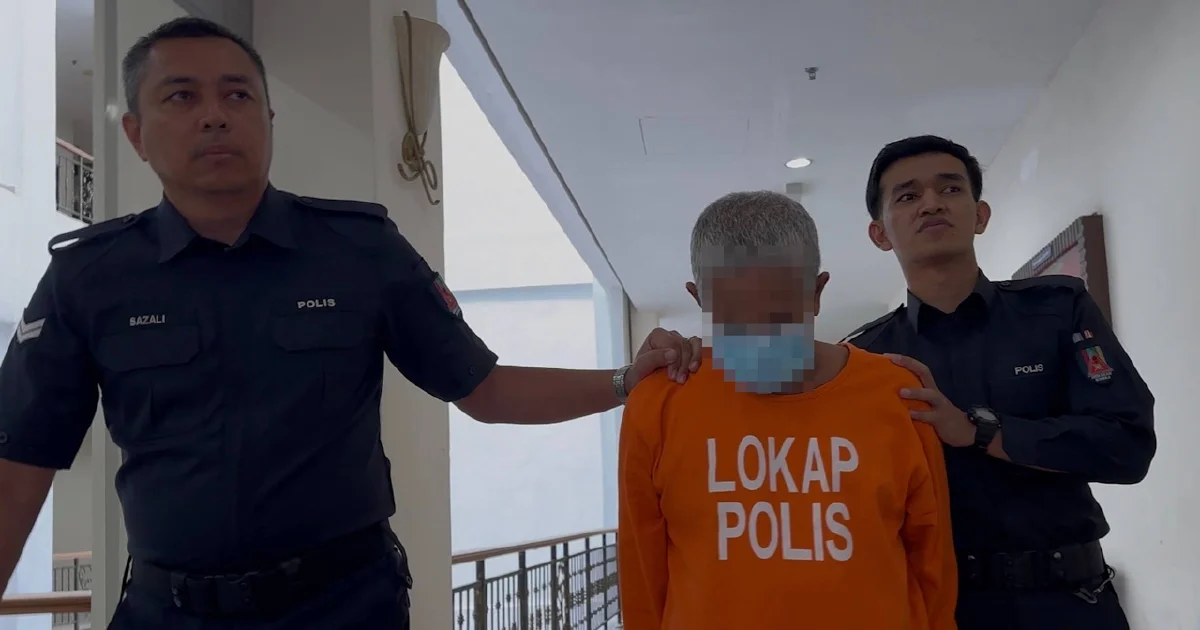
The Sessions Court in Muar has handed down a substantial custodial sentence to a 67-year-old pensioner following his guilty plea to five charges involving the rape and sexual assault of his two young granddaughters. The court imposed a combined prison term of 33 years along with 14 strokes of the cane, reflecting the gravity of the offences and the severe breach of family trust at the heart of the case. The swift resolution through the defendant's guilty plea spared the young victims the ordeal of protracted courtroom proceedings and repeated testimony about their traumatic experiences.
Family-based sexual abuse cases represent among the most disturbing category of criminal conduct in Malaysia, striking at the very foundation of the domestic sphere where children ought to feel safest. When perpetrated by a grandparent figure, such abuse takes on additional dimensions of violation, exploiting not only a position of physical authority but also the deep emotional bonds and implicit trust that characterise intergenerational relationships. The severity of sentence imposed in this Muar case signals judicial determination to impose meaningful consequences for such breaches, sending a clear message about societal intolerance for exploitation of minors within family networks.
The five distinct charges to which the defendant pleaded guilty indicate a pattern of repeated abuse rather than isolated incidents. This multiplicity of offences typically reflects sustained predatory behaviour, where a perpetrator exploits ongoing access and familial proximity to commit successive assaults. The fact that two separate victims were involved suggests a systematic approach to exploitation, compounding the culpability beyond what a single-victim case might warrant. Sentencing frameworks in Malaysian courts account for such aggravating factors when calculating appropriate custodial periods.
At 67 years old, the defendant faces serving the majority of his remaining life in custody. The 33-year sentence, when applied to someone already in the pensioner age bracket, effectively constitutes a sentence approaching life imprisonment. This reality underscores the courts' evaluation of the offender's dangerousness and the irredeemable breach of societal norms represented by his actions. Advanced age does not mitigate culpability in cases involving the most vulnerable members of society, and judicial practice consistently reflects this principle.
The imposition of caning in addition to imprisonment remains a distinctive feature of Malaysia's criminal justice framework. The 14 strokes ordered here, while substantial, falls within the bands available to the court for serious offences. Corporal punishment, supplementing the custodial element, reflects legislative intent to ensure comprehensive penalties for crimes of this severity. The physical punishment component carries symbolic weight beyond its practical application, signifying the criminal justice system's explicit denunciation of the conduct.
The defendant's guilty plea in such cases serves multiple functions within the Malaysian legal system. It demonstrates acceptance of wrongdoing, eliminates the need for witnesses including the victims to give traumatic testimony, and expedites the justice process. For young survivors of intrafamilial sexual abuse, avoiding cross-examination and prolonged court involvement can be psychologically protective, though the broader process of trauma recovery extends far beyond the conclusion of criminal proceedings. The guilty plea effectively removed any possibility of the victims having to recount abuse in open court.
Sexual abuse within families often remains hidden for extended periods before disclosure occurs. The barriers to reporting are particularly pronounced when the perpetrator occupies a position of authority and familial respect. Children may struggle with competing emotions of fear, shame, loyalty to family members, and uncertainty about whether adults will believe their accounts. The emergence of allegations against this 67-year-old suggests that at some point, protective mechanisms—whether through school staff, family members, or other adults—functioned adequately to bring the matter to authorities' attention.
The prevalence of intrafamilial sexual abuse across Malaysian society cuts across socioeconomic and educational boundaries. While police statistics provide aggregate data on sexual crimes, the specific subcategory of grandfather-perpetrated abuse against granddaughters remains insufficiently disaggregated in public discourse, making the true incidence difficult to assess. This particular case from Muar, while now resolved through the courts, represents merely one instance of a phenomenon that social workers and child protection advocates indicate remains substantially underreported.
Beyond the criminal proceedings themselves, the conviction in Muar raises broader questions about community education and preventive frameworks. Schools, religious institutions, and healthcare providers occupy potential positions to identify at-risk children and provide supportive interventions. Training frontline professionals to recognise behavioural indicators of abuse, and establishing clear reporting pathways, remain crucial components of a comprehensive child protection system. The substantial sentence imposed here, while legally appropriate, represents a reactive response to conduct that might ideally be interrupted through earlier protective intervention.
Looking forward, the custodial period ahead offers no opportunity for rehabilitation given the nature of the offending. Instead, the focus shifts toward ensuring institutional safeguarding of the defendant's fellow prisoners and eventual management of his release, should he survive the full 33-year term. More significantly, the Muar case underscores the ongoing imperative for Malaysian society to maintain vigilance in protecting vulnerable family members from exploitation, to lower barriers to reporting abuse, and to ensure that those who prey on children within domestic settings face unambiguous legal consequences.

