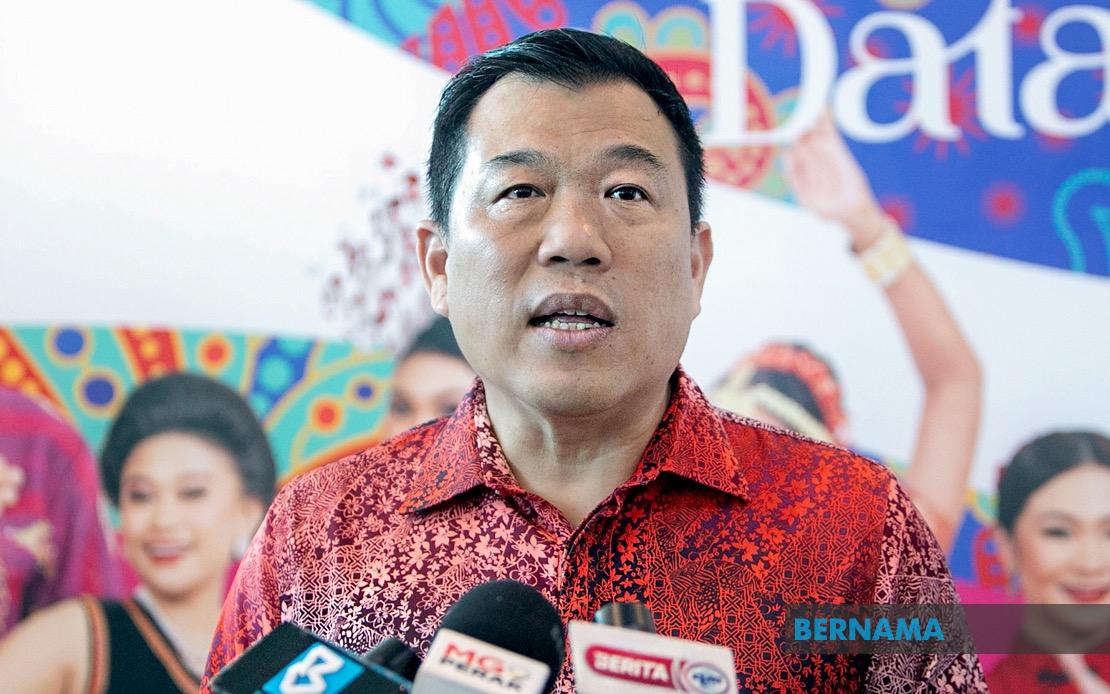
The state of Perak is demonstrating resilience in its tourism economy through stronger domestic visitation patterns, even as international tourist flows face headwinds from reduced aviation capacity and broader industry challenges. Overnight domestic tourist arrivals in the state climbed to 10.4 million in 2025, representing a modest increase from 10.2 million the previous year, according to Loh Sze Yee, chairman of Perak's Tourism, Industry, Investment and Corridor Development Committee. However, this positive trajectory for domestic tourism masks a concerning underlying weakness: international visitor numbers contracted by approximately 1.5 per cent during the same period, signalling that Perak's appeal to overseas travellers is being constrained by factors largely beyond the state's direct control.
The deterioration in international arrivals reflects specific operational disruptions that have reshaped Southeast Asia's tourism landscape. The withdrawal of direct flight services on the Singapore-Ipoh route has emerged as a critical bottleneck, forcing potential visitors from the affluent Singapore market to pursue longer itineraries or forgo Perak altogether. Compounding this logistical challenge is the cascading impact of volatile global oil prices on the aviation sector, which has elevated operational costs for airlines and prompted capacity reductions on less densely trafficked regional routes. For Malaysian tourism operators, these dynamics underscore the vulnerability of regional destinations to supply-side shocks that erode international competitiveness independent of destination appeal or marketing effectiveness.
Within Malaysia's broader domestic tourism hierarchy, Perak occupies a significant but not dominant position. According to data from Malaysia's Chief Statistician Datuk Seri Dr Mohd Uzir Mahidin, Selangor remains the country's tourism powerhouse, drawing 36.4 million domestic visitors in 2025, while Kuala Lumpur followed with 35.1 million arrivals. Perak's 23.6 million domestic visitors positions the state third nationally, reflecting the concentration of tourism demand around Malaysia's economic heartland and capital region. This ranking illustrates an enduring geographic pattern whereby domestic tourists gravitate toward major urban centres and established infrastructure hubs, a trend that has implications for how regional destinations like Perak must strategise to capture a larger share of internal travel flows.
To address these competitive dynamics and elevate Perak's profile within Malaysia's tourism ecosystem, the state has been selected to host the Pantai Timur Fest 2026, a significant platform coordinated by Tourism Malaysia. According to Mohd Amirul Rizal Abdul Rahim, director-general of Tourism Malaysia, Ipoh's selection reflects the city's strategic positioning as one of the country's principal tourist destinations, particularly as a gateway for travellers from the northern, central, and southern regions of Peninsular Malaysia. This designation carries particular strategic weight: it enables Perak to leverage its geographic centrality to serve as a promotional hub for broader East Coast Malaysia tourism experiences, thereby enhancing the visibility of Kelantan, Terengganu, and Pahang among domestic audiences who might otherwise overlook these destinations.
The Pantai Timur Fest 2026 has been structured as a comprehensive industry showcase, bringing together thirty exhibition booths representing a diverse cross-section of tourism operators from the three East Coast states. Travel agencies, hotel chains, theme park operators, independent tourism product owners, and online travel agents have converged to present their offerings to visitors, creating a concentrated marketplace where consumers encounter multiple options and service providers can directly assess market demand and consumer preferences. This model extends beyond transactional exposure; it facilitates networking among industry players, allows smaller tourism enterprises to access distribution channels they might not otherwise reach, and creates opportunities for collaboration that can enhance the regional tourism product.
Beyond the exhibition component, the festival integrates cultural programming designed to strengthen emotional and experiential connections with East Coast destinations. Cultural performances and traditional craft demonstrations provide tangible expressions of regional identity and heritage, offering visitors immersive encounters with local artistic traditions that transcend standard tourism marketing. Heritage food promotions introduce culinary dimensions often overlooked in conventional tourism promotion, while interactive activities deepen engagement by transforming passive consumption into participatory experiences. These elements collectively work to position East Coast tourism as multidimensional and culturally substantive, rather than superficial leisure consumption.
The Pantai Timur Fest 2026 operates within the broader context of the Visit Malaysia 2026 campaign, a national tourism initiative designed to elevate Malaysia's international and domestic tourism performance during a projected banner year. Special offers and discounts on travel packages integrated into the festival create immediate incentives for purchase decisions, translating increased awareness into actual visitor flows. For Perak specifically, the festival represents an opportunity to transition from a transit destination—a place travellers pass through en route to other locations—into a primary destination warranting extended stays and dedicated spending.
The growth in domestic tourism to Perak, while modest in percentage terms, reflects broader patterns of domestic travel resilience within Malaysia. Malaysian families and independent travellers have demonstrated consistent appetite for regional exploration, particularly as international travel considerations—visa requirements, foreign exchange volatility, health protocols—become more complex. This domestic tourism represents a stable revenue foundation for the state's tourism operators and provides a counterbalance to the volatility inherent in international tourism markets. The 2 per cent increase in overnight domestic arrivals, though small, demonstrates that marketing efforts and product development continue to yield results among Malaysia's 35 million-person domestic tourism market.
The disconnect between Perak's domestic tourism growth and declining international arrivals points to a strategic imperative: addressing the aviation connectivity gap requires coordination between state government, Tourism Malaysia, Malaysia Airports, and regional airlines. The loss of the Singapore-Ipoh route represents a failure to maintain air linkages that previously facilitated high-value short-haul tourism. Singapore's 5.6 million population, with high per capita incomes and established patterns of regional travel, represents a strategically significant source market. Restoring or developing alternative air connectivity to regional airports, potentially through partnerships with budget carriers or through enhanced ground transportation options, has become a priority for destinations competing for tourism revenues.
Looking ahead, Perak's tourism trajectory will depend significantly on its ability to leverage domestic tourism strength while simultaneously addressing international market challenges. The state's positioning within Malaysia's tourist geography—equidistant from several major demand-generating centres—provides inherent advantages for capturing expanded shares of domestic travel. The concentration of tourism infrastructure and expertise in Ipoh, combined with proximity to natural attractions and cultural heritage sites, offers foundation for sustained growth. However, without concurrent efforts to restore international connectivity and competitiveness, Perak risks consolidating itself as a primary destination for price-sensitive domestic travellers while losing the higher-spending international visitors who contribute disproportionately to tourism revenues and employment generation.

