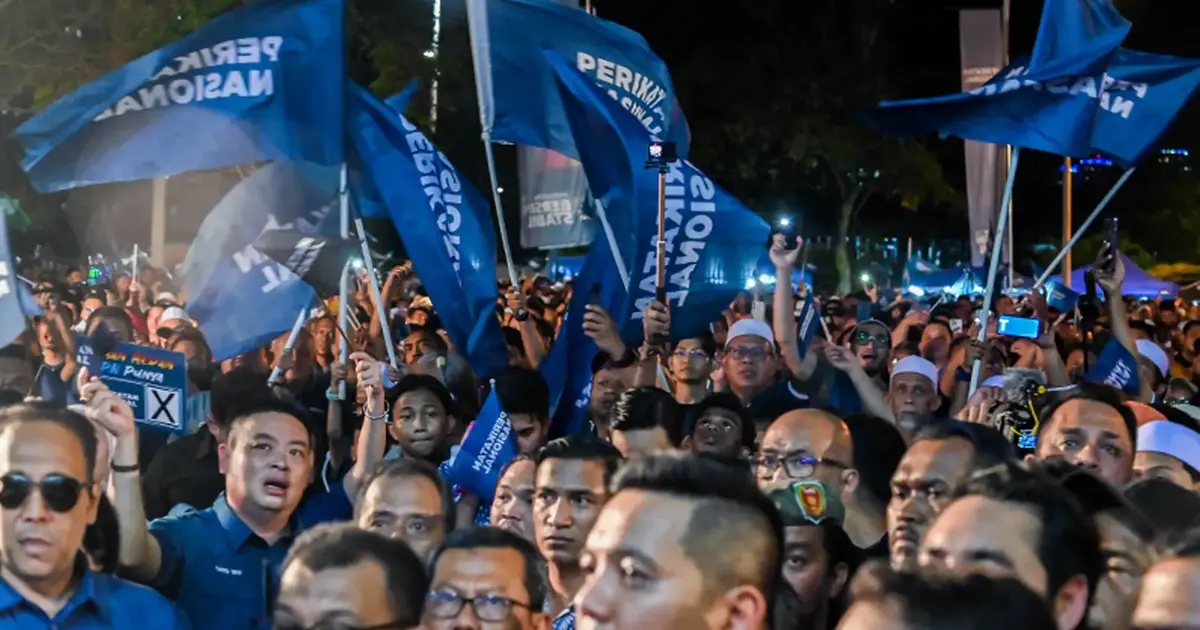
The Perikatan Nasional coalition faces a critical juncture as simmering tensions between two of its largest component parties, PAS and Bersatu, have reportedly entered a more volatile and entrenched phase that threatens the stability of the entire political alliance. According to analysts monitoring developments within the opposition bloc, the relationship between the Islamist party and Muhyiddin Yassin's outfit has deteriorated from occasional friction into what observers characterise as a sustained and strategic confrontation that extends well beyond ceremonial disagreements.
Yusri Ibrahim, chief researcher at the Ilham Centre for Strategic Intelligence, has described the current state of affairs as having transitioned into a "guerrilla war" phase, a characterisation that underscores the intensity and unpredictability of the ongoing dispute. This assessment suggests that rather than resolving disagreements through formal channels or behind-the-scenes negotiations, both parties are increasingly willing to engage in public manoeuvres and asymmetric tactics designed to gain advantage within the coalition structure. The shift towards this more combative posture represents a fundamental change in how the two organisations interact, moving away from the kind of pragmatic cooperation that has historically held Perikatan Nasional together.
The deterioration of PAS-Bersatu relations carries significant implications for Malaysia's broader political landscape, particularly given Perikatan Nasional's status as a major opposition force. When coalition partners begin operating in what amounts to a competitive rather than collaborative framework, the ability of the bloc to mount effective political challenges becomes substantially compromised. This dynamic has already begun manifesting in visible ways across multiple fronts, from parliamentary tactics to grassroots mobilisation efforts, with each party increasingly pursuing strategies that prioritise its own organisational interests over collective advancement.
For Malaysian voters and political observers, this fracturing represents a critical development that reshapes the country's three-bloc political configuration. Previously, the assumption that Perikatan Nasional would serve as a coherent opposition alternative to both the Pakatan Harapan government and Barisan Nasional is now in serious question. The coalition's original positioning as a unified force has been considerably weakened by internal divisions that suggest fundamental disagreements about leadership, direction, and resource allocation that may prove difficult to reconcile.
The root causes of the PAS-Bersatu rift remain multifaceted and deeply embedded in organisational interests. PAS, as a established political force with strong grassroots networks and a defined ideological foundation, operates from a position of relative organisational strength within the coalition. Bersatu, by contrast, is a newer entrant that maintains significant influence through personal networks and electoral dynamics, but lacks the institutional depth and social infrastructure that longer-established parties possess. These structural differences create inherent tensions regarding leadership roles, strategic decision-making authority, and resource distribution within the alliance.
Geographic and demographic factors further complicate the relationship between the two parties. PAS maintains particularly strong support bases in specific regions, whilst Bersatu's political footprint is more dispersed and dependent on particular electoral dynamics. When coalition partners have non-overlapping or even competing geographic strongholds, the incentive to cooperate diminishes considerably, as gains for one party do not necessarily translate into benefits for the other. This territorial dimension of their dispute suggests that resolution may require substantial restructuring of how Perikatan Nasional allocates electoral responsibilities and campaign resources.
The implications for Southeast Asia more broadly warrant consideration, particularly given Malaysia's position as a significant regional actor. Political instability or fragmentation within major coalitions can create vacuum spaces that external actors attempt to exploit, potentially altering regional diplomatic and economic dynamics. Additionally, Malaysian analysts and regional observers often look to the country's political developments as barometers for broader trends affecting democratic institutions and coalition governance across Southeast Asia. The Perikatan Nasional experience may offer cautionary lessons about the sustainability of political alliances built on tactical rather than ideological foundations.
For Bersatu specifically, the escalating conflict with PAS raises fundamental questions about the party's long-term viability as an independent political force. Without a clear ideological distinction or deep institutional roots, Bersatu's political relevance depends substantially on maintaining coalition status and electoral relevance. The deterioration of its relationship with PAS potentially forces Bersatu to reconsider its strategic positioning, whether that involves seeking accommodation with other political forces, attempting reconciliation with former allies, or doubling down on internal strengthening.
PAS, by contrast, operates from somewhat stronger organisational foundations, but also faces risks from prolonged coalition instability. The party's base expects consistent movement towards defined ideological and policy objectives, and extended conflict within Perikatan Nasional may frustrate grassroots supporters who perceive the coalition as diluting PAS's core mission. Such frustration could manifest in electoral volatility or reduced enthusiasm for coalition-based politics among PAS's traditional voting constituencies.
The "guerrilla war" characterisation employed by analysts suggests that both parties have adopted strategies involving calculated moves, strategic communications, and manoeuvring rather than direct confrontation or immediate separation. This phase could persist indefinitely, creating a state of chronic instability that undermines Perikatan Nasional's effectiveness without necessarily triggering rapid coalition dissolution. Such prolonged tension typically exhausts resources, demoralises activists, and creates opportunities for rival political forces to expand their own influence.
Moving forward, observers will monitor whether Perikatan Nasional members can develop mechanisms for managing these disputes, or whether the alliance faces progressive fragmentation. The coalition's capacity to adapt its internal structures and decision-making processes may ultimately determine whether it survives this challenging period or whether Malaysian politics enters a new configuration altogether.