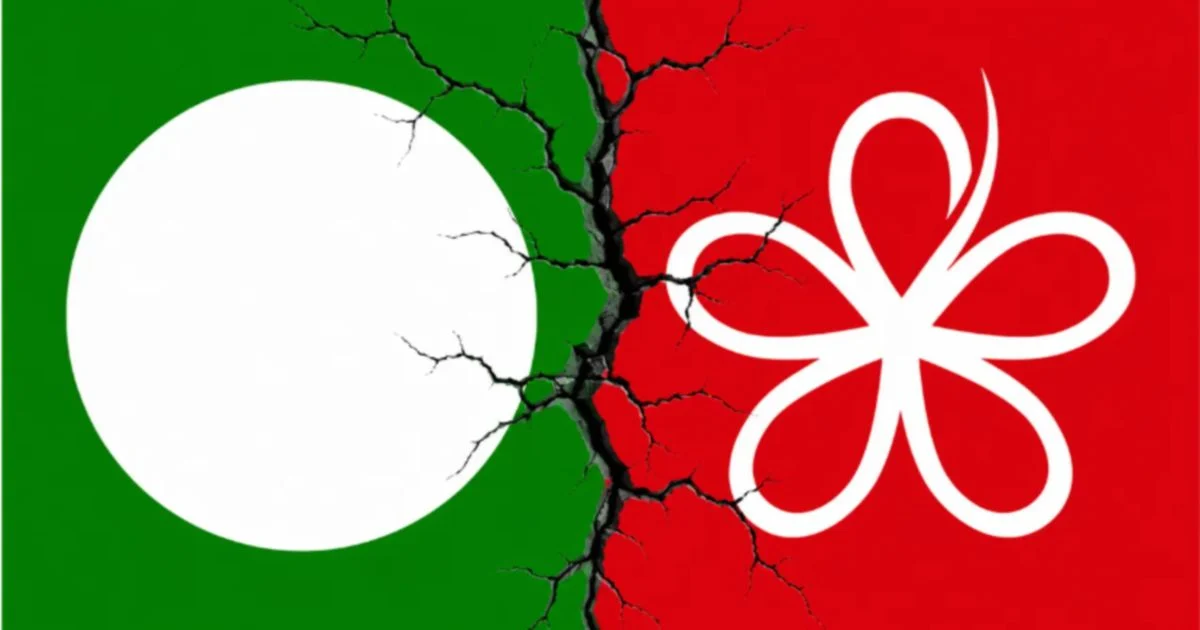
The deepening friction between Pas and Bersatu stands as a critical threat to Perikatan Nasional's electoral viability heading into the 16th General Election, with political observers warning that internal instability within the coalition could prove decisive in determining voting patterns across the country. The two parties, which form the backbone of PN's support base, have been locked in escalating disputes over leadership direction, policy priorities, and seat allocations, undermining the unified front necessary to mount a credible challenge to competing political blocs.
The origins of the current rift trace to fundamental disagreements about PN's strategic positioning and governance philosophy. Bersatu, led by former Prime Minister Mahathir Mohamad and later by other leaders, has emphasised modernisation and appeals to urban voters, whilst Pas maintains a stronger focus on religious and cultural issues that resonate with its core constituency. These competing visions have created friction over candidate selections, campaign messaging, and even parliamentary voting decisions, signalling to observers that the coalition lacks the cohesion required to present a convincing alternative government to Malaysian voters.
For Pas, the tensions expose vulnerabilities in its relationship with a partner that commands considerable bureaucratic machinery and financial resources. The Islamic party's reliance on Bersatu's infrastructure and funding has historically given it disproportionate influence within PN structures, yet recent disputes suggest this balance is unstable. Pas leaders have grown increasingly vocal about perceived slights and marginalisation within coalition decision-making, with rank-and-file members questioning whether alignment with Bersatu serves the party's long-term interests or constrains its independence in championing Islamic governance principles.
Bersatu faces equally significant challenges from the partnership's deterioration. The party's relatively modest electoral base means it requires strong coalition mechanics to retain parliamentary relevance, particularly in contests where Bersatu and Pas directly compete for Malay-Muslim majority seats. Public displays of internal disagreement weaken Bersatu's credibility with pragmatic voters who might otherwise consider it a viable governing alternative, whilst also complicating its efforts to attract moderate urbanites concerned about religious conservatism influencing policy.
Voter sentiment represents the ultimate battlefield where this rift will be decided. Malaysian electorates have demonstrated increasing sophistication in punishing coalitions perceived as unstable or self-serving, as evidenced by the fragmentation visible in previous election cycles. Voters who might have otherwise backed PN candidates face uncertainty about whether their vote contributes to a coherent governing agenda or merely reinforces internal rivalries that will translate into policy paralysis should the coalition secure power. This hesitation particularly affects swing constituencies in urban and semi-urban areas where coalition stability figures prominently in voting calculus.
The timing of these tensions compounds the strategic difficulties facing both parties. With GE16 anticipated within the next election cycle, the coalition lacks sufficient time to rebuild trust or implement structural reforms that might restore confidence among sceptical voters. Early warning signals from party grassroots organisations suggest that activists in both Pas and Bersatu are becoming demoralised, reducing the volunteerism and ground-level mobilisation that historically translate party endorsements into actual votes cast.
Regional implications extend beyond immediate electoral mathematics. Pas and Bersatu represent distinct ideological currents within Malaysian Islam and Malay politics, with Pas rooted in Islamic party traditions stretching back decades whilst Bersatu emerged from more recent political realignments involving former UMNO figures. Their inability to reconcile competing visions raises questions about whether Islamic conservatism and modernising pragmatism can coexist within functional Malaysian political structures, or whether these currents are condemned to perpetual competition.
Comparative regional context suggests that coalition stability during election cycles significantly influences outcomes across Southeast Asian democracies. Thai, Indonesian, and Philippine examples demonstrate how pre-election fractures within ideologically heterogeneous coalitions frequently translate into voter rejection and reduced parliamentary representation for fractious partners. Malaysian voters appear increasingly responsive to similar signals, penalising coalitions that project internal division rather than unified governance readiness.
The consequences extend beyond PN's GE16 performance to shape Malaysia's broader political trajectory for the subsequent term. A weakened PN lacking Pas-Bersatu harmony would likely see consolidated dominance by competing blocs, potentially reducing political pluralism and limiting voter choice to binary contests between oversized coalitions. Conversely, if PN successfully navigates present tensions and presents unified messaging, it could establish itself as a genuine three-bloc system offering Malaysian voters meaningful alternatives.
Party leadership in both organisations confronts immediate pressure to either resolve underlying tensions through compromise and power-sharing arrangements, or alternatively to acknowledge incompatibility and reconfigure their political alignments. The choices made in coming months will substantially determine whether Perikatan Nasional emerges as a consolidated political force capable of challenging incumbent blocs, or fragments into its constituent parts, leaving Malaysian voters with fewer genuinely competitive options when ballots are cast in the sixteenth general election.