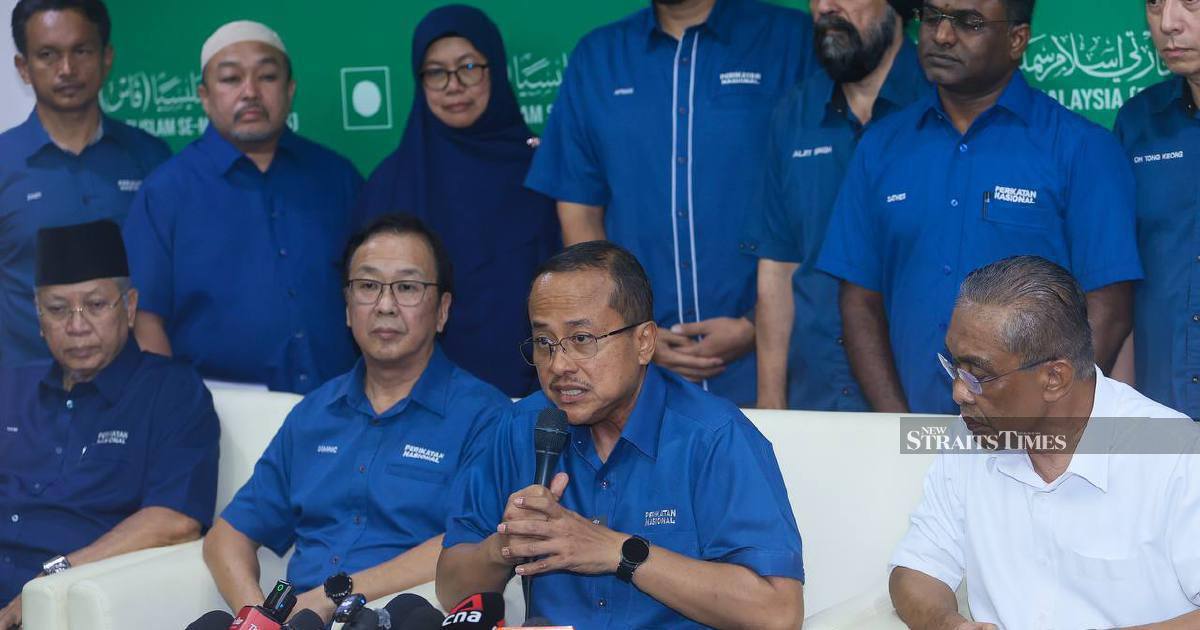
Perikatan Nasional (PN) has expanded its ranks by formally admitting two additional political parties into the coalition, according to an announcement by PN chairman Datuk Seri Dr Ahmad Samsuri Mokhtar following an emergency Supreme Council session held in Kuala Lumpur. The move signals the opposition alliance's continued push to strengthen its parliamentary presence and electoral prospects, even as deeper questions about the coalition's fundamental direction and unified purpose linger unaddressed.
The emergency convening itself underscores the ongoing dynamics within Malaysia's fractious opposition landscape. Perikatan Nasional has positioned itself as an alternative to the incumbent Pakatan Harapan administration, seeking to consolidate anti-government sentiment and present a viable coalition for voters seeking change. The admission of fresh parties reflects a strategy to broaden the coalition's reach across diverse voter constituencies and geographic regions, extending its appeal beyond its existing core membership.
However, the most telling aspect of the evening's proceedings lies in what was deliberately excluded from discussion. The coalition notably sidestepped any substantive conversation regarding Wawasan—understood to mean the coalition's broader strategic vision, long-term policy direction, and shared ideological framework. For a political alliance claiming to represent a coherent alternative government, the absence of consensus or even discussion around such fundamental questions reveals significant underlying tensions.
Equally conspicuous was the omission of any debate concerning the coalition's visual identity and branding apparatus, including its official logo. In modern political competition, symbols carry enormous weight, serving as repositories of public perception and trust. That PN leadership deemed it inadvisable or impractical to engage with these matters suggests internal disagreements too sensitive to navigate in a single session, or perhaps a calculation that avoiding the topic entirely was preferable to exposing fault lines.
The strategic implications for Malaysian politics warrant careful scrutiny. Perikatan Nasional's expansion through party admission can be interpreted as quantitative growth—expanding the number of affiliated organisations and their combined membership rolls. Yet coalition strength ultimately depends on qualitative cohesion: shared principles, agreed-upon policy platforms, and unified messaging to the electorate. The deferral of such conversations suggests that PN may be prioritising headcount over genuine alignment, a gambit that could prove problematic if the coalition faces rigorous public scrutiny during election campaigns.
For Malaysian voters and observers of the political landscape, the question becomes whether Perikatan Nasional can function effectively as a governing alternative without having settled fundamental questions about what it represents beyond opposition to the current administration. Historically, coalitions that expand without establishing clear ideological or policy foundations risk internal paralysis when forced to make concrete governance decisions. The reluctance to discuss Wawasan and branding in a single session hints that deeper conversations may be postponed indefinitely, buried beneath the administrative machinery of expanding membership.
The decision to hold an emergency Supreme Council meeting for party admissions rather than regular scheduled proceedings also signals urgency within PN's strategic calculations. Whether this reflects time-sensitive opportunities to absorb disaffected politicians or parties, or conversely represents an attempt to move forward decisively before internal dissent crystallises, remains unclear. The expedited nature of the proceedings, combined with the avoidance of contentious topics, suggests a leadership mindful of fragility within the coalition's current composition.
Within Southeast Asia's broader democratic context, Malaysia's opposition dynamics matter considerably. The region is watching how PN navigates the challenge of coalition-building in an increasingly multipolar political environment. Other regional opposition movements are grappling with similar questions: how to maintain internal coherence while expanding reach, how to build credible alternatives to incumbent governments, and how to articulate distinctive visions rather than merely embodying anti-incumbency sentiment. Perikatan Nasional's trajectory offers instructive lessons, both positive and cautionary.
The two new parties joining PN will now operate within an alliance whose foundational clarity remains unresolved. Party leaders at the grassroots and middle levels will struggle to explain coalition membership to their supporters and voters without clear articulation of shared purpose. Candidates facing the electorate will find it difficult to articulate what a PN government would deliver differently, beyond general commitments to change and reform that opposition coalitions universally promise.
As Perikatan Nasional charts its course ahead of future electoral contests, the unresolved questions about Wawasan and branding represent intellectual and organisational debts that will eventually demand settlement. Whether the coalition can resolve these fundamental matters while maintaining unity among an increasingly diverse membership remains an open question—one that will likely determine whether PN presents a genuine threat to the ruling coalition's grip on power, or remains a collection of parties united primarily by what they oppose rather than what they stand for.

