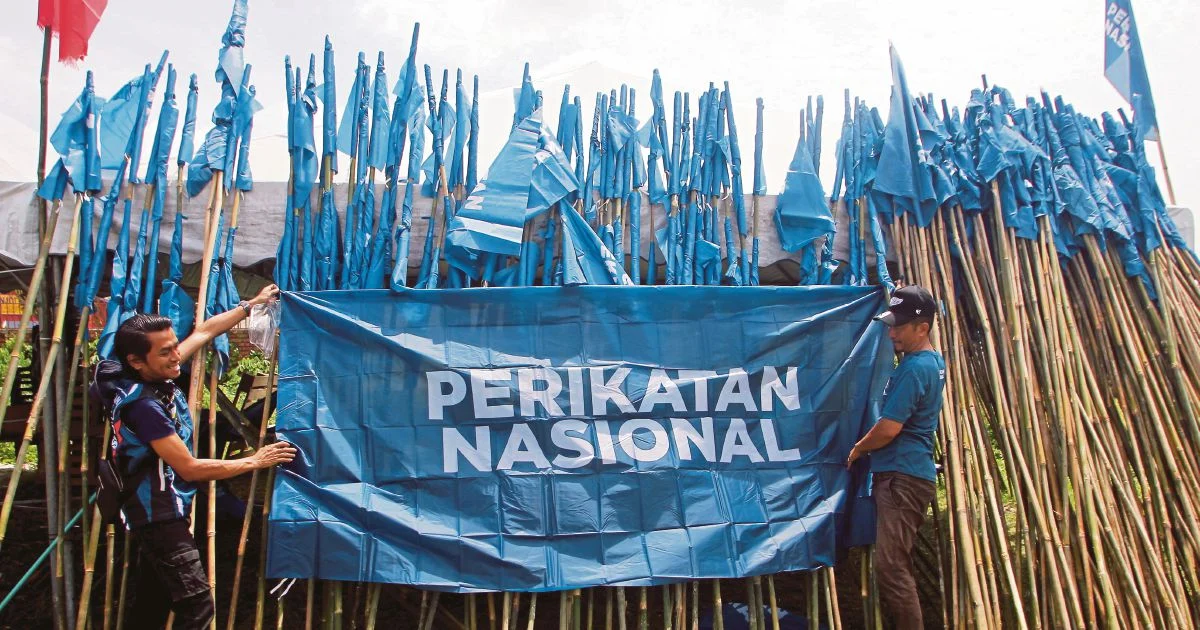
The Perikatan Nasional coalition is set to hold a crucial Supreme Council gathering on June 22, where senior leaders will attempt to iron out festering disagreements that have quietly complicated operations within the opposition alliance. High on the agenda will be the contentious question of who has authority over the coalition's logo—an asset whose symbolic and practical value extends far beyond the merely cosmetic in Malaysia's intensely branded political ecosystem. The meeting also provides a platform to resolve the thorniest issue facing any multiparty alliance: the endorsement and vetting of candidates for forthcoming electoral contests.
Loyal observers of Malaysian politics understand that disputes over coalition symbols are rarely trivial. The logo serves as the unifying banner under which constituent parties campaign, mobilise supporters, and project collective identity to voters. In a system where party symbolism carries legal weight and electoral significance, control over logo usage becomes a matter of genuine leverage and prestige. Within Perikatan Nasional, which comprises entities with distinct organisational structures and political interests, disagreement over logo deployment can quickly mushroom into broader questions about decision-making authority and the relative standing of member parties. The June 22 session will need to clarify precisely which bodies can approve logo usage and under what circumstances, a deceptively simple-sounding task that touches fundamental issues of coalition governance.
The candidate endorsement question cuts even deeper into coalition management. When multiple parties come together under a single electoral banner, the business of selecting which individuals will stand for election becomes extraordinarily complex. Some candidates represent established party politicians with deep roots in their constituencies; others may be recruited as independents or offered positions that bridge different party memberships. Questions naturally arise about how endorsements are granted, what criteria apply, and whether decisions made at coalition level can override the wishes of individual constituent parties. The June 22 meeting must establish principles and procedures that all participants find broadly acceptable, or risk seeing candidate disputes erupt publicly as election day approaches.
These tensions reflect a broader challenge facing Perikatan Nasional as it seeks to maintain cohesion among parties that, while united in opposition to the current government, sometimes harbour competing territorial, ideological, and strategic interests. Multiparty alliances in Malaysia have historically proven fragile when member organisations feel their autonomy is being compromised or their members sidelined in favour of coalition priorities. The fact that the Supreme Council is only now convening to address these matters suggests they have been festering for some time, creating uncertainty that could hamper the coalition's election readiness and dampen campaign effectiveness.
From a broader Southeast Asian perspective, Perikatan Nasional's difficulties underscore a pattern familiar across the region: opposition coalitions often struggle with the mechanics of cooperation, particularly when they unite around negation—being against the government—rather than around a shared positive agenda. In Thailand, Vietnam, and Indonesia, analysts have observed similar tensions within opposition alliances as they attempt to coordinate despite differing party structures and objectives. Malaysia's experience with Perikatan Nasional is therefore instructive for any regional observer studying how democratic coalitions navigate internal discord.
The timing of the June 22 meeting carries its own significance. As elections draw closer, unresolved procedural and organisational matters become progressively more urgent. Campaigns require clarity about who will run where and under what banner; voters need transparency about which coalition is fielding which candidates; and internal stakeholders need confidence that decisions are being made fairly. Allowing these questions to drift into the campaign period itself would project weakness and invite scrutiny about whether Perikatan Nasional can function effectively as a governing coalition, should it succeed at the ballot box.
For Malaysian voters, especially those considering whether to support the coalition, these internal mechanics matter considerably. A coalition that cannot resolve procedural disputes or agree on candidate endorsements before an election may struggle to govern coherently afterwards. The Supreme Council meeting therefore serves as a practical test of whether Perikatan Nasional possesses the institutional maturity and leadership capacity to function as a credible alternative government. It is not enough to attract voters through opposition to current policies; a credible challenge must demonstrate that it can manage complexity and make binding decisions even when member parties disagree.
The resolution of these issues at the June 22 gathering will signal much about the coalition's readiness and internal health. Should the meeting produce clear, agreed-upon frameworks that all parties accept, confidence in Perikatan Nasional's coherence will strengthen, and the coalition can move forward into campaign season with reduced institutional friction. Conversely, if the session ends without resolution or produces agreements that some parties subsequently challenge, the opposition alliance will enter the crucial election period weakened and distracted by internal disputes rather than focused on its electoral message. For Malaysian politics and the broader regional democratic landscape, the outcomes of this meeting merit careful monitoring.

