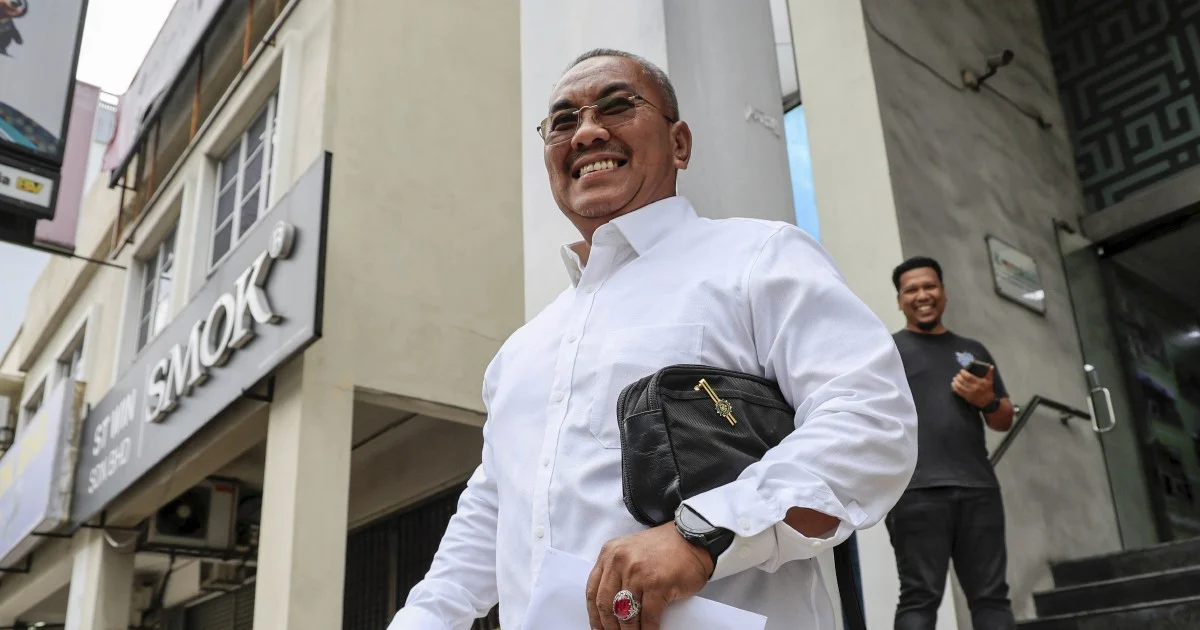
Perikatan Nasional's election director Datuk Seri Sanusi Md Nor has signalled the coalition's readiness for the Johor state election by confirming that protracted seat negotiations among the grouping's member parties have reached completion. The announcement marks a critical juncture in the coalition's pre-election positioning, with all contentious allocations now settled to allow the alliance to present a unified front to voters.
The resolution of 34 overlapping seats—where multiple PN component parties sought to contest the same constituencies—represents the culmination of weeks of behind-the-scenes negotiations. In multi-party coalitions, such overlaps are routine flashpoints where regional strengths, historical performance, and internal party hierarchies collide. The fact that PN managed to clear this hurdle without public acrimony suggests a level of cohesion that could prove advantageous in the campaign phase, particularly if the alliance maintains its unified messaging around key policy positions.
For Malaysian political observers, seat allocation disputes often foreshadow deeper coalition fractures. When component parties cannot agree on candidate nominations, the resulting tensions frequently spill into public discourse, undermining the coalition's broader electoral narrative. PN's success in wrapping up negotiations cleanly indicates that its constituent organisations—likely including PAS, Bersatu, and other Malay-majority or Islamic-focused parties—have accepted a distribution formula that each deems acceptable, at least for purposes of this election cycle.
The timing of Sanusi's announcement carries strategic weight. By confirming seat arrangements early, PN establishes a clear campaign schedule and allows its nominated candidates to begin grassroots mobilisation without uncertainty. Candidates can now launch their campaigns in their respective constituencies without fearing that their nomination might be reversed by ongoing coalition negotiations. This operational clarity is particularly valuable in state elections, where ground-level organising and voter engagement often determine margins of victory.
Johor has historically been a crucial battleground in Malaysian politics. The state's large parliamentary representation and its status as an economic powerhouse make it a priority for all major political groupings. PN's apparent unity in approaching the Johor contest may reflect recognition among coalition partners that victory here carries national implications. A strong performance in the state could reinforce PN's position as a credible alternative government and strengthen its hand in any future negotiations around federal coalitions or cabinet positions.
The coalition structure of Malaysian politics often requires such internal negotiations as a prerequisite to electoral effectiveness. Unlike single-party systems where candidate selection occurs within a hierarchical framework, coalition-based elections demand consensus-building across multiple organisations with distinct constituencies and leadership structures. The successful conclusion of PN's seat discussions suggests that the coalition's leadership—particularly Sanusi in his election director role—has navigated these internal complexities competently.
For voters and observers in other Malaysian states, the PN resolution in Johor may offer lessons about coalition stability and functionality. The ability to present unified candidacies without last-minute defections or public disputes strengthens a coalition's electoral credibility. Conversely, protracted seat negotiations or frequent revisions of nominee lists can damage voter confidence and suggest internal instability. PN's clean completion of the process sends a signal of organisational competence that extends beyond Johor to national perceptions of the coalition.
The specificity of the 34 overlapping seats figure provides a baseline for assessing PN's true strength in the Johor electorate. This number encompasses constituencies where more than one coalition member believed it had a legitimate claim or competitive advantage. How PN's final allocations distribute these seats among its component parties will reveal important information about power dynamics within the coalition—specifically, which parties secured the most competitive seats and which accepted more challenging constituencies. Such distributions often reflect, implicitly or explicitly, each party's bargaining power within the broader coalition structure.
Looking forward, PN faces the practical challenge of translating internal unity into electoral momentum. Seat negotiations represent merely the administrative foundation; the coalition's actual campaign performance will depend on candidate quality, campaign financing, grassroots organisation, and broader voter sentiment regarding state governance and national political direction. The successful resolution of seat disputes removes one potential source of friction but does not guarantee electoral success.
For Southeast Asian observers monitoring Malaysian political developments, PN's Johor positioning is noteworthy. The region's coalition-based systems often struggle with internal discipline and consensus-building. PN's apparent ability to manage these complexities suggests a level of institutional maturity that affects not only state-level politics but regional perceptions of Malaysian political stability. As major economic relationships increasingly hinge on political predictability, a coalition's demonstrated capacity for internal organisation carries implications beyond electoral mathematics.
The Johor contest will also test whether PN's coalition unity extends beyond seat negotiations into actual campaign execution. Component parties will need to coordinate messaging, avoid public criticism of each other's candidates, and present consistent policy positions on state issues. Early indications of such coordination—or its absence—will emerge once campaigning formally commences. The next phase will reveal whether Sanusi's announcement of concluded negotiations translates into sustained coalition cohesion throughout the election period.

