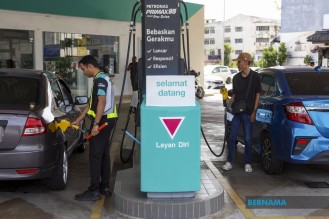
Malaysia's fuel supply chain remains on stable footing through at least August, according to assurances delivered by Datuk Seri Azalina Othman Said, Minister in the Prime Minister's Department (Law and Institutional Reform), during discussions of the National Economic Action Council this week. The statement provides a measure of relief following earlier concerns that Petronas Dagangan Bhd, the publicly listed fuel distribution arm of national oil giant Petronas, could face supply constraints as soon as the end of June. The timeline extension suggests that domestic energy security planning has moved beyond the immediate crisis phase into a more sustainable operational posture.
Petrolas Dagangan's role in the Malaysian energy landscape is substantial and undeniable. The subsidiary operates approximately half of all petrol stations servicing the nation's fuel requirements, making it the single largest distributor in the domestic market. This concentration of supply through one major player underscores both the efficiency of Petronas's integrated operations and the strategic importance of maintaining uninterrupted service across the network. Any significant disruption at the distribution level would ripple through the economy, affecting transport, manufacturing, and essential services that depend on reliable fuel access.
The geopolitical context driving these supply concerns stems from ongoing instability in West Asia, a region that has historically supplied substantial portions of global crude oil. The conflict has created uncertainty in international energy markets, prompting governments across the region to reassess their sourcing strategies and build contingency supplies. Malaysia, as an energy-producing nation in its own right, carries less vulnerability than pure import-dependent economies, yet remains exposed to price volatility and supply chain disruptions that affect global petroleum markets.
To manage these evolving risks, the Malaysian government has established a dedicated Crisis Management Task Force, known as PPPK, operating under the MTEN framework. This institutional response reflects a recognition that energy security transcends normal market operations and requires coordinated government oversight. The task force's mandate encompasses continuous monitoring of fuel inventories, petroleum supplies, and broader energy sector conditions. This real-time surveillance capability allows officials to identify emerging bottlenecks or constraints before they mature into acute shortages, enabling proactive rather than reactive policy responses.
Beyond simple supply monitoring, the task force maintains responsibility for multiple objectives that collectively constitute energy security. Price stability represents a critical concern, particularly given the inflationary pressures affecting Malaysian households and businesses. The government remains committed to preventing crude-to-pump price transmission that would impose sudden cost burdens on consumers and industries dependent on transport fuel. Simultaneously, the task force addresses supply-side criminal activities including fuel smuggling and black-market distribution networks that drain legitimate supplies and undermine state revenues.
To reduce dependence on West Asian crude sources and mitigate geopolitical supply risks, Malaysia is actively diversifying its crude procurement portfolio. West African petroleum producers and suppliers across the Americas represent alternative sources capable of serving Malaysian refinery requirements. These alternative suppliers offer geographic and political diversification that reduces vulnerability to any single regional disruption. However, sourcing decisions cannot be made purely on political grounds; crude quality must match local refinery specifications, and commercial terms including pricing and transport logistics must prove economically viable compared to established West Asian relationships.
The extension of supply assurance timelines from June through August represents tangible progress, yet officials and market observers acknowledge that the planning horizon remains compressed by historical standards. Normally, petroleum companies forecast with visibility extending many months or quarters ahead, allowing for measured capital investment and operational refinement. The current three-month visibility window reflects genuine uncertainty about how global energy dynamics will evolve as West Asian tensions persist or potentially escalate. This compressed timeframe creates pressure to execute contingency plans efficiently while simultaneously securing longer-term arrangements that would push supply security further into the future.
For Malaysian businesses and consumers, these developments carry immediate and longer-term implications. In the near term, the government's assurances and active management suggest that fuel shortages will remain unlikely, and price disruptions, while possible, are being actively managed through policy intervention. Longer-term, however, the energy security challenges highlighted by this episode underscore Malaysia's exposure to global petroleum market volatility despite domestic production capacity. Industries dependent on transport or energy inputs might rationally consider operational adjustments or hedging strategies to manage fuel cost exposure.
The political dimension of energy security also warrants attention. Parliamentary questions raised by opposition lawmakers regarding supply guarantees reflect legitimate public concern about government preparedness. The establishment of the Crisis Management Task Force and Minister Azalina's detailed public responses represent efforts to demonstrate competent crisis management and forward planning. Such political accountability mechanisms, while sometimes contentious, ultimately strengthen governance by requiring officials to articulate clear strategies and commitments regarding essential services.
Moving forward, Malaysian policymakers face persistent challenges in balancing short-term supply security with longer-term energy transition objectives. While current attention focuses on crude petroleum sourcing and refinery operations, Malaysia's energy future encompasses renewable energy development, fuel efficiency standards, and potentially alternative fuels that would reduce petroleum dependence entirely. The current supply pressure, rather than representing a crisis, might serve as impetus for accelerating these strategic transitions that would fundamentally reduce vulnerability to international petroleum market shocks.
The assurances provided regarding fuel supplies through August should be understood as a baseline position rather than a definitive endpoint. Government and Petronas officials will continue assessing global conditions, securing additional supplies where possible, and refining contingency plans. Malaysian consumers and businesses can proceed with reasonable confidence in near-term supply stability, while understanding that energy security remains an ongoing concern requiring sustained institutional attention and strategic planning at the highest levels of government.

