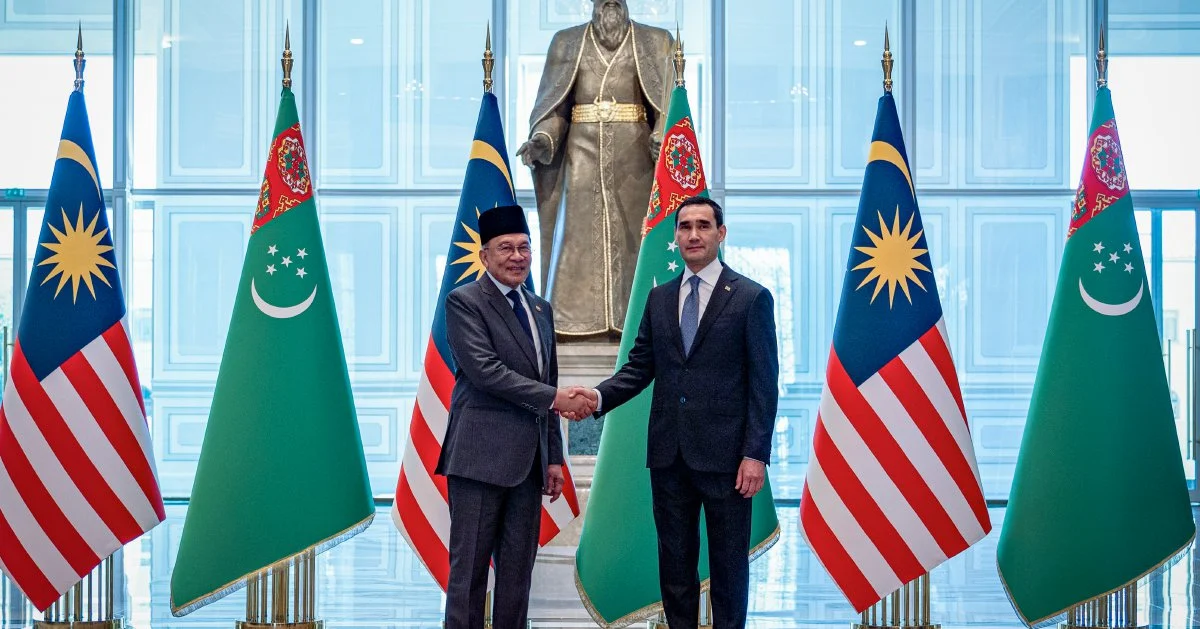
Malaysia's national petroleum corporation Petronas is positioning itself as a crucial bridge between Kuala Lumpur and Ashgabat, leveraging its existing operational platform in Turkmenistan to catalyse a broader renaissance in bilateral relations. The timing of this commercial deepening coincides with Prime Minister Datuk Seri Anwar Ibrahim's official journey to the mineral-rich Central Asian state, signalling that energy cooperation now anchors the two countries' strategic partnership at the highest levels of government and corporate leadership.
Turkmenistan, sitting atop vast natural gas reserves and positioned along critical energy corridors connecting Asia, Europe and the Middle East, represents a natural arena for Malaysian involvement. Petronas's established operational base in the country provides the national company with institutional knowledge, regulatory relationships and technical expertise that competitors cannot easily replicate. This existing foundation transforms Petronas from a mere investor into a trusted partner capable of executing complex energy projects in a region where relationship continuity and proven track records carry significant weight.
The convergence of Prime Minister Anwar's diplomatic mission with Petronas's commercial expansion reflects a deliberate Malaysian strategy to deepen economic ties across the Central Asian region. By elevating energy partnerships to the prime ministerial level, Malaysia signals long-term commitment rather than transactional engagement, a messaging approach that resonates particularly in Turkmenistan's resource-dependent economy where foreign partnerships must demonstrate stability and sustained interest. The timing also positions Malaysia to benefit from Turkmenistan's growing openness to diversifying its international economic partnerships beyond traditional arrangements.
For Malaysian businesses beyond Petronas, this renewed diplomatic framework creates secondary opportunities. Service providers, engineering firms and trading companies specializing in energy sector support can leverage the improved bilateral atmosphere and expanded Petronas operations to establish footholds in Turkmenistan. The spillover effects of Petronas's presence extend across multiple industries, potentially opening procurement opportunities and technology transfer arrangements that benefit Malaysia's broader economic interests in Central Asia.
The geopolitical context amplifies the significance of Malaysia's Turkmenistan engagement. Central Asia remains a region where multiple powers—China, Russia, Iran and Western nations—compete for influence and resources. Malaysia's historically balanced foreign policy and non-aligned positioning make the country an attractive diplomatic and commercial partner for Central Asian states seeking alternatives to more coercive relationships. Petronas's investment therefore carries implicit diplomatic weight, demonstrating Malaysian willingness to invest in regions beyond Southeast Asia's traditional sphere while maintaining equidistant relationships with global powers.
Turkmenistan's energy sector offers particular attractions for Malaysian expansion. The country possesses proven natural gas reserves among the world's largest, yet faces technical and financial constraints in maximizing extraction and export capabilities. Petronas brings technical expertise in deepwater and complex offshore operations, skills highly relevant to Turkmen hydrocarbon development in the Caspian Sea. Knowledge transfer through joint ventures and operational partnerships could unlock reserves that currently generate insufficient revenue for Turkmenistan's development priorities.
Regional energy dynamics further contextualize this partnership's importance. Southeast Asia's surging demand for liquefied natural gas to fuel economic growth creates natural demand pulls that can anchor long-term supply contracts. Malaysian investors and energy firms capable of navigating Central Asian supply chains and establishing reliable procurement relationships gain competitive advantage in securing stable feedstock for domestic markets and international LNG operations. Petronas's Turkmenistan operations position Malaysia along global energy supply networks increasingly important for regional economic security.
The commercial relationship also addresses Turkmenistan's persistent challenge of finding reliable international partners willing to invest in long-term infrastructure without imposing political conditions. Malaysia's emphasis on pragmatic economic engagement, combined with institutional frameworks emphasizing non-interference in sovereign affairs, appeals to Turkmenistan's governance model. This alignment of interests creates durable foundations for partnerships that can weather geopolitical volatility affecting other foreign investors with more politically-charged presences.
Prime Minister Anwar's visit underscores Malaysia's strategic recognition that economic diversification beyond traditional Southeast Asian focus areas requires deeper engagement with emerging markets and resource-rich regions. Turkmenistan represents both a supplier of critical resources and a potential market for Malaysian goods and services. The diplomatic acknowledgement at the highest level signals investors that Malaysia-Turkmenistan business development enjoys governmental support and protection, reducing perceived risks for Malaysian companies contemplating Central Asian ventures.
For Petronas specifically, expanded Turkmenistan operations support the corporation's global portfolio diversification strategy. As Malaysia's primary international energy investor, Petronas must constantly seek new projects and reserves to maintain shareholder returns and competitive position among global energy majors. Turkmenistan's substantial but underdeveloped resources offer growth opportunities aligned with Petronas's technical capabilities, while the freshly elevated diplomatic relationship provides political cover for long-term investment commitments.
The broader implications suggest Malaysia intends positioning itself as a reliable economic partner for Central Asian states, an approach complementing China's Belt and Road Initiative and Russia's traditional regional influence. Rather than competing for dominance, Malaysia offers pragmatic commercial partnerships emphasizing mutual benefit and technology sharing, an approach particularly attractive to resource-rich nations seeking development alternatives and reducing economic concentration risk among traditional partners.

