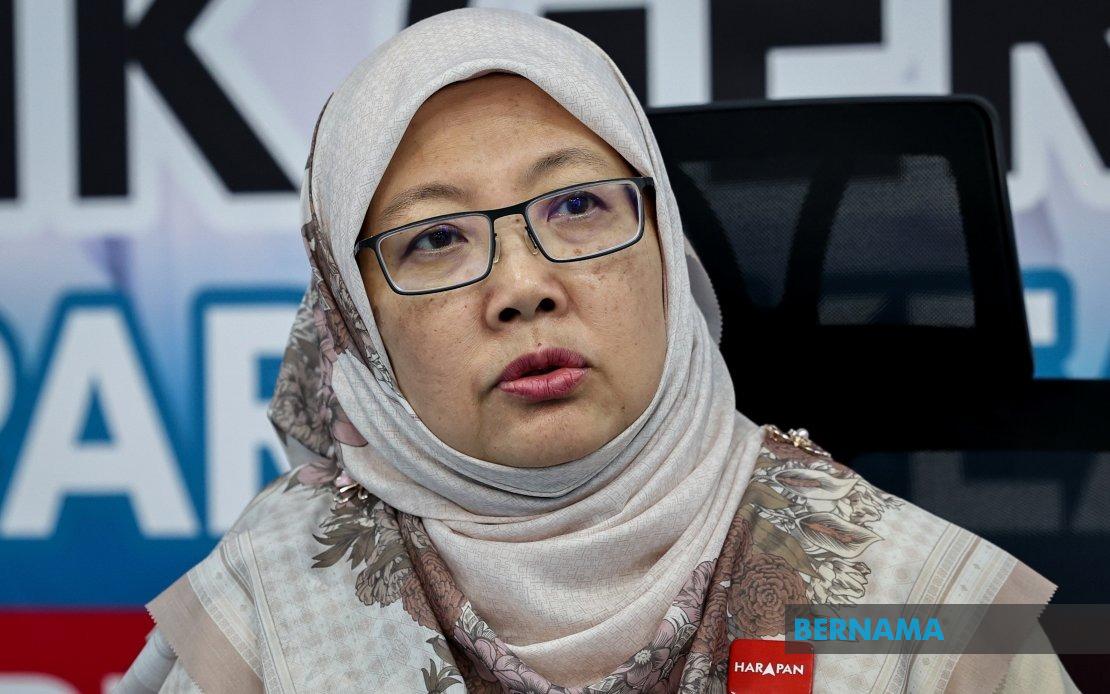
Pakatan Harapan has reaffirmed its commitment to respecting the constitutional authority vested in the Sultan of Johor to appoint the Menteri Besar, should voters grant the coalition the mandate to govern the state. The declaration came as the opposition coalition seeks to navigate mounting pressure from the ruling Barisan Nasional to clarify its leadership intentions ahead of upcoming state elections.
Johor PKR chairman Datuk Seri Dr Zaliha Mustafa articulated the coalition's position in a carefully worded statement, emphasising that PH would strictly observe the Johor State Constitution 1895 and the traditional prerogatives it enshrines. This constitutional framework has long safeguarded the paramount ruler's role in state governance, a principle that carries particular resonance in Johor given the sultanate's historical and political significance within the Malaysian federation.
The timing of PH's statement reflects an attempt to sidestep a political challenge posed by current Menteri Besar Datuk Onn Hafiz Ghazi, who had publicly called on the opposition to name its preferred candidate for the top state position. Such demands carry implicit political weight, as they seek to lock opposition leaders into commitments before the electoral verdict, potentially creating internal friction should popular opinion diverge from pre-announced choices.
Instead of engaging directly with this challenge, PH's leadership has chosen to reframe the election discourse around substantive governance. Dr Zaliha stressed that the coalition's campaign messaging would prioritise concrete policy proposals rather than personalised leadership contests. This strategy attempts to shift voter attention toward deliverables: improved living standards, job creation, and economic development initiatives that transcend individual personalities or positions.
The coalition's approach reflects a broader recognition that Malaysian voters increasingly evaluate political parties on their capacity to address bread-and-butter concerns. Economic stagnation, cost-of-living pressures, and employment challenges have dominated public discourse across the nation, and Johor—as the country's second-largest economy and a manufacturing and logistics hub—faces particular pressure to demonstrate governance competence. PH's emphasis on policy substance over personality arguably aligns with these underlying voter priorities.
Dr Zaliha's statement that PH possesses numerous qualified and experienced leaders capable of administering the state serves a dual purpose. It projects confidence in the coalition's bench strength while simultaneously avoiding the creation of a single face or name that rivals could attack or that might alienate competing factions within PH itself. The multiethnic, multi-party coalition structure inherent to PH means that identifying any single candidate risks disappointing supporters from other constituent parties who might have harboured leadership ambitions.
The distinction PH has drawn between respecting the Sultan's constitutional powers and declining to pre-announce a Menteri Besar candidate reflects sophisticated understanding of Malaysian constitutional monarchy. While the Sultan possesses formal appointment authority, that authority is conventionally exercised with deference to the elected government's majority composition. By pledging to uphold this constitutional arrangement, PH simultaneously avoids the appearance of challenging royal prerogative—a sensitive matter in any state, but especially in Johor with its strong monarchical traditions—while leaving space for its own decision-making processes to unfold post-election.
The emphasis on engagement with Johor's population and attention to their grievances represents PH's attempt to centre the campaign narrative on voter concerns rather than elite-level political positioning. This grassroots focus could prove strategically advantageous if economic conditions remain challenging or if voters perceive the incumbent administration as having neglected peripheral communities or specific constituencies' particular needs. Manufacturing towns, port cities, and agricultural regions within Johor all present distinct economic opportunities and vulnerabilities that PH may exploit through targeted policy messaging.
For Malaysian political observers, PH's stance illustrates how opposition coalitions navigate the tension between maintaining internal cohesion and responding to external political pressure. Naming a Menteri Besar candidate prematurely could exacerbate existing strains within PH between component parties, each of which might advance claims or harbour resentments about power-sharing arrangements. The strategic ambiguity PH has chosen—commitments to respecting constitutional processes combined with refusals to pre-commit on specific personalities—attempts to preserve flexibility while projecting principled restraint.
This approach also carries implications for broader regional politics. As Malaysian states increasingly experience competitive electoral contests between established coalitions, patterns of campaign strategy and constitutional interpretation established in Johor may influence approaches elsewhere. The tension between opposition demands for transparency about leadership intentions and opposition desires to preserve internal flexibility likely will recur across multiple state contests, making Johor's handling of these dynamics potentially instructive for other jurisdictions.
The underlying constitutional question that PH's statement implicitly addresses—whether elected governments should formally determine Menteri Besar appointments or whether such decisions should remain with the Sultan—remains somewhat contested within Malaysian constitutional practice, though convention generally recognises the Sultan's formal authority. PH's explicit commitment to this framework may serve to reassure both constitutional monarchists and fence-sitting voters who harbour concerns about potential challenges to established institutions.

