The Philippine Department of Justice has launched a formal investigation into potential criminal charges against government officials connected to a shooting incident at the Senate on May 13 and the subsequent escape of Senator Ronald dela Rosa from protective custody in the early hours of May 14. Justice Secretary Fredderick Vida confirmed that prosecutors are actively examining the circumstances surrounding both events and exploring whether they are linked, marking a significant development in what has become a high-profile security and governance crisis in Manila.
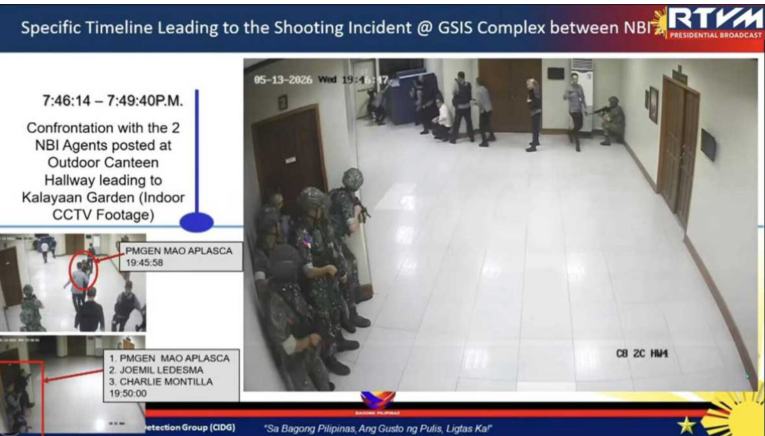
The investigation has already gathered substantial evidence from multiple sources. Vida disclosed that a prosecutorial panel has obtained statements from members of the National Bureau of Investigation, interviewed journalists who were present, and reviewed CCTV footage from the Senate premises. This material indicates that sniper fire originated from the fifth floor of the Senate building, targeting what investigators have identified as an NBI vehicle parked at the adjoining GSIS premises. The nature of the shooting—apparently a deliberate attack using sniper fire rather than random gunfire—suggests premeditation and raises serious questions about who may have ordered or authorized such an action.
While Vida stopped short of naming specific individuals under investigation, he made clear that preliminary findings point toward the involvement of public officials in various capacities. His remark that "many of the personalities involved are public officials" indicates that the investigation extends beyond a simple security breach or lone actor scenario. This suggests coordination or complicity at institutional levels, potentially implicating decision-makers within government agencies or the Senate itself. For Malaysian observers, the parallel to how institutional dysfunction can create security vulnerabilities is particularly relevant given regional concerns about governance and institutional integrity.
The escape of Dela Rosa from protective custody on May 14 adds another dimension to the inquiry. A sitting senator managing to evade security personnel raises fundamental questions about how protective custody was arranged, who authorized the arrangements, and whether protocols were deliberately compromised. The close timing between the shooting and his escape—occurring within hours—has led investigators to explore whether the two incidents were coordinated or whether one precipitated the other. These details suggest the investigation may uncover systemic failures in security procedures or possibly deliberate facilitating of Dela Rosa's departure.
Vida's statement that the investigation remains "active and ongoing" indicates that authorities have not yet reached firm conclusions or made arrests. This measured approach, while potentially frustrating to those seeking immediate answers, reflects procedural standards requiring thorough evidence examination before formal charges. The Justice Secretary emphasized that no specific individuals have been formally identified as suspects at this stage, suggesting the net of inquiry remains relatively wide as investigators pursue different leads.
The Justice Secretary's cautious language also served to reassure the public about investigative integrity. His assurance that the department will proceed "professionally, objectively, and without fear or favor" is a notable statement given the political sensitivities involved. A sitting senator's involvement in or connection to such incidents automatically creates pressure for either aggressive prosecution or protective discretion. Vida's emphasis that "no individual is above the law" counters potential perceptions of elite impunity, while his caveat that "no person should be judged before the evidence has been fully examined" guards against premature conclusions or politically motivated charges.
For the Southeast Asian region, this incident underscores vulnerabilities in institutional security and governance systems. The ability of a senator to escape protective custody, combined with sniper fire from within a government building, demonstrates how even senior institutions can become sites of serious security breach. Malaysia and other regional nations facing similar challenges in governance and security will likely monitor the Philippine investigation's findings and how authorities address systemic weaknesses it may reveal.
The involvement of the National Bureau of Investigation as both a victim (the attacked vehicle) and an investigative agency creates an interesting institutional dynamic. The NBI's dual role as both investigating body and potential subject of investigation requires careful management to ensure credibility and avoid conflicts of interest. How the DOJ navigates this complexity will significantly influence public confidence in the inquiry's legitimacy.
The shooting incident itself—targeting an identified NBI vehicle—suggests knowledge of the agency's operations and movements. This points toward an insider or someone with access to operational intelligence. Combined with the apparent ease of Dela Rosa's escape, the emerging picture suggests possible collusion or systematic compromise within security apparatus, rather than isolated individual failures. Such institutional vulnerability represents a concerning precedent for governance in the Philippines and the wider region.
As the investigation progresses, attention will focus on the DOJ's willingness to follow evidence wherever it leads, particularly if it implicates senior officials or powerful political figures. The case will test Philippine institutions' capacity for accountability and may influence regional perceptions of governance quality and rule of law implementation in Southeast Asia.