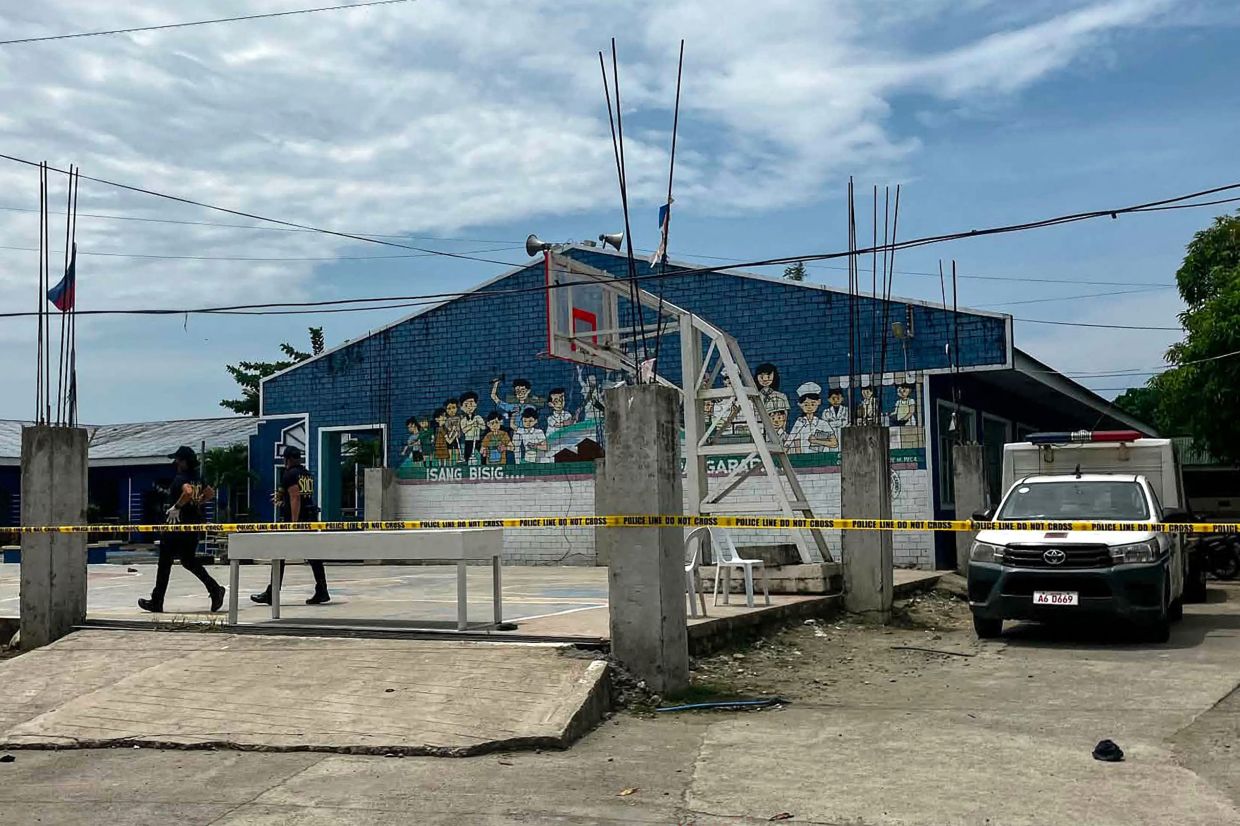
Shock reverberated across the Philippines following a mid-morning shooting at San Jose National High School in Tacloban City on Monday that claimed three lives and left seven others injured. Two teenage students, aged 14 and 15, were detained by authorities immediately after the attack, which occurred at the government-run institution serving over 1,500 pupils. Regional police chief Brig. Gen. Jason Capoy confirmed that both perpetrators and victims were enrolled at the same school, marking a rare and deeply troubling incident of violence within an educational setting in the Southeast Asian nation.
During preliminary police questioning, the young suspects indicated that they had experienced bullying at school, though investigators have not disclosed further specifics regarding their grievances or the sequence of events leading to the outbreak of violence. Neither teenager possessed a prior criminal history, a detail that has heightened public concern about the unpredictability of such incidents. The weaponry used in the assault traced back to concerning security lapses: one suspect obtained a 9 mm pistol from a relative employed as a police officer, who now faces investigation for her role in the firearms breach, while the second suspect wielded a calibre 38 revolver. The ease with which these weapons reached the school campus underscored fundamental vulnerabilities in institutional safety protocols.
Capoy revealed that inadequate perimeter security directly facilitated the attack. With only a solitary security guard monitoring multiple entry and exit points, the suspects encountered minimal obstruction in smuggling firearms into the compound. During the assault itself, the perpetrators moved systematically through the campus, entering two separate classroom spaces. After unleashing gunfire in the first room, students fled in panic, prompting the attackers to pursue certain victims into an adjoining classroom where additional shots were discharged. Police forensics teams recovered approximately 40 spent shell casings scattered throughout the attack scene, providing investigators with forensic evidence for their ongoing inquiry.
The victims bore a demographic pattern that alarmed educators and parents alike: most of the deceased and injured were female students, raising questions about whether gender played any role in the assailants' targeting. Harrowing mobile phone recordings captured by witnesses documented the horror unfolding within the school building. Video footage showed students huddled beneath classroom desks, their voices trembling with fear as gunshots echoed through corridors. Some children could be heard calling desperately for their mothers whilst sheltering in place. Additional recordings revealed panicked students pouring out of the campus gates, many clinging to one another for comfort and reassurance as they evacuated the compound.
The arrest narrative also illustrated the response challenges facing law enforcement. One suspect remained at the school when police arrived and was apprehended there without incident. His accomplice, however, managed to escape the campus and sought refuge in a residential property located nearby. Officers successfully located and detained the fugitive after local residents notified authorities of suspicious activity, demonstrating the importance of community vigilance in such emergencies. Both teenagers are now in police custody awaiting further legal proceedings, though their minor status complicates prosecution under Philippine law.
President Ferdinand Marcos Jr. responded swiftly to the incident by directing a comprehensive investigation into circumstances surrounding the shooting. Through Communications Undersecretary Claire Castro, the presidential office announced that Marcos had instructed law enforcement agencies nationwide to strengthen security measures across schools, government offices, and populated public spaces. Castro characterised the president as deeply troubled by the violence, emphasizing that the emotional devastation would resonate particularly acutely among bereaved families and the broader school community. The presidential intervention signals recognition that this incident demands systemic responses extending beyond the immediate investigation.
The legal framework governing juvenile offenders in the Philippines introduces significant complications in this case. A statute enacted in 2006 establishes 15 years as the minimum age threshold for criminal culpability, meaning the 14-year-old suspect may escape formal criminal prosecution depending on whether authorities determine the individual possessed sufficient understanding of the criminal act and its consequences. Both suspects are slated for transfer to government welfare services following completion of police investigations, placing them within the juvenile justice system rather than the adult criminal apparatus. This jurisdictional reality has sparked discussion about how the nation addresses accountability when minors commit grave offences.
While firearms-related crime remains endemic throughout the Philippines, with unlicensed weapons circulation contributing substantially to the country's violent crime statistics, incidents of coordinated school shootings remain comparatively uncommon. This rarity makes Monday's Tacloban attack particularly alarming for educational institutions and parents across the archipelago. The 2022 shooting at a university in the Manila metropolitan region, which resulted in four deaths including a former town mayor, represented the most recent comparable incident, suggesting that such attacks, though rare, appear to be recurring phenomena requiring serious policy attention.
The security failures exposed by this incident have prompted urgent reassessment of protective measures in Philippine schools. The single-guard model proving wholly inadequate to manage sprawling campuses with numerous access points has become indefensible in light of Monday's violence. Educational administrators and government officials now confront mounting pressure to implement comprehensive security upgrades, enhanced screening protocols at entrances, and improved mental health support systems capable of identifying and assisting troubled students before crisis escalates into tragedy. The broader question confronting Philippine society involves determining whether enhanced physical security alone suffices, or whether addressing underlying bullying, social isolation, and youth mental health represents an equally vital component of preventing future incidents.
The tragedy has also intensified scrutiny on firearms regulation and accountability measures, particularly regarding police personnel and their family members. That a law enforcement officer's weapon reached the hands of a minor through a family member represents an obvious breach of responsible gun stewardship. Authorities have signaled their intention to investigate the officer thoroughly, suggesting potential disciplinary and possibly criminal consequences. This dimension of the incident may catalyze broader discussions about gun ownership requirements and security obligations among law enforcement families across the country.

