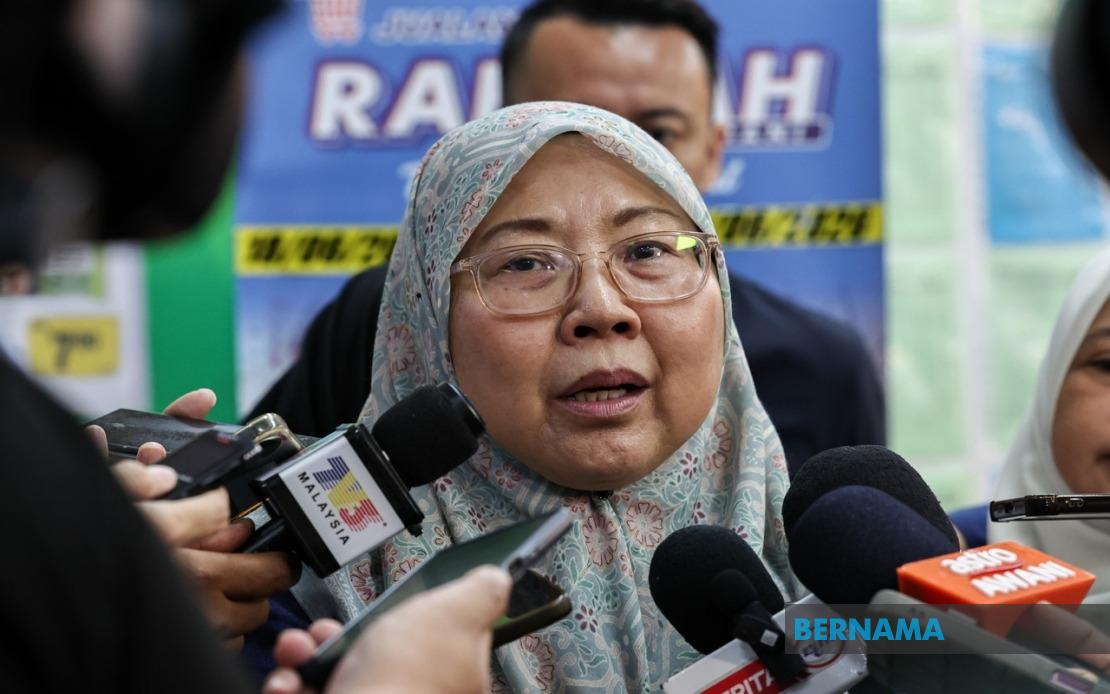
The People's Justice Party (PKR) has locked in its candidate selections for the upcoming Johor and Negeri Sembilan state elections, with party secretary-general Datuk Dr Fuziah Salleh confirming that the vetting process is now 99 per cent complete. The formal unveiling of the party's full slate is imminent, scheduled for announcement within the coming days. This disclosure came during remarks made to media representatives at the Rahmah Sales Programme venue in Econsave Taman Daya, Johor Bahru, on June 19.
PKR intends to contest 20 seats across Johor's expanded state assembly and 16 seats in Negeri Sembilan's lower house. The party's candidate composition will reflect what the leadership describes as a measured equilibrium between seasoned politicians and emerging talent, with particular emphasis on broadening representation among women and younger politicians. However, Fuziah refrained from disclosing the precise proportion of newcomers in the candidate pool, preferring to reserve that detail for the official launch event.
The Johor state election cycle proceeds on a tight schedule. The Election Commission has designated June 27 as nomination day, with the actual voting scheduled for July 11. This timeline follows the dissolution of the Johor State Legislative Assembly on June 1. The chamber encompasses 56 seats in total, and prior to dissolution the political composition reflected Barisan Nasional's commanding majority of 40 seats, with Pakatan Harapan holding 12 positions, Perikatan Nasional controlling three, and MUDA retaining one seat.
Negeri Sembilan's electoral process operates on a separate but overlapping calendar. Voters there will cast ballots on August 1, with nomination activities concentrated on July 18, followed by early voting opportunities on July 28. The Negeri Sembilan State Legislative Assembly comprises 36 seats distributed among parties that, before the assembly's dissolution on June 5, saw Pakatan Harapan commanding 17 positions, Barisan Nasional occupying 14 seats, and Perikatan Nasional controlling five representatives.
A significant complication has emerged regarding PKR's ambitions in Johor, specifically over the Puteri Wangsa constituency. Johor Amanah, PKR's component partner within the Pakatan Harapan coalition, has lodged a competing claim to the seat. Amanah's deputy chairman Dr Zuhan Zain had previously objected to the seat allocation, asserting that it should remain with Amanah rather than revert to PKR as the latter contends. PKR's position rests on the argument that Puteri Wangsa was merely loaned to the Malaysian Democratic Alliance Party (MUDA) during the 2022 state election cycle and therefore rightfully belongs to PKR.
Fuziah acknowledged the dispute but deferred resolution to the upper echelon of Pakatan Harapan's leadership structure. She described the Amanah claim as a position statement rather than a resolved matter, emphasizing that the coalition's top brass would arbitrate between the competing interests. This deferral reflects the delicate balancing act required within multi-party coalitions, where seat allocations and territorial disputes carry significant implications for intra-coalition harmony and electoral strategy.
Separately, PKR finds itself managing an internal disciplinary matter involving Subang Member of Parliament Wong Chen. The lawmaker challenged the party to initiate expulsion proceedings against him following a preliminary disciplinary investigation. Fuziah disclosed that the Wong Chen case has been transferred to PKR's Disciplinary Board for determination and potential further action. The precise nature of the investigation and the grounds for Wong Chen's confrontational posture remain unclear from available statements, though the matter evidently touches on sufficiently serious concerns to warrant formal party machinery engagement.
The twin election contests in Johor and Negeri Sembilan assume considerable importance within Malaysia's broader political landscape. Johor, historically a Barisan Nasional stronghold, has witnessed intensifying competition in recent electoral cycles. The state election will test whether Pakatan Harapan can expand its presence from the 12 seats it currently holds, or whether Barisan Nasional's traditional dominance will reassert itself. The outcome will influence perceptions of coalition strength heading into potential federal-level political shifts.
Negeri Sembilan presents a more competitive terrain. The previous composition saw Pakatan Harapan holding a marginal lead over Barisan Nasional by three seats, while Perikatan Nasional maintained a meaningful presence. The August 1 election could substantially reshape the state's political direction. Perikatan Nasional's performance in both states will bear watching, as it continues to position itself as an alternative to both the federal ruling coalition and the opposition bloc.
PKR's emphasis on balanced representation speaks to evolving expectations regarding political inclusion. The inclusion of women and younger candidates reflects broader demographic and generational shifts within the electorate, particularly in urban centres where voter preferences have trended toward inclusive leadership teams. How substantially the party follows through on these stated principles through its final candidate announcements will provide insight into whether the rhetoric translates to material change in political recruitment.
The finalisation of candidate lists represents a critical juncture in election preparation. These selections will substantially determine the competitive dynamics in individual constituencies and aggregate outcomes across both states. The days remaining before the official announcement will witness intensifying scrutiny of candidate profiles, track records, and perceived electability within specific constituencies.

