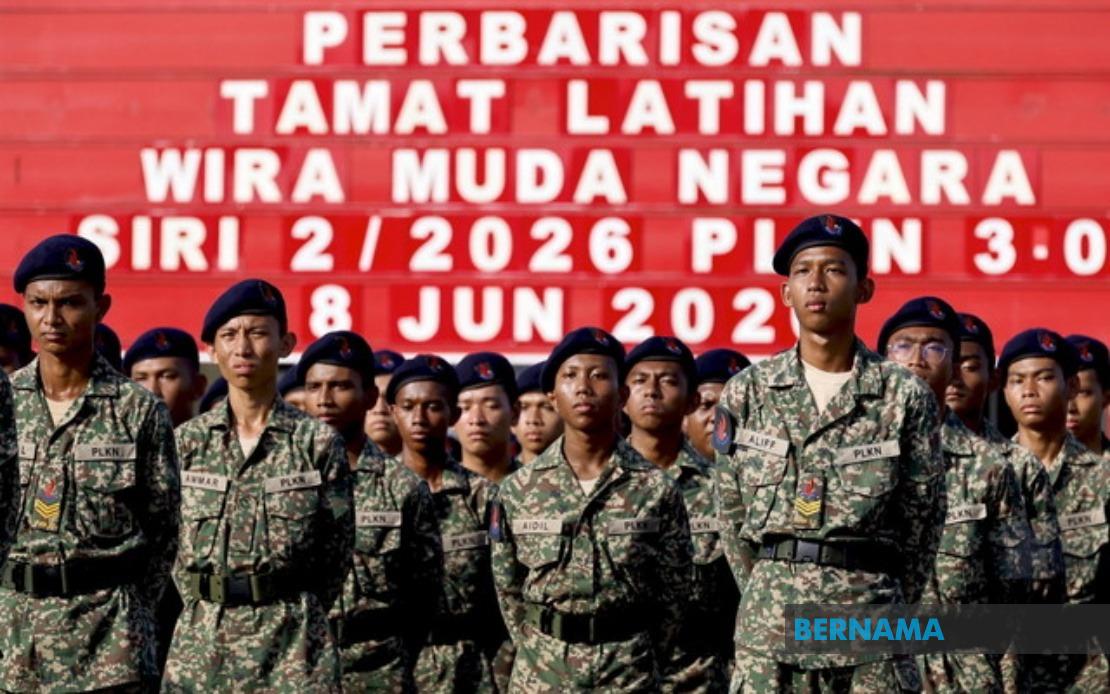
Malaysia's redesigned National Service Training Programme, known as PLKN 3.0, has cleared all its critical performance benchmarks, according to findings presented in Parliament today. Deputy Defence Minister Adly Zahari told the Dewan Rakyat that comprehensive impact studies conducted in collaboration with Universiti Malaysia Sabah and the National Defence University of Malaysia have documented measurable improvements across six foundational elements aimed at developing well-rounded citizens. The results represent a significant validation of the ministry's revised approach to building human capital through structured national service.
The programme's success is measured against rigorous standards, with each training cohort required to achieve a minimum 80 per cent score in patriotism, national unity, discipline and personal transformation, mental resilience and preparedness, military knowledge, and volunteerism. These metrics were established as essential components of the revised curriculum following feedback from previous iterations of the national service scheme. Assessment methodology involved rigorous before-and-after surveys of participants, providing empirical evidence rather than anecdotal observations of the training's impact on youth development.
Military knowledge emerged as the area of most dramatic improvement, surging from 56 per cent proficiency at the start of training to 84 per cent upon completion—a 28 percentage point gain that underscores the effectiveness of the revised curriculum's technical and operational components. This substantial increase suggests that the training modules have been refined to deliver clearer instruction and better knowledge retention. Similarly, volunteerism rose from 75 per cent to 83 per cent, reflecting enhanced emphasis on civic engagement and community service values within the programme framework.
Patriotism levels climbed from 82 per cent baseline to 88.98 per cent, while unity—a critical objective given Malaysia's multicultural composition—improved by nine percentage points. Perhaps most notably, discipline and self-transformation metrics jumped from 77.36 per cent to 92.6 per cent, indicating that the intensive training regimen effectively cultivates personal behavioural change and adherence to structured environments. Mental resilience, another key focus area, increased from 71 per cent to 83 per cent, suggesting participants develop greater psychological robustness and stress management capacity through the programme's experiential components.
Although PLKN 3.0 operates as a character development initiative rather than a direct job placement scheme, the Defence Ministry has negotiated valuable employment advantages for graduates. Five major public sector appointing authorities have agreed to grant additional merit points to eligible PLKN 3.0 participants during recruitment and interview processes, effectively providing qualified trainees with competitive advantages in civil service hiring. This arrangement addresses longstanding criticism that national service schemes should deliver tangible post-participation benefits and enhances the programme's appeal to youth and their families.
The initiative explicitly targets inclusive participation across socioeconomic divides. Deputy Minister Adly confirmed that PLKN 3.0 was deliberately designed to accommodate young people from all backgrounds, with particular attention to B40 and rural youth populations often underrepresented in national programmes. Integration of Technical and Vocational Education and Training elements into core modules helps ensure relevance for participants pursuing non-academic career pathways, reflecting Malaysia's broader skills-based development agenda and addressing labour market demands across diverse sectors.
Participation figures demonstrate solid momentum in the early rollout phase. To date, 3,404 trainees have completed PLKN 3.0 training, comprising 1,202 from the initial year and 2,202 in the second series conducted in 2024. The Defence Ministry targets recruiting 4,200 trainees by year-end, utilising its three established camps that have demonstrated capacity for scaled operations. Anticipating sustained demand, the ministry is establishing nine additional training facilities expected to expand annual capacity to 9,200 participants by 2025, signalling confidence in the programme's trajectory and commitment to making it accessible across the country.
The expansion strategy carries particular significance for Malaysian youth policy development. Successfully ramping up from roughly 3,400 current participants to over 9,000 annually requires substantial infrastructure investment, instructor training, and logistical coordination. The pace of camp establishment and recruitment scaling will indicate whether the Defence Ministry can maintain quality standards during rapid expansion, a common challenge in human development initiatives. Success would position PLKN 3.0 as a scalable national institution capable of reaching diverse youth cohorts systematically.
Adly also acknowledged significant barriers to full participation that the ministry continues monitoring. Health concerns and ongoing educational commitments represent primary reasons cited by selected individuals who subsequently fail to enrol in scheduled training programmes. These systemic challenges—balancing national service with academic calendars, accommodating legitimate medical constraints, and enabling completion of higher education—reflect tensions inherent in any mandatory youth programme. The ministry's explicit recognition of these factors suggests responsiveness to legitimate participation obstacles rather than attributing non-attendance to apathy or resistance.
The positive impact findings align with broader Southeast Asian trends of renewed government investment in youth civic engagement and national cohesion initiatives. Several regional neighbours have similarly revamped national service schemes, recognising their potential as mechanisms for building social capital, bridging communal divides, and instilling shared identity among diverse youth populations. Malaysia's documented success with PLKN 3.0 metrics may inform policy discussions across the region and demonstrate measurable returns on structured youth development investment.
For Malaysian stakeholders, the programme's validated success addresses previous controversies surrounding earlier national service iterations. The rigorous assessment methodology—involving independent academic institutions and standardised before-and-after measurement—lends credibility to claims of effectiveness and distinguishes PLKN 3.0 from earlier versions sometimes criticised as poorly evaluated. This evidence-based approach strengthens the ministry's case for continued expansion and potentially higher government budget allocation toward youth development through the programme.
Looking forward, the sustainability of PLKN 3.0's demonstrated benefits depends on maintaining instructional consistency as capacity expands, ensuring nine new camps maintain quality standards achieved at existing facilities, and managing the inevitable diversity of youth cohorts as participation broadens geographically and across socioeconomic strata. The programme's trajectory from initial rollout through planned nine-fold capacity expansion will test whether documented human capital improvements persist at scale. Success would validate Malaysia's model for youth development, while implementation challenges during expansion could similarly provide instructive lessons.

