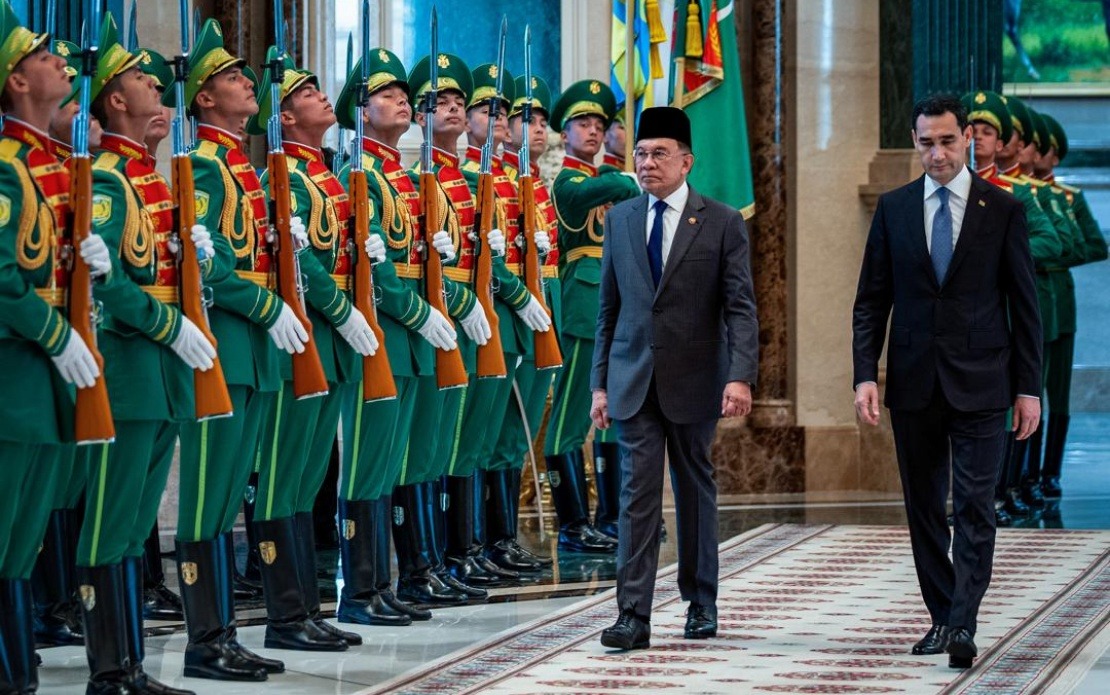
Prime Minister Datuk Seri Anwar Ibrahim has arrived in Turkmenistan for a landmark two-day state visit, becoming the first such trip to the Central Asian nation since he took office as Malaysia's 10th Prime Minister in November 2022. The visit represents a significant step in expanding Malaysia's diplomatic footprint in a region traditionally less frequented by Southeast Asian leaders, though home to vast energy resources and geopolitical significance.
At the Turkmenistan Presidential Palace in Ashgabat, Anwar was greeted with full ceremonial honours befitting a visiting head of government. The official welcome protocol included President Serdar Berdimuhamedov's personal reception and a guard of honour, with both the Malaysian and Turkmenistan national anthems played in acknowledgement of the historic moment. Such formal ceremonies underscore the importance both nations are attaching to strengthening bilateral relations and positioning themselves as strategic partners in an increasingly competitive global landscape.
The Malaysian delegation's introduction to Turkmenistan's Cabinet ministers and senior officials signalled the breadth of engagement planned during the two-day state visit. Such introductory protocols, while procedurally standard, reflect the comprehensive nature of the discussions anticipated. Both prime ministerial offices have allocated time and resources for high-level engagement, suggesting substantive matters will be addressed beyond ceremonial pleasantries.
Following the initial formalities, Anwar and President Berdimuhamedov transitioned into private bilateral discussions before expanding to a broader meeting format involving both delegations. The dual-track approach—beginning with intimate one-on-one talks before widening to include cabinet representatives—typically indicates the two leaders intended to establish personal rapport and identify shared priorities before diving into specific sectoral cooperation frameworks. Such discussions traditionally cover diplomatic, economic, defence, and cultural dimensions of bilateral engagement.
For Malaysia, engagement with Turkmenistan carries particular relevance given the nation's substantial natural gas reserves and strategic location along historical trade corridors connecting Asia and Europe. Turkmenistan ranks among the world's leading gas producers, and establishing closer ties could potentially benefit Malaysian energy security considerations, particularly as the nation navigates its energy transition and seeks diversified supplier relationships beyond traditional Middle Eastern sources.
From Turkmenistan's perspective, closer relations with Malaysia offer access to Southeast Asia's economic dynamism and stability. The Central Asian nation has historically maintained a policy of positive neutrality in international affairs, and expanding ties with diverse partners like Malaysia reinforces this balanced approach. Additionally, Malaysia's experience in managing a multicultural, multi-religious society may offer valuable insights for a nation that hosts various ethnic groups and religious communities.
The bilateral framework that Anwar and Berdimuhamedov are expected to develop during their meetings could encompass multiple sectors. Trade and investment opportunities likely feature prominently, with both nations potentially exploring joint ventures in energy, technology transfer, and infrastructure development. Educational and cultural exchanges represent another avenue where cooperation could deepen, fostering people-to-people connections that underpin long-term diplomatic relationships.
The timing of this visit aligns with Malaysia's broader foreign policy orientation toward expanding engagement across the Muslim world and beyond. Turkmenistan, though secular in governance and officially neutral, has significant Muslim populations and represents a bridge between Central Asia, the Middle East, and Asia-Pacific regions. Anwar's visits to such strategically positioned nations demonstrate Malaysia's intent to position itself not merely as a Southeast Asian player but as an active participant in broader continental and global affairs.
Central Asia has increasingly featured in regional calculations as powers like China expand infrastructure investments through initiatives such as the Belt and Road programme. For Malaysia to maintain diplomatic relevance and secure its economic interests in emerging markets, engagement with countries like Turkmenistan becomes strategically prudent. The visit sends a signal that Malaysia takes Central Asian relationships seriously and views them as integral to its long-term foreign policy architecture.
The invitation extended by President Berdimuhamedov to Anwar demonstrates Turkmenistan's receptivity to strengthening ties with Malaysia. Such invitations are carefully calculated diplomatic moves, and Turkmenistan's willingness to host a Malaysian prime minister reflects perceived mutual benefit. The Central Asian nation, while resource-rich, remains somewhat isolated from mainstream international engagement, making efforts to diversify its diplomatic partnerships particularly important for its national interests.
As discussions unfold during the two-day visit, observers will watch for announcements regarding trade agreements, cultural cooperation programmes, or joint initiatives in areas such as education and scientific research. Any outcomes from these conversations could serve as building blocks for a more robust Malaysia-Turkmenistan relationship, potentially creating models for engagement that benefit both nations' respective development objectives and regional aspirations.
The broader implications of Anwar's Central Asian sojourn extend beyond bilateral dynamics. It demonstrates Malaysia's commitment to multi-vector foreign policy that refuses to be confined to traditional regional relationships. By investing diplomatic capital in relationships with geographically distant but strategically important nations, Malaysia reinforces its position as a serious international actor capable of navigating complex geopolitical landscapes and securing national interests across multiple spheres of influence.

