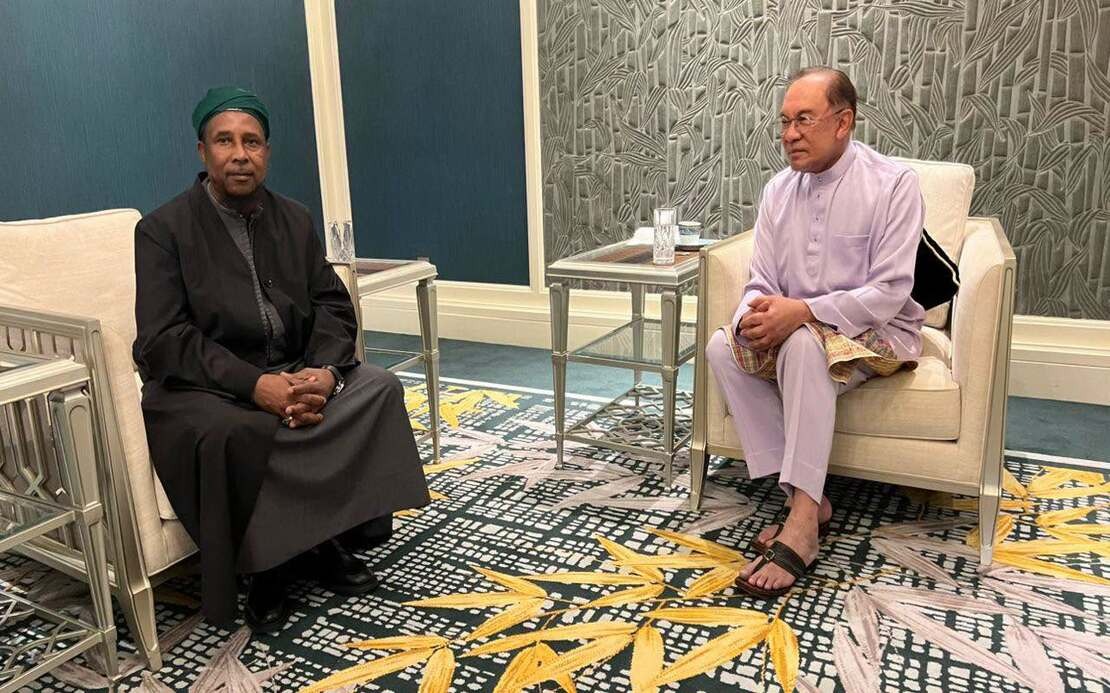
Prime Minister Datuk Seri Anwar Ibrahim hosted a farewell meeting with Gambian scholar Sheikh Muhammad Haydara Al-Jilani on June 26, concluding the visiting cleric's month-long engagement across Malaysia. The encounter, facilitated through the Prime Minister's social media platform, marked the culmination of an extensive religious and educational tour that had taken the scholar to various locations throughout the country. This departure comes at a significant moment in the Islamic calendar, with the meeting coinciding with the Day of Ashura, creating what observers described as a particularly spiritually meaningful occasion for such an exchange.
Sheikh Muhammad Haydara Al-Jilani's presence in Malaysia formed part of a coordinated dakwah initiative—a religious outreach and missionary effort—that encompassed multiple gatherings focused on Islamic knowledge transmission and communal spiritual practices known as dhikr. These sessions, held across selected venues nationwide, were designed to facilitate theological dialogue and deepen understanding of Islamic teachings among Malaysian audiences. The scholar's tour represents the kind of trans-regional Islamic engagement that has become increasingly common in Southeast Asia, reflecting the region's role as an important hub for Islamic learning and religious exchange.
The Prime Minister used the occasion to seek blessings not merely for personal purposes but explicitly for the collective welfare of the Malaysian population. In his public remarks, Anwar emphasised his request that Sheikh Muhammad Haydara Al-Jilani offer special prayers for national prosperity, domestic tranquility, and the country's continued spiritual well-being under divine protection and mercy. This framing demonstrates how contemporary Malaysian political leadership integrates religious observance with national governance discourse, positioning Islamic practice as foundational to state stability and popular welfare.
The timing of the farewell visit during the Day of Ashura—commemorated on the 10th day of Muharram in the Islamic calendar—carries particular significance for Muslim communities. This day holds profound spiritual meaning across Islam, though its observance varies among different Muslim traditions. By scheduling the meeting on this blessed Friday, as Anwar termed it, the Prime Minister aligned the diplomatic farewell with a moment of heightened religious consciousness and communal reflection. This deliberate temporal choice underscores how religious calendars continue to structure political and diplomatic activities in Malaysia.
Gambia's position in West African Islamic scholarship, while distinct from Southeast Asian traditions, has historically contributed valuable perspectives to global Islamic discourse. Sheikh Muhammad Haydara Al-Jilani's journey to Malaysia exemplifies the broader pattern of Islamic knowledge circulation across continents, connecting scholars, students, and communities in an international network of faith-based learning. For Malaysia, hosting such visiting scholars reinforces the nation's self-perception as a significant destination for Islamic education and interfaith engagement within the Muslim world.
The dakwah programmes conducted throughout the scholar's Malaysian tour served multiple audiences and objectives. Beyond the purely spiritual dimension of dhikr gatherings—communal remembrance practices rooted in Islamic devotional tradition—these initiatives provided platforms for theological instruction and religious inquiry. The national scope of these programmes, operating across multiple locations, suggests coordinated planning aimed at ensuring that the visiting scholar's teachings and spiritual guidance could benefit geographically dispersed Malaysian Muslim communities rather than remaining confined to major urban centres.
From a diplomatic perspective, this exchange reflects Malaysia's broader engagement strategy within the Organisation of Islamic Cooperation and its cultivation of relationships with Islamic scholars and institutions worldwide. Hosting distinguished religious figures and facilitating their educational missions contributes to Malaysia's positioning as a credible and welcoming centre for Islamic learning and practice. Such visits also generate grassroots religious engagement that transcends formal state-to-state relations, creating personal connections and spiritual bonds among ordinary practitioners across different nations.
The public nature of Anwar's farewell—disseminated through social media channels—transformed what could have been a private ceremonial moment into a broader political communication. By documenting and sharing the meeting, the Prime Minister signalled to Malaysian Muslim constituencies his active engagement with Islamic scholarship and his commitment to facilitating religious knowledge exchange. This transparency also demonstrates how contemporary political leaders leverage digital platforms to narrate their own religious observance and values alignment.
Sheikh Muhammad Haydara Al-Jilani's month-long presence created opportunities for sustained dialogue rather than fleeting encounters. This extended timeline allowed for deeper engagement with Malaysian audiences, more comprehensive teaching programmes, and meaningful relationships with local religious communities and institutions. The structural difference between such lengthy scholarly residencies and brief diplomatic visits reflects a recognition that religious education and spiritual transmission require sustained commitment and repeated interaction.
Looking forward, the conclusion of this particular scholar's visit does not signify the end of such exchanges but rather their continuation within established patterns of Islamic international relations. Malaysia's demonstrated willingness to host visiting scholars and facilitate their religious missions indicates ongoing investment in positioning the nation as a vibrant centre within global Islamic networks. These engagements, while primarily religious in character, carry implicit diplomatic and soft-power dimensions that contribute to Malaysia's broader international standing and cultural influence.
The Prime Minister's explicit invocation of prayers for national well-being during a farewell to a visiting scholar encapsulates a distinctive Malaysian approach to governance that weaves religious observance into statecraft. Rather than maintaining secular-religious boundaries, this model incorporates faith-based perspectives into national discourse while maintaining pluralistic governance structures. As Malaysia navigates contemporary challenges ranging from economic pressures to social cohesion, such moments of religious engagement with international scholars continue to feature prominently in the government's public presentation of its values and priorities.

