Prime Minister Datuk Seri Anwar Ibrahim made his second visit to Johor in as many days on Monday, travelling approximately 200 kilometres south to Segamat for a pair of community-focused engagements designed to deepen the ruling coalition's grassroots presence ahead of the state election. The dual-event itinerary reflected the government's strategy of combining formal policy launches with informal public interaction to build momentum in the crucial southern state.
Segamat, located in the central region of Johor, has become strategically important following Pakatan Harapan's recent announcement of its full slate of candidates for the 16th Johor state election. The coalition formally unveiled its contenders just days earlier in Bukit Gambir, Tangkak, signalling the beginning of intensive campaign operations across the state's constituencies. This latest visit underscored the coalition's commitment to translating candidate nominations into on-ground engagement and messaging.
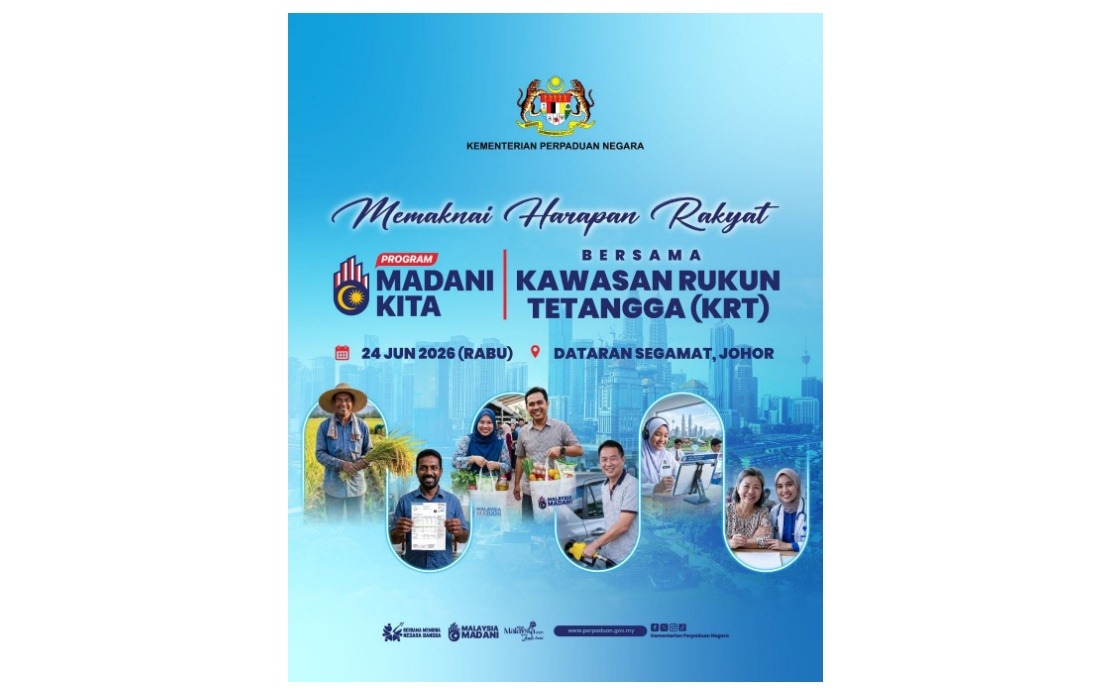
The centrepiece of Anwar's Segamat programme was the official launch of MADANI KITA at Dataran Segamat at 5 pm. The initiative, being rolled out in collaboration with local Rukun Tetangga (neighbourhood associations), aims to serve multiple governance objectives simultaneously. The programme is framed as a vehicle for strengthening bonds between neighbours, fostering inter-community relationships across ethnic lines, and disseminating government policies and initiatives to ordinary Malaysians at the grassroots level. For a government entering a crucial electoral phase, such programmes carry both political and administrative significance, allowing officials to communicate directly with constituents while appearing to focus on non-partisan community welfare.
Complementing the formal launch was the more relaxed "Jom! Makan Durian" community gathering scheduled for 6.30 pm at the Yayasan Bazaar site. The casual dining event, centred on the beloved Malaysian durian fruit, represented a deliberate shift in tone from the ceremonial MADANI KITA launch. By sharing a meal with local residents in an informal setting, the Prime Minister's office sought to present him as accessible and connected to everyday Malaysian life, a particularly valuable perception-building exercise during an election campaign. The choice of durian—a distinctly Malaysian cultural and culinary icon—further reinforced themes of national identity and shared heritage that resonate strongly with voters.
The timing of these Segamat events aligned closely with the formal commencement of the Johor state election process. The Election Commission had designated June 27 as nomination day, July 7 for early voting, and July 11 as polling day, establishing a compressed campaign calendar that left little room for delayed outreach efforts. By visiting Segamat before the nomination period officially opened, Anwar was effectively beginning the campaign proper while maintaining the appearance of conducting pre-election government business.
Pakatan Harapan's candidate allocation reflected careful coalition management. The list announced included 20 representatives from PKR, 19 from Amanah, and 17 from DAP, distributing all 56 state seats across the three partner parties. This distribution strategy addressed longstanding internal negotiations about seat allocations, a process that often proves contentious within multi-party coalitions. The visible unity achieved through this announcement—evident in Anwar's ability to present a complete candidate slate—projected strength and organisational cohesion to voters.
For Malaysian political observers and voters in Johor, the significance of Anwar's Segamat visit extended beyond the immediate ceremonial activities. The state election represented an important test of Pakatan Harapan's electoral fortunes following the 2022 general election, when the coalition achieved a historic victory at the federal level. Johor, as one of Malaysia's largest states both geographically and economically, held particular weight in any assessment of the coalition's trajectory and capacity to govern effectively. Success in Johor would signal renewed momentum ahead of future electoral contests; setbacks could indicate waning support or organisational challenges.
The MADANI KITA programme itself deserves scrutiny as an electoral tool. While ostensibly focused on strengthening neighbourhood cohesion and spreading government information, such initiatives also serve to increase public awareness of government achievements and policy priorities. During an election campaign, heightened visibility and positive associations with government programmes translate into political advantage. The programme's emphasis on cross-community cooperation carried additional weight in a state with diverse demographic composition, where building perceptions of inclusive governance can influence swing voters and undecided constituents.
Segamat's specific context made it a logical target for this visit. The district, whilst not commanding the same attention as major urban centres or state capital Johor Bahru, nevertheless comprises multiple constituencies within the 56-seat state assembly. Demonstrating presence in such areas communicates that the government and ruling coalition remain attentive to both urban and semi-rural constituencies, a message particularly important for parties seeking to consolidate support across diverse regions. The focus on neighbourhood associations and grassroots community structures also reflected acknowledgment that electoral victory ultimately depends on mobilising voters at the lowest administrative levels.
As the Johor state election campaign entered its formal phase, Anwar's continued physical presence in the state and his engagement with community-level initiatives signalled personal investment in the outcome. For a Prime Minister governing a country with concurrent state and federal politics, such visible campaigning carries both symbolic value—demonstrating commitment to state-level concerns—and practical campaign benefits. The cumulative effect of multiple visits and diverse engagement types helps build the narrative momentum that modern electoral campaigns require.

