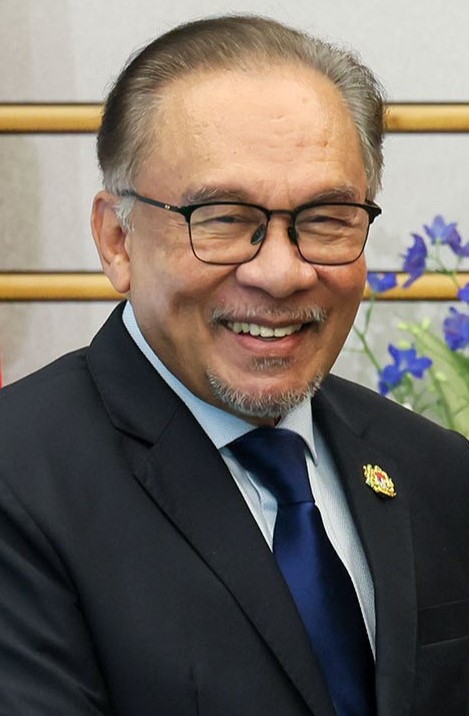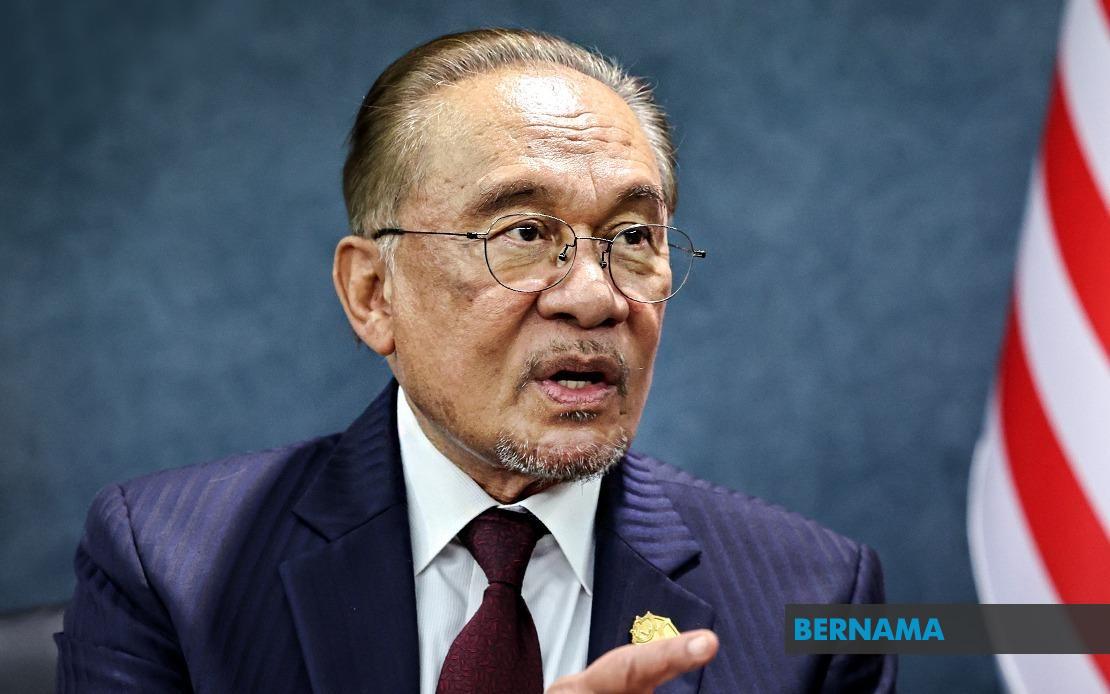
Prime Minister Datuk Seri Anwar Ibrahim is set to deliver a keynote address at the ASEAN-Russia Business Forum in Kazan, reinforcing Malaysia's commitment to deepening ties with the Russian Federation at a critical juncture in regional geopolitics. The address, delivered at Kazan IT Park, represents Malaysia's active participation in high-level diplomatic and economic engagement with Moscow, reflecting Kuala Lumpur's multi-aligned foreign policy approach that seeks to maintain balanced relationships across major global powers.
The forum brings together senior government officials and business representatives from all ten ASEAN member states alongside Russian counterparts, creating a platform for exploring commercial opportunities and strengthening people-to-people connections. Anwar, who holds the dual portfolios of Prime Minister and Finance Minister, will present Malaysia's perspective on economic cooperation and trade expansion, positioning the country as a key bridge between Southeast Asia and Russia during a period of evolving global alignments.
Kazan's selection as the summit venue carries symbolic weight that extends beyond mere logistical convenience. The city, home to approximately 1.3 million residents and situated where the Volga and Kazanka rivers converge roughly 800 kilometres east of Moscow, stands as Russia's major cultural and economic hub outside the country's western metropolitan centres. Often characterised as Russia's 'third capital' after Moscow and St Petersburg, Kazan represents a deliberate choice emphasising the breadth of Russia's engagement with ASEAN across its diverse geography and demographics.
The historical and cultural significance of hosting the summit in Kazan takes on additional meaning given the city's status as a preeminent centre of Islamic culture and heritage within Russia. With more than a millennium of documented history, Kazan has evolved as a distinctive bridge between Russian and Muslim civilisations, a positioning that resonates deeply with ASEAN's own multicultural character and allows meaningful dialogue rooted in mutual respect for religious and cultural pluralism. This geographical and cultural context underscores how ASEAN-Russia relations transcend simple transactional diplomacy.
This year's commemoration marks the 35th anniversary of ASEAN-Russia dialogue relations, a milestone spanning three and a half decades of sustained engagement. The relationship trajectory demonstrates remarkable institutional development, progressing from initial diplomatic exchanges in 1991 to Russia's elevation as a full ASEAN Dialogue Partner in 1996, and subsequently to the establishment of a Strategic Partnership in 2018. This escalating framework reflects both organisations' conviction that cooperation across political-security, economic, and socio-cultural domains serves mutual strategic interests.
Beyond the business forum, Anwar will participate in the ASEAN-Russia Commemorative Summit Gala Dinner at the Tatar State Academic Theater, where the Malaysian delegation will join other ASEAN leaders in a courtesy call on Russian President Vladimir Putin. These protocol-level engagements serve crucial functions in international relations, allowing leaders to exchange perspectives on matters of shared concern and to signal continued commitment to bilateral and multilateral partnerships amid shifting global circumstances.
From Malaysia's perspective, the Kazan summit arrives at a moment when bilateral economic engagement warrants expanded attention. In 2025, Russia ranked as Malaysia's ninth-largest trading partner among European countries, with bilateral commerce reaching RM8.72 billion, equivalent to approximately USD2.04 billion. This substantial volume reflects deeply integrated trade relationships that have developed organically despite geopolitical complexities and international sanctions regimes.
Malaysia's export profile to Russia demonstrates the country's competitive advantages in manufactured goods and processed commodities. Electrical and electronic products, along with machinery, equipment and component parts, comprise Malaysia's principal export categories, reflecting the nation's position as a leading producer of semiconductors and advanced manufacturing. Processed food products also feature prominently, capitalising on Malaysian agricultural capabilities and food processing expertise that find receptive markets in Russian wholesale and retail channels.
The import side of the Malaysia-Russia relationship centres on natural resources and chemical inputs. Malaysian importers source petroleum products, minerals, and chemical-based materials from Russia, taking advantage of the country's abundant hydrocarbon reserves and mining operations. This complementary trade structure demonstrates how natural factor endowments drive bilateral commerce, with Malaysia supplying manufactured value-added goods whilst importing raw materials and energy inputs.
Broader ASEAN-Russia trade dynamics reveal the strategic importance that Southeast Asia holds for Russian economic interests. In 2024, total ASEAN-Russia bilateral trade reached USD18.1 billion, underscoring the significance of the ten-member bloc as a collective trading and investment partner. However, Russian foreign direct investment in ASEAN stood at USD92.97 million, equivalent to approximately RM367.90 million, suggesting that whilst trade volumes remain substantial, investment flows remain constrained compared to ASEAN's engagement with other major powers.
This investment disparity points to untapped potential in the bilateral relationship. The business forum provides an opportunity for Russian and ASEAN entrepreneurs to identify sectors offering attractive returns, particularly in energy infrastructure, telecommunications, advanced manufacturing, and financial services. The Kazan IT Park venue itself symbolises Russia's emphasis on digital transformation and technology-driven economic development, areas where ASEAN possesses complementary capabilities and growing expertise.
Malaysia's participation in the commemorative summit reflects broader strategic calculations about maintaining equidistance among major powers whilst safeguarding economic interests. As geopolitical tensions between Russia and Western powers persist, ASEAN's non-aligned positioning becomes increasingly valuable, allowing member states to engage Moscow productively without sacrificing relationships with other economic and security partners. This diplomatic balancing act has become central to Malaysian foreign policy under the Anwar administration.
The ASEAN-Russia relationship occupies a distinctive space within international affairs, representing cooperation between a dynamic regional grouping and a global power pursuing revitalised engagement across Asia. Anwar's address at the business forum will likely emphasise Malaysia's commitment to pragmatic, mutually beneficial cooperation that respects sovereignty whilst pursuing concrete commercial and developmental objectives. Such messaging reinforces ASEAN's independent agency in international relations and positions Southeast Asian nations as valuable partners worthy of sustained engagement from all quarters of the global system.