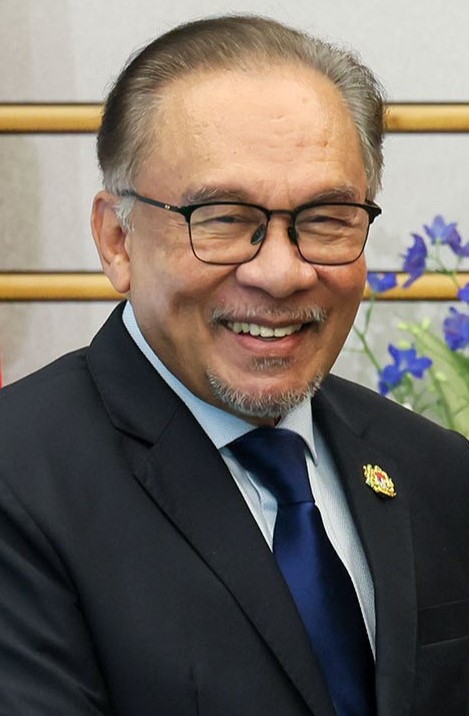
Prime Minister Anwar Ibrahim is embarking on a working visit to Russia beginning tomorrow, where he will hold a crucial meeting with President Vladimir Putin as part of broader discussions between ASEAN leadership and Russian counterparts. The mission centres on a critical objective: guaranteeing the uninterrupted flow of crude oil and diesel into Malaysia, underscoring how energy security remains at the forefront of the government's agenda despite the complex geopolitical landscape.
The Prime Minister made these intentions clear during an engagement with fishing communities, farmers, and residents at a local gathering in Muar, emphasising that maintaining robust international relationships directly translates into tangible economic benefits for the nation. He stressed that proactive diplomatic overtures regarding energy supply represent far more than mere administrative procedure—they constitute an essential safeguard against the supply chain vulnerabilities that have already begun destabilising several neighbouring ASEAN economies. This forward-thinking approach reflects an understanding that energy disruptions in any regional economy can cascade across borders, affecting trade, manufacturing competitiveness, and household purchasing power.
Malaysia's current ability to sustain one of the world's most competitive fuel prices deserves particular attention in this context. The domestic retail price for RON95 petrol stands at RM1.99 per litre, a figure that reflects both judicious economic stewardship and the dividends of stable international partnerships. Maintaining such pricing requires more than domestic policy competence; it hinges fundamentally on Malaysia's capacity to secure reliable, cost-effective oil sourcing on the global market. Any disruption to these supply channels would immediately translate into price pressures that would ripple through the broader economy, affecting transport costs, food prices, and industrial production.
The geopolitical context makes the timing of this visit particularly significant. Recent military escalations in West Asia, involving strikes by Israel and the United States against Iran, have created an unprecedented threat to one of the world's most critical maritime chokepoints: the Strait of Hormuz. This waterway handles roughly one-third of global maritime petroleum traffic, making any prolonged closure potentially catastrophic for economies dependent on stable energy imports. For Malaysia, a trading nation whose prosperity depends partly on predictable energy costs, such disruptions pose genuine risks to macroeconomic stability.
Anwar acknowledged these perils explicitly, noting that closure of the Strait of Hormuz would trigger immediate domestic consequences through higher global oil prices. The connection is straightforward: Malaysia imports significant quantities of oil, and any spike in global crude pricing directly threatens the government's ability to maintain affordable domestic fuel rates. This is not merely an abstract economic concern but rather a matter that affects the real purchasing power of ordinary Malaysians and the operational costs of businesses nationwide.
However, the Prime Minister provided some grounds for optimism regarding the West Asian situation, citing recent information received from Pakistan's leadership. According to these discussions, there exists potential for diplomatic resolution, with an accord possibly being reached within days that could halt the escalating conflict. Should such developments materialise, the immediate threat to maritime transit routes would diminish substantially. Conversely, should negotiations stall or deteriorate, Malaysia and other energy-importing nations would face mounting pressure as global oil prices climb in response to sustained geopolitical uncertainty and supply fears.
Current market indicators already suggest some easing of pressure, with oil prices beginning a modest decline. Yet this fragile stability remains dependent on diplomatic developments over which Malaysia has limited direct influence. This reality underscores why the Prime Minister's engagement with Russian leadership becomes strategically important—it creates an additional avenue for securing Malaysia's energy interests at a moment when global conditions remain unsettled.
The broader significance of engaging with Russia on energy matters reflects Malaysia's pragmatic approach to foreign relations and economic statecraft. Despite international tensions and various geopolitical alignments, Malaysia has consistently maintained that economic interests and diplomatic relationships must transcend ideological divisions. Russian oil represents one component of Malaysia's diversified energy portfolio, and ensuring access to these supplies requires sustained dialogue and relationship management at the highest levels.
For Malaysian and regional readers, the implications extend beyond petrol pump prices. Energy security directly impacts industrial competitiveness, foreign investment attraction, and government fiscal capacity to fund social programmes and infrastructure. When the Prime Minister prioritises fuel supply security during international engagements, he is essentially protecting the economic foundations upon which Malaysia's development agenda depends. The visit to Russia thus represents more than protocol or bilateral courtesy—it constitutes an integral component of national economic strategy designed to insulate Malaysia from external shocks while maintaining the affordability and reliability that Malaysians have come to expect.