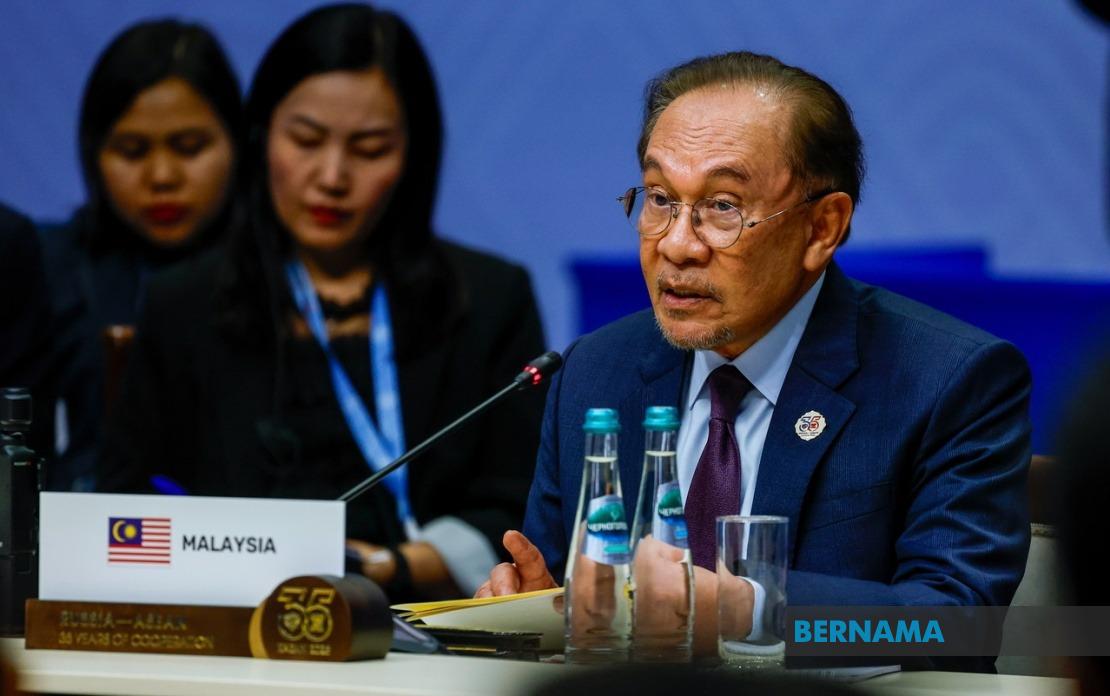
Prime Minister Datuk Seri Anwar Ibrahim has made a forceful case for deeper strategic cooperation between ASEAN and Russia, delivering a keynote address at a high-level summit in Kazan that underscores the bloc's commitment to engaging major global powers on its own terms. Speaking during the plenary session of the ASEAN-Russia Commemorative Summit, Anwar positioned the gathering as a critical forum where the ten-member Southeast Asian organization and Moscow can chart a collaborative path forward amid rising global uncertainty and geopolitical turbulence.
The summit represents a landmark moment in bilateral relations, coinciding with the 35th anniversary of ASEAN-Russia engagement that formally commenced in 1991 with ceremonies in Kuala Lumpur. This three-and-a-half-decade relationship has evolved from initial diplomatic recognition into a structured strategic partnership, and the commemorative gathering in the Russian city signals both sides' determination to breathe fresh momentum into the association. The timing is particularly significant given the current global environment, where ASEAN nations increasingly face pressure to align with competing power blocs, making the organization's traditional non-aligned posture more important than ever.
In his address, the Malaysian premier emphasized that constructive engagement rooted in dialogue and diplomacy must remain the cornerstone for managing conflicts and easing geopolitical tensions across the world. This message carries particular weight coming from Malaysia, which has long advocated for peaceful resolution of regional disputes and maintains relationships with powers across the geopolitical spectrum. Anwar's emphasis on dialogue reflects a fundamental ASEAN principle—the preference for consensus-building and negotiation over confrontation—that distinguishes the bloc's approach to international relations from more assertive major powers.
The Prime Minister outlined an expansive agenda for ASEAN-Russia cooperation spanning multiple critical domains. Trade and investment partnerships represent the economic foundation, while digital infrastructure and science and technology collaborations position both sides to benefit from emerging innovation cycles. Notably, artificial intelligence featured prominently in Anwar's remarks, reflecting growing recognition that AI competency will determine competitive advantage in coming decades. Energy cooperation carries particular resonance for Malaysia and other ASEAN members facing complex decisions about transitioning away from fossil fuels while maintaining reliable power supplies and energy sovereignty.
Beyond energy, Anwar highlighted food security and the halal industry as priority cooperation areas. For Malaysia, which has positioned itself as a global halal certification and standards leader, deeper engagement with Russia on halal products and processes opens commercial opportunities while advancing shared interests in meeting growing global demand for religiously compliant goods. Food security cooperation gains urgency as climate change increasingly threatens agricultural productivity across Southeast Asia, and partnering with Russia—a major agricultural producer—offers potential solutions to supply chain vulnerabilities.
People-to-people exchanges featured prominently in the Malaysian leader's vision, underscoring that sustainable diplomatic ties require cultural understanding and social connectivity beyond official channels. Educational partnerships, tourism flows, and grassroots engagement help build constituencies within both ASEAN nations and Russia that benefit from cooperation and therefore advocate for continued friendly relations. This dimension often receives less attention than trade or military cooperation but proves essential for long-term relationship resilience.
On Middle Eastern geopolitics, Anwar reiterated Malaysia's unequivocal position regarding the conflict in Gaza, demanding immediate cessation of violence, unobstructed humanitarian assistance, and recognition of Palestinian self-determination rights. The Prime Minister additionally condemned the expansion of military operations into Lebanese territory and expressed concern about attacks on the United Nations Interim Force in Lebanon (UNIFIL). These statements reflect Malaysia's consistent support for Palestinian causes and broader principle that military escalation contradicts international law and humanitarian norms—positions that resonate across much of ASEAN and that Russia, similarly positioned outside Western-led frameworks, shares to varying degrees.
The summit was co-chaired by ASEAN leadership including Philippines President Ferdinand Marcos Jr., who holds the organization's rotating annual chair, alongside representatives from all ten member states. This inclusive representation underscores that ASEAN engagement with Russia operates as a collective initiative rather than bilateral arrangement, giving the partnership broader legitimacy and ensuring that smaller ASEAN members have voice in shaping cooperation frameworks.
Four substantive outcome documents are expected to emerge from the gathering, including the Kazan Declaration marking the 35-year milestone, joint statements on energy and cultural cooperation, and a comprehensive implementation plan for the ASEAN-Russia Strategic Partnership spanning 2026 through 2030. These instruments will operationalize the cooperation agenda articulated by Anwar and other leaders, translating political commitment into concrete initiatives with clear metrics and timelines. The forward-looking five-year plan demonstrates both sides' confidence that this partnership can withstand current global pressures and deliver tangible benefits to their respective peoples.
The summit's significance extends beyond the bilateral ASEAN-Russia relationship. By convening at this level and with this agenda, ASEAN signals its unwillingness to be confined within a unipolar international system or forced to choose exclusively between competing great powers. Malaysia's leadership in articulating this position—emphasizing dialogue, multilateralism, and shared prosperity—reflects its historical role as bridge-builder within ASEAN and between the organization and major powers. For Malaysian readers and policymakers, the summit exemplifies how medium-sized regional powers can maintain strategic autonomy by cultivating diverse partnerships, investing in institutional relationships that transcend individual leaders, and consistently advocating for principles-based engagement grounded in international law and mutual respect.