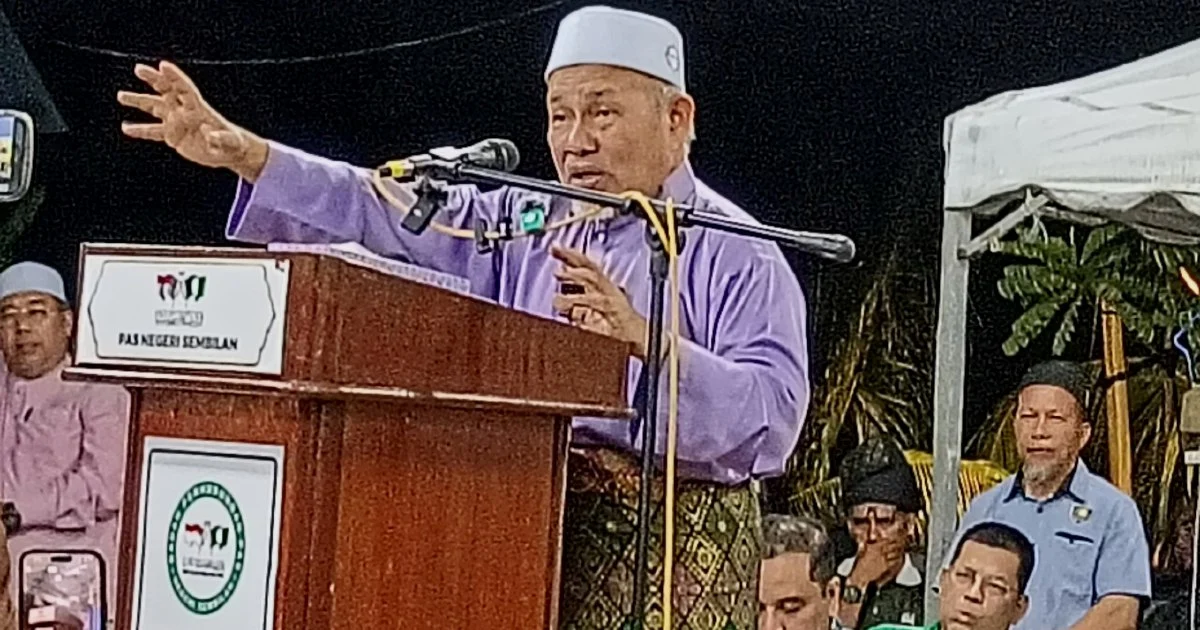
Perikatan Nasional exists as a shared political enterprise rather than the exclusive property of any single constituent, according to PAS deputy president Datuk Seri Tuan Ibrahim Tuan Man, who has moved to clarify the governance structure of Malaysia's major opposition coalition in the face of mounting internal tensions.
Tuan Ibrahim's statement represents an attempt to establish common ground among PN's fractious membership at a moment when coordination between member parties has become increasingly strained. The coalition, which emerged as a serious political force following the 2022 elections and has since become a significant player in parliamentary opposition, comprises multiple organisations with competing interests and leadership ambitions. By reaffirming that no single party holds dominion over the entire bloc, Tuan Ibrahim appears to be setting boundaries against any faction's unilateral decision-making.
The clarification comes in response to what observers have interpreted as overreach by certain Bersatu figures regarding coalition matters. Such disputes over control and direction have become recurring friction points within PN, threatening the unity that has enabled the coalition to maintain relevance in Malaysian politics. The underlying question of who ultimately steers coalition policy has remained unresolved, creating uncertainty about the bloc's longevity and strategic coherence.
Bersatu, as the numerically largest and politically most prominent PN member, has wielded considerable influence over the coalition's direction since its inception. Former Prime Minister Muhyiddin Yassin's dominance within Bersatu naturally translated into significant leverage within PN as a whole. However, this outsized influence has occasionally prompted concern among other component parties, particularly PAS, which commands substantial grassroots organisation and electoral reach in its own right. The tension between Bersatu's structural weight and other parties' desire for equal voice has simmered beneath the surface of coalition politics.
PAS itself brings irreplaceable assets to the PN equation. The Islamic party's deep entrenchment in Malay-Muslim communities across both urban and rural Malaysia gives it mobilisation capacity that few other organisations can match. Its presence in the coalition lends credibility on religious and social issues that resonate with significant voter segments. Recognising this, PAS leaders have grown more vocal about asserting their party's equal standing within the broader coalition framework, rather than accepting a subordinate role.
The ownership dispute also reflects broader disagreements about PN's strategic orientation. Different parties favour different approaches to working with other political actors, pursuing different policy priorities, and competing for influence within coalition structures. Without clear institutional mechanisms for resolving these differences, disputes tend to escalate into public airing of grievances, as appears to be happening now. Such visibility undermines the coalition's capacity to project unity to voters, a critical asset for any opposition force seeking to position itself as a credible alternative government.
For Malaysian politics more broadly, the PN struggle mirrors challenges faced by coalition arrangements throughout Southeast Asia. Multi-party blocs depend on member organisations subordinating individual ambitions to collective goals, a discipline that proves difficult to maintain over extended periods. When economic conditions worsen or electoral prospects decline, constituent parties often revert to protecting their own interests, revealing latent tensions that were previously papered over through public unity.
The implications extend beyond internal PN dynamics. A coalition unable to resolve questions of governance and ownership risks gradually losing influence in parliament and among voters who perceive internal discord as a sign of deeper weakness. Opposition coalitions particularly suffer from such perceptions, since voters may conclude that if the bloc cannot manage itself, it would surely struggle to manage the country. Meanwhile, the ruling coalition can exploit such divisions through tactical offers that tempt individual PN members to switch allegiances or reduce their commitment to the bloc.
Tuan Ibrahim's intervention suggests PAS intends to resist any marginalisation within the coalition framework. By publicly staking a claim to equal ownership, he signals that his party will not accept decisions made unilaterally by other parties, regardless of their size. Whether this assertion of principle can be translated into institutional reforms that actually guarantee equal voice remains to be seen. PN currently lacks the formal governance structures necessary to resolve such disputes fairly and transparently.
Moving forward, the coalition faces pressure to develop clearer rules about decision-making authority and party representation. Without such structures, disputes over ownership and control will likely recur, each instance further eroding the coalition's cohesion. For PN to mature as a political force, its component parties must establish mechanisms that respect each member's legitimate interests while maintaining sufficient unity to function effectively as an opposition bloc.
The success or failure of this effort will significantly influence Malaysian politics over coming years. A strengthened, unified PN could present a formidable challenge to the current government during the next election cycle. Conversely, a coalition riven by ownership disputes and leadership conflicts would struggle to capitalise on voter dissatisfaction. Tuan Ibrahim's comments suggest PAS is prepared to fight for its position within the bloc, setting the stage for serious negotiations about PN's future structure.

