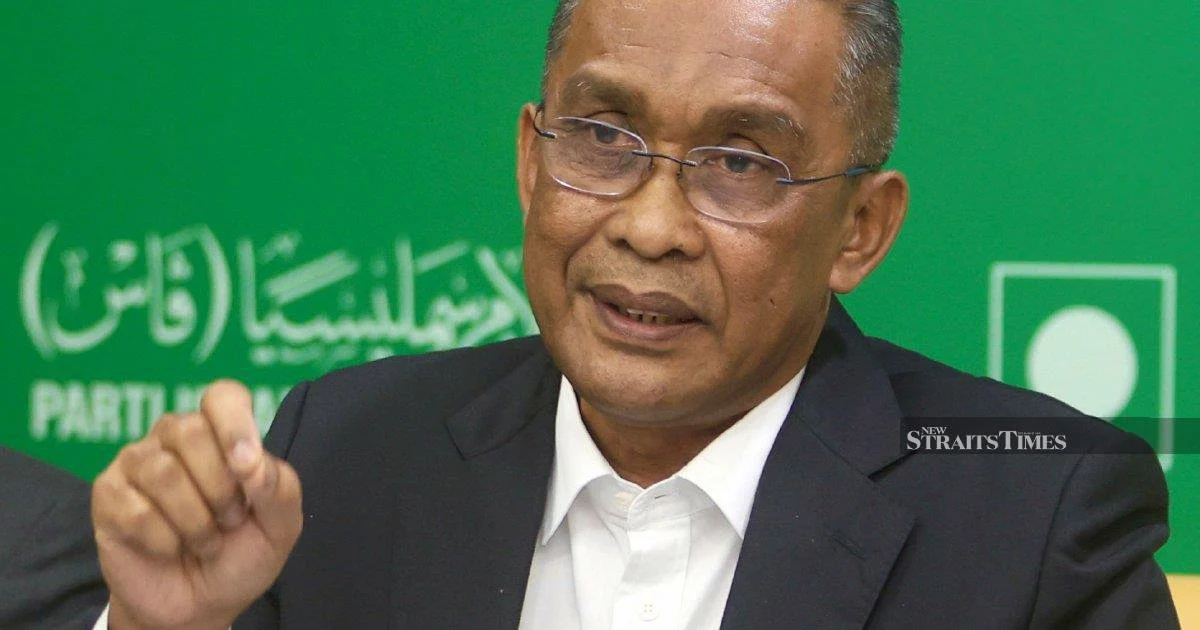
The Registrar of Societies has formally recognised Perikatan Nasional's leadership restructuring, confirming Datuk Seri Dr Ahmad Samsuri Mokhtar as the coalition's chairman with expanded powers over organisational decision-making. The administrative confirmation marks the completion of an internal transition that consolidates governance authority within the Islamist-led opposition alliance, signalling a recalibration of how the coalition intends to coordinate operations moving forward amid Malaysia's volatile political landscape.
Under the newly formalised arrangement, all activities and meetings conducted under the PN umbrella now require explicit approval from the chairman's office. This centralised approval mechanism represents a notable shift in how the coalition—comprised of PAS, Bersatu, and Perikatan component parties—will manage internal coordination and public-facing initiatives. The requirement extends across all levels of the alliance, creating a hierarchical control structure that differs from the more distributed decision-making frameworks that characterised earlier phases of the coalition's existence since its formation in 2020.
The timing of this formal confirmation arrives at a critical juncture for Malaysian opposition politics. Perikatan Nasional has emerged as a significant alternative bloc to the Pakatan Harapan-led federal government, with strong electoral performances in recent state-level contests and sustained influence in parliamentary proceedings. The administrative consolidation under Ahmad Samsuri's authority appears designed to strengthen internal discipline and prevent the fragmentation that has periodically weakened broader opposition coordination efforts in the past.
For component parties within Perikatan Nasional, the new approval requirements may necessitate adjustments to their operational procedures. PAS, as the largest party within the coalition, maintains its own internal decision-making structures, but significant public pronouncements or coordinated activities involving the broader PN platform must now navigate the chairman's office. Bersatu and other component organisations similarly find their coalition-level activities subject to this gatekeeping mechanism, which could affect everything from campaign scheduling to parliamentary tactics to public communications.
The formalisation by the Registrar of Societies carries legal weight beyond symbolic significance. Organisation registration in Malaysia carries specific governance requirements, and the RoS confirmation establishes Ahmad Samsuri's authority on an official regulatory basis. This legitimacy is particularly important for a coalition like Perikatan Nasional, which operates at the intersection of partisan politics and legal organisational structures, requiring compliance with societies registration provisions while simultaneously functioning as a dynamic political force.
Regional observers view such structural consolidations within opposition coalitions as reflective of broader Asian political dynamics. Opposition blocs across Southeast Asia frequently grapple with balancing internal diversity against the need for unified strategic direction. The PN's adoption of more centralised chairman authority mirrors similar moves within opposition movements elsewhere in the region, though Malaysia's specific political context—with its constitutional monarchies, federal state structures, and ethnoreligious complexities—creates unique pressures on coalition management.
For the ruling Pakatan Harapan government, PN's strengthened internal governance structure presents both challenges and opportunities. A more disciplined, centrally-directed opposition can coordinate legislative responses more effectively and present more coherent policy alternatives. Conversely, tighter control may reduce the internal contradictions and messaging inconsistencies that have occasionally benefited the government in public perception. Parliamentary dynamics are likely to shift accordingly, with PN likely to present more coordinated block voting and unified opposition statements across the Dewan Rakyat.
The practical implications for Malaysian voters extend beyond procedural matters. Opposition coalition strength and coherence directly influence electoral competitiveness and the quality of parliamentary scrutiny exercised over government actions. A well-coordinated, effectively governed opposition coalition can provide stronger checks on executive power, diverse policy perspectives in legislative debate, and genuine electoral alternatives for voters dissatisfied with incumbent performance. Conversely, poorly managed coalitions risk imploding or fragmenting precisely when public pressure for change peaks.
Ahmad Samsuri's appointment carries implications for internal PN power dynamics beyond the chairman's formal role. His elevated authority reflects confidence from component parties regarding his ability to manage diverse interests and personality-driven factions within the alliance. Maintaining coalition cohesion requires navigating competing ambitions within PAS, managing Bersatu's particular political positioning, and accommodating smaller component parties' aspirations for relevance and resource allocation. The chairman's approval authority provides mechanisms for conflict resolution that extend beyond mere procedural formality.
Looking toward Malaysia's political calendar, the structural changes within Perikatan Nasional gain additional significance. The coalition's performance in upcoming parliamentary votes, potential by-elections, and any future state-level contests will partly reflect whether centralised governance enhances strategic effectiveness or creates bottlenecks that stifle organic coalition development. The next electoral cycle will provide empirical measurement of whether formalised approval structures strengthen PN's competitive positioning or generate internal friction that undermines coalition effectiveness.
The RoS confirmation ultimately represents one snapshot within Malaysia's ongoing political evolution. Opposition coalitions, government alliances, and structural governance frameworks continuously adapt in response to electoral pressures, leadership changes, and shifting voter preferences. Ahmad Samsuri's formalised leadership and the expanded approval requirements represent the current iteration of how Perikatan Nasional has chosen to organise itself. Whether this structure persists, evolves, or transforms again will depend substantially on the coalition's political performance and the durability of inter-party relationships within the alliance in coming months.

