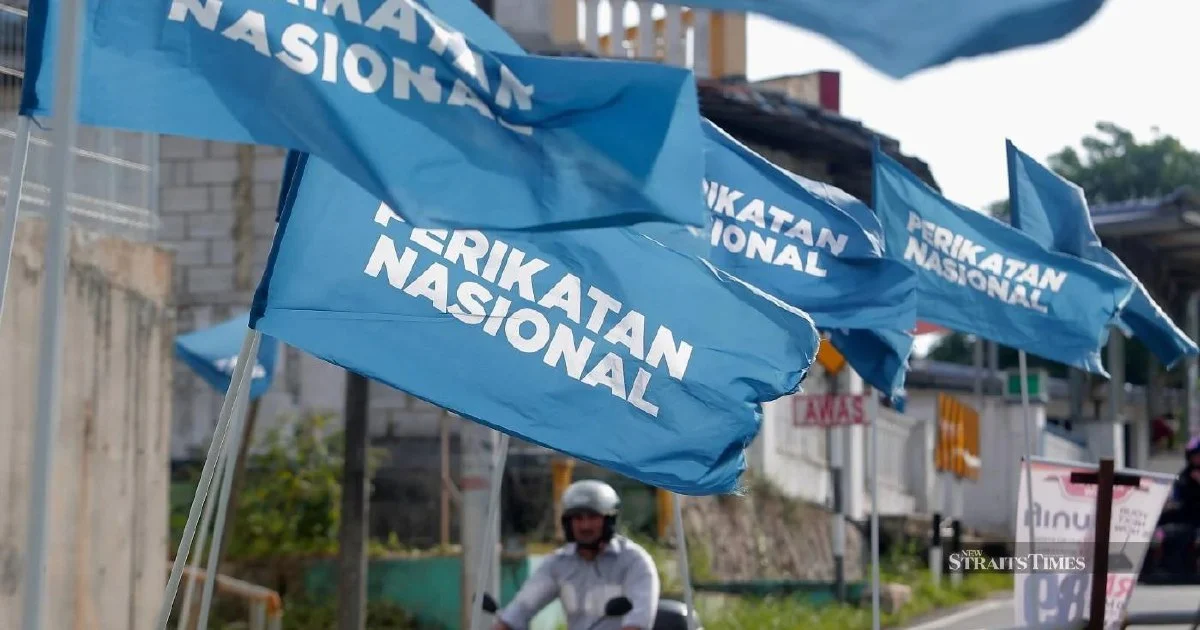
Perikatan Nasional (PN) appears to be treading carefully in its relationship with Bersatu, prioritising coalition cohesion as the bloc prepares for consequential state elections in Johor and Negri Sembilan. Political observers suggest that the timing of these polls makes a split particularly costly, and the coalition leadership seems intent on preserving unity until these contests conclude.
The strategic calculus underpinning this decision reflects broader realities in Malaysian electoral politics. PN, which comprises Bersatu, PAS, and smaller parties, has emerged as a significant force in national politics over the past few years. However, its position remains contested and requires careful management of internal dynamics. Bersatu, despite its smaller parliamentary representation compared to PAS, brings considerable organisational capacity and control over certain constituencies that could prove decisive in state-level contests.
Johor represents particularly sensitive political terrain. The state has long been a stronghold of established parties, and control of its legislative assembly carries symbolic weight beyond the number of seats contested. A weakened PN performance in Johor would undermine the coalition's credibility as a governing alternative. Negri Sembilan, meanwhile, presents its own complexities, with demographic and electoral patterns that favour different coalition partners depending on constituency-level dynamics. Splitting PN's campaign efforts across multiple coalition variants would dilute messaging and fragment resources at a moment requiring consolidated strength.
Bersatu's internal positioning within PN has occasionally generated tensions. The party, founded by former Prime Minister Mahathir Mohamad and later absorbing defectors from UMNO, occupies an uneasy middle ground within the coalition. Its members have navigated questions about ideological alignment, particularly regarding Islamic governance frameworks championed by PAS. Yet from a purely numerical perspective, losing Bersatu's parliamentary members and grassroots machinery would materially weaken PN's competitive position.
The timing dimension cannot be overstated in understanding this calculated restraint. State elections in Malaysia often serve as testing grounds for broader political narratives. Poor performances in Johor and Negri Sembilan would embolden rival coalitions and potentially trigger defections or recalculations among fence-sitting politicians and voters. Conversely, competitive showings would reinforce PN's claims to being a viable national alternative. For Bersatu specifically, strong results would validate its continuing relevance within the coalition structure and strengthen arguments for greater influence in coalition decision-making.
Analysts observing PN's internal management note that the coalition has developed mechanisms for absorbing disagreements without public rupture. Disagreements on policy, resource allocation, and candidate selection exist but are typically resolved through backroom negotiations rather than public confrontations. This contrasts with the governing coalition's more visible internal tensions, which sometimes play out in press statements and legislative votes. Such discipline, whether born from genuine consensus or calculated restraint, serves PN's electoral interests by projecting an image of unity that appeals to voters fatigued by coalition politics.
The electoral timeline itself creates incentives for temporary truce. Bersatu leadership recognises that a coalition breakup immediately preceding these elections would trigger a cascade of complications: candidate nominations would require renegotiation, campaign infrastructure would fragment, and competing messages might confuse voters in critical constituencies. The damage would likely persist beyond election day, affecting perceptions of PN's viability in potential post-election coalition formations at the national level.
For the broader Southeast Asian context, Malaysia's coalition politics offer instructive lessons. Regional democracies increasingly feature multi-party coalitions navigating complex internal tensions while competing for electoral mandates. PN's approach—maintaining public unity while managing private disagreements—represents a pragmatic middle path between formal coalition agreements and complete autonomy. Whether this model proves sustainable depends partly on electoral outcomes in Johor and Negri Sembilan.
Bersatu's recent electoral trajectory also influences the calculus. The party's performance in previous contests has been mixed, raising questions about its independent viability. This vulnerability cuts both ways: PN might be tempted to sideline Bersatu, but doing so risks losing its voter base and triggering defections. Conversely, Bersatu depends on PN's larger structure for electoral competitiveness. This mutual dependency creates a structural reason for maintaining the alliance, at least until the immediate electoral cycle concludes.
Looking forward, the results in Johor and Negri Sembilan will likely reshape coalition negotiations both within PN and at the national level. A PN success would strengthen Bersatu's bargaining position, potentially enabling the party to extract greater concessions in future coalition arrangements. A disappointing showing might trigger more serious discussions about restructuring, either within PN or through alternative coalition formations. The upcoming elections thus represent not merely contests for state assemblies but pivotal moments in determining the trajectory of Malaysian coalition politics over the next electoral cycle.

