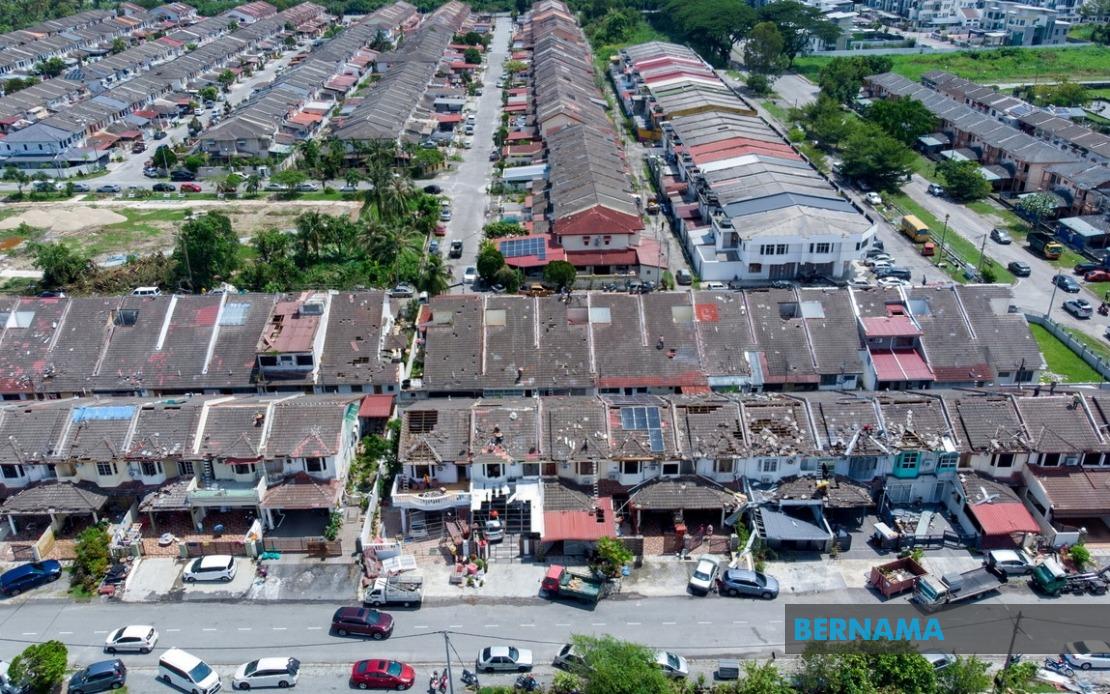
Following a devastating storm that struck Bercham on Friday, police have implemented strict security measures by sealing off five disaster-affected zones within the neighbourhood and imposing movement restrictions to safeguard properties from opportunistic crime during the recovery phase. The operation reflects growing concerns among law enforcement that large-scale natural disasters create vulnerable windows for looters and break-ins, necessitating coordinated checkpoints and surveillance across the most severely impacted areas.
Ipoh district police chief ACP Muhammad Najib Hamzah outlined the enforcement strategy during a media briefing at the Incident Control Post (PKTK) based at Bercham police station, acknowledging that residents require reasonable access to their damaged properties for cleanup and recovery efforts. The police leadership recognised that an outright lockdown would hamper legitimate restoration work, and therefore adopted a calibrated approach that balances security concerns with humanitarian needs.
The most pressing security challenge emerges during evening and night hours, when darkness and the absence of electricity in several neighbourhoods, notably Anjung Bercham, create conditions conducive to criminal activity. Police will intensify their scrutiny of nighttime movements, requiring residents seeking access to verify property ownership before permitting entry. This verification mechanism aims to distinguish between genuine residents conducting recovery work and individuals attempting to exploit confusion and darkness as cover for theft or burglary.
By 8 am on the day of the police briefing, authorities had recorded 492 storm-related incident reports through the Op Bencana system, a figure that continues to grow as residents complete damage assessments and formalise their claims. Significantly, police announced no time limit for filing reports, recognising that many residents remain overwhelmed by immediate survival and shelter concerns before documenting losses. This extended reporting window accommodates the varying pace at which different households can assess damage and engage with bureaucratic processes.
The geographic scope of the disaster encompasses multiple established residential communities across Ipoh's northwestern sector. Anjung Bercham Utara, Taman Mujur, Kampung Bercham, Kampung Tersusun Tasek, Taman Pusat Bercham, and Taman Indah Sakti collectively represent several thousand residents whose homes and livelihoods sustained significant impact from the meteorological event.
M. Kulasegaran, Member of Parliament for Ipoh Barat and Deputy Minister in the Prime Minister's Department (Law and Institutional Reform), characterised the storm as extraordinary in its intensity and reach. His assessment that more than 200 houses suffered damage underscores the scale of property destruction, positioning this event among the more significant weather-related disasters affecting the Ipoh metropolitan area in recent years. Notably, Kulasegaran attributed the phenomenon to a landspout, a localised and intense rotating column of air that develops over land, distinguishing this event from conventional convective storms and suggesting unique meteorological conditions converged to produce exceptionally damaging wind speeds.
The full extent of financial and material losses remains undetermined as of the police statement, with damage valuations pending comprehensive assessment by insurance adjusters, municipal authorities, and affected households themselves. The complexity of calculating aggregate losses reflects the distributed nature of residential damage across multiple neighbourhoods and the variable value of affected properties and contents.
This incident carries broader implications for disaster management in Malaysia's urban areas, particularly regarding the intersection between rapid police response and property protection during natural disaster recovery phases. As climate variability intensifies and extreme weather events become more frequent, authorities must refine protocols for securing affected communities while simultaneously enabling residents to rebuild their lives and properties. The Bercham operation demonstrates how law enforcement agencies are adapting traditional security approaches to address the specific vulnerabilities created by large-scale environmental disasters.
For Malaysian residents in similar circumstances, the incident reinforces the importance of documenting damage promptly and engaging with official reporting mechanisms, as these records form the basis for insurance claims, government assistance programmes, and municipal reconstruction initiatives. The police coordination also highlights how vulnerable disaster zones can become during recovery windows, particularly in periods of darkness and confusion when social order temporarily weakens.

