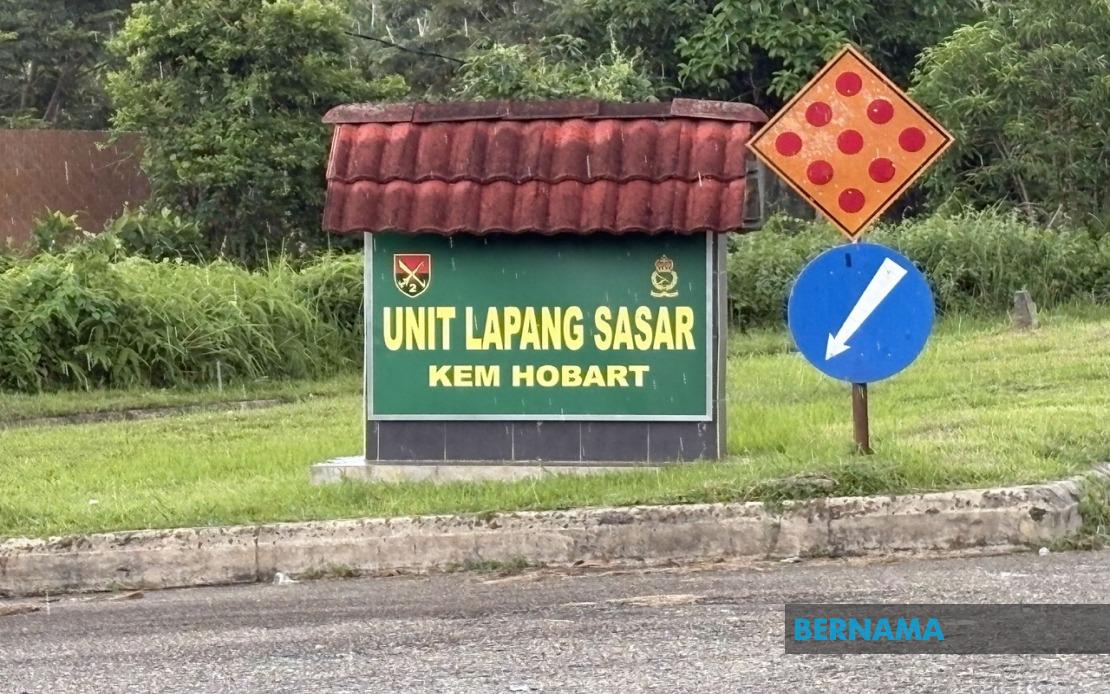
A tragedy struck the Malaysian Army's training operations in Kedah today when an explosion during a routine grenade-throwing drill claimed the lives of two soldiers at Hobart Camp in Gurun. The incident, which unfolded at approximately 10.57 am, has prompted authorities to launch a comprehensive investigation as the Defence establishment grapples with questions about safety protocols during weapons training.
The two fatalities have been identified as Corporal Norazmi Abu Bakar, attached to the Sixth Battalion of the Royal Malay Regiment, and Private Siti Khadijah Sungip, serving with the First Squadron of the Royal Malaysian Engineers Regiment. Both personnel were participating in a grenade-throwing component of the Combat Enhancement Training programme under the auspices of the First Squadron, Royal Malaysian Engineers Regiment, which falls under the Second Infantry Division's operational structure.
According to Kuala Muda police chief ACP Hanyan Ramlan, law enforcement has classified the incident as a sudden death matter and opened an official investigation file to examine the circumstances surrounding the blast. The police chief emphasised that statement-taking from witnesses who were present during the training exercise forms a critical pillar of the investigative process. Speaking to reporters at the Forensic Department of the Sultan Abdul Halim Hospital in Sungai Petani, ACP Hanyan Ramlan outlined the authorities' methodical approach to understanding what transpired during the exercise.
Responses to the explosion were rapid, with both injured personnel receiving immediate medical attention and transport to the Sultan Abdul Halim Hospital. However, despite emergency interventions during their transit to the facility, neither soldier survived the injuries sustained from the blast. Their remains were subsequently transferred to Sultanah Bahiyah Hospital in Alor Setar to undergo post-mortem examinations, a standard procedure in cases of military fatalities that will provide medical insight into the nature and severity of their injuries.
The incident raises significant concerns about the conduct of military training exercises involving explosives and heavy weapons. Grenade-throwing drills are fundamental components of soldier training worldwide, designed to develop proficiency with essential combat implements. However, they demand stringent adherence to safety protocols and careful supervision to prevent accidents. The deaths at Hobart Camp underscore the inherent risks that personnel face during such training, even under controlled circumstances with experienced instruction.
For the Malaysian military establishment, this tragedy arrives amid ongoing discussions about balancing comprehensive combat training with soldier safety. The Defence Ministry and armed forces leadership will likely face scrutiny regarding whether existing safety measures at training facilities meet contemporary standards. Questions will inevitably emerge concerning equipment condition, instructor qualifications, participant briefings, and emergency response procedures. The investigation's findings may prompt a broader review of protocols across military training installations nationwide.
The sudden loss of these two soldiers reverberates through their respective units and the broader army community. Corporal Norazmi Abu Bakar and Private Siti Khadijah Sungip were engaged in their professional duties when the accident occurred, highlighting the real dangers that military personnel encounter even during peacetime training operations. Their families and comrades face the profound grief that accompanies such unexpected losses, particularly when fatalities result from training rather than operational combat scenarios.
Police coordination with military authorities will be essential as the investigation progresses. ACP Hanyan Ramlan's commitment to securing cooperation from all relevant parties suggests a collaborative approach between civilian law enforcement and Defence Ministry officials. The investigation team will need to examine equipment maintenance records, training documentation, witness testimonies, and potentially technical analysis of the grenade or explosive device involved. Understanding whether the incident resulted from equipment malfunction, procedural violation, training error, or other causes will inform recommendations for preventing similar tragedies.
The incident also carries implications for military recruitment and personnel morale. While the armed forces necessarily accepts certain occupational hazards, training fatalities can impact public confidence in the Defence establishment's commitment to personnel welfare. Transparent communication about the investigation's progress and any corrective measures implemented will be crucial for maintaining trust among serving personnel and their families, as well as among potential recruits considering military service.
Regionally, this incident contributes to broader conversations about military training safety standards across Southeast Asia. Nations throughout the region conduct similar weapons training programmes, and investigating best practices for preventing such accidents benefits the entire region's armed forces. The investigation's conclusions and any resulting policy changes at Malaysian military facilities may influence discussions among regional defence partners regarding optimal approaches to balancing training effectiveness with personnel protection.
As the investigation unfolds, the Malaysian public will be watching for updates on the circumstances surrounding this tragic loss. The sudden death inquiry represents the formal mechanism through which authorities will examine all contributing factors and establish an accurate account of events. While the investigation cannot restore the lives lost today, it serves the crucial function of determining what safeguards failed and how similar incidents might be prevented in future training operations. For the Malaysian Army, this moment demands both accountability and a renewed commitment to ensuring that personnel can develop essential combat skills within an environment prioritising their safety and wellbeing.