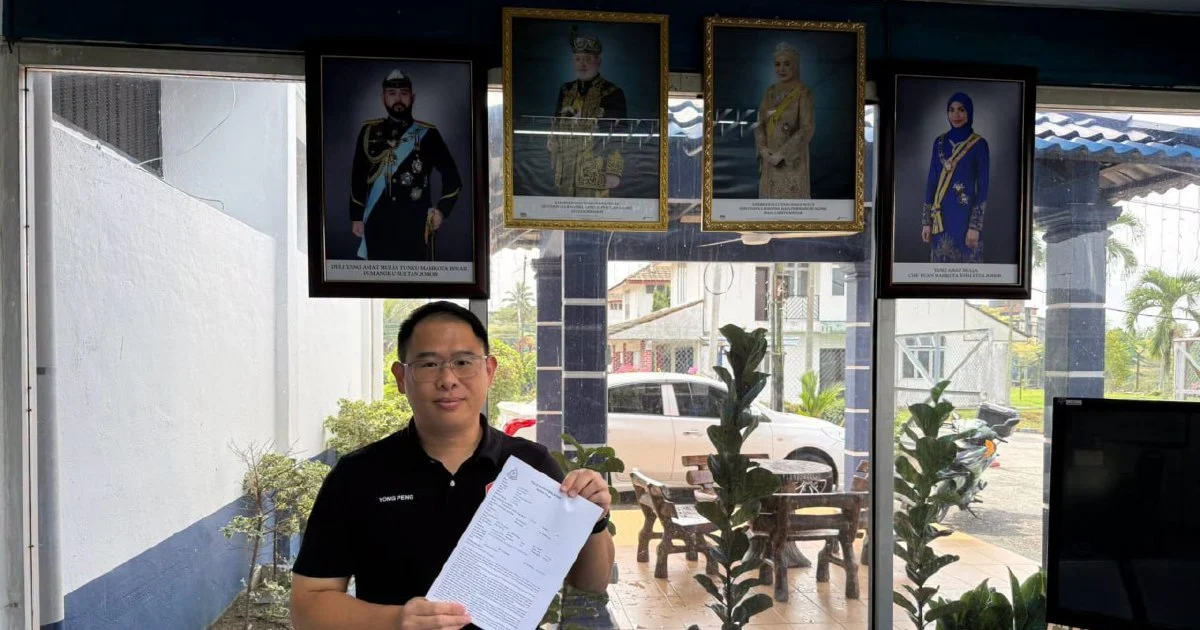
A police report has been lodged following controversial claims by a politician linking Johor's royal palace to the dissolution of the state assembly, intensifying a constitutional dispute that threatens to reshape political dynamics in Malaysia's southern sultanate. The complaint represents an escalation in tensions surrounding the circumstances that led to the assembly's dissolution, with parties now appealing to law enforcement to investigate whether statements made about the palace's role constitute defamation or other criminal offences.
The allegations in question concern Puad, whose public remarks have drawn sharp rebukes from observers concerned about appropriate conduct when discussing matters touching upon the monarchy. In Malaysia's constitutional framework, the Sultan occupies a position of supreme importance, combining ceremonial authority with significant powers over state governance. Comments suggesting inappropriate palace involvement in legislative matters invariably trigger sensitive questions about the boundary between legitimate political discourse and statements that might undermine respect for constitutional institutions.
Johor's assembly dissolution has been a contentious affair from its inception, with multiple stakeholders disputing whether proper procedures were followed and whether all parties acted within their constitutional remit. The timing of the dissolution, coming amid broader shifts in the state's political landscape, prompted speculation about the motivations driving its announcement. Against this backdrop, Puad's public statements alleging a palace connection appear to have crystallised concerns among those who view such claims as inappropriate or potentially misleading.
The filing of the police report signals that parties directly affected by the allegations now view the matter as sufficiently serious to warrant formal investigation. In Malaysia's legal system, statements concerning the monarchy can fall under provisions protecting the dignity and reputation of royal institutions, creating a legal framework through which such complaints can be pursued. The reference to law enforcement suggests that complainants believe Puad's utterances may have crossed thresholds established by criminal law.
From a broader constitutional perspective, the incident illuminates ongoing tensions within Malaysia's system of governance regarding the proper scope of royal authority in state-level affairs. While sultans retain important powers, contemporary democratic norms increasingly emphasise that such powers should be exercised according to established conventions and in consultation with relevant political actors. Allegations suggesting unilateral palace direction of assembly dissolution thus challenge fundamental assumptions about how Johor's government ought to function.
For Malaysian observers and especially those in Johor, the case raises practical questions about how political figures should communicate about sensitive institutional matters. Public statements made without careful calibration risk appearing to attribute blame to the palace for decisions that might more appropriately be understood as resulting from complex political negotiations among elected representatives and constitutional office-holders. The resort to police complaint procedures suggests complainants felt no alternative avenue adequately addressed the perceived damage.
The dissolution itself had substantial consequences for Johor's political trajectory, affecting the composition of the assembly and the distribution of power among competing factions. Understanding whether and how palace involvement shaped these outcomes remains pertinent to evaluating whether the process met constitutional standards and public expectations. Puad's claims, by focusing attention on alleged palace direction, implicitly challenge the narrative that elected officials made autonomous decisions based on constitutional authority and political judgment.
The investigation process will likely examine what precisely Puad stated, whether his remarks were made in specific public forums or through media channels, and whether those statements can reasonably be interpreted as attributing improper conduct to palace officials. Investigators must also consider whether such allegations, even if disputed, constitute legitimate political commentary or cross into territory where legal remedies become appropriate. This distinction carries significance for debates about free speech and political accountability in Malaysia.
For Johor's political ecosystem, the police report may either clarify constitutional procedures or deepen divisions depending on investigation outcomes and any subsequent legal proceedings. If the report leads to charges against Puad, supporters will likely characterise the action as suppressing legitimate political debate, whereas critics might view it as necessary to defend institutional respect. If investigation concludes no offence occurred, attention will shift back to the substantive question of whether palace involvement in the dissolution was appropriate.
The incident occurs within Malaysia's broader context of evolving relations between sultans and democratic institutions. Several states have experienced political crises where royal prerogatives and democratic processes appeared misaligned, suggesting systemic tensions warrant serious consideration beyond any individual case. Johor's situation therefore carries implications extending beyond the state itself, potentially influencing how other sultans exercise their authority and how elected representatives navigate disputes involving royal participation in governance.
Regional observers watching Malaysian constitutional developments will note how this matter unfolds, particularly given Southeast Asia's varied approaches to balancing monarchical authority with democratic accountability. Malaysia's handling of such conflicts helps establish precedents that other constitutional monarchies in the region may reference when facing comparable disputes. The resolution of the Johor assembly dissolution controversy and the police investigation it has sparked will thus contribute to evolving understanding of how Southeast Asian democracies manage the complex intersection of traditional authority and modern governance.
Moving forward, the police investigation represents a crucial juncture for clarifying whether Puad's allegations can withstand legal scrutiny and whether Malaysian law adequately distinguishes between legitimate political critique and actionable defamation. The outcome will signal to other politicians the boundaries within which they may discuss palace involvement in state affairs, potentially shaping political communication around similar matters in future crises.

