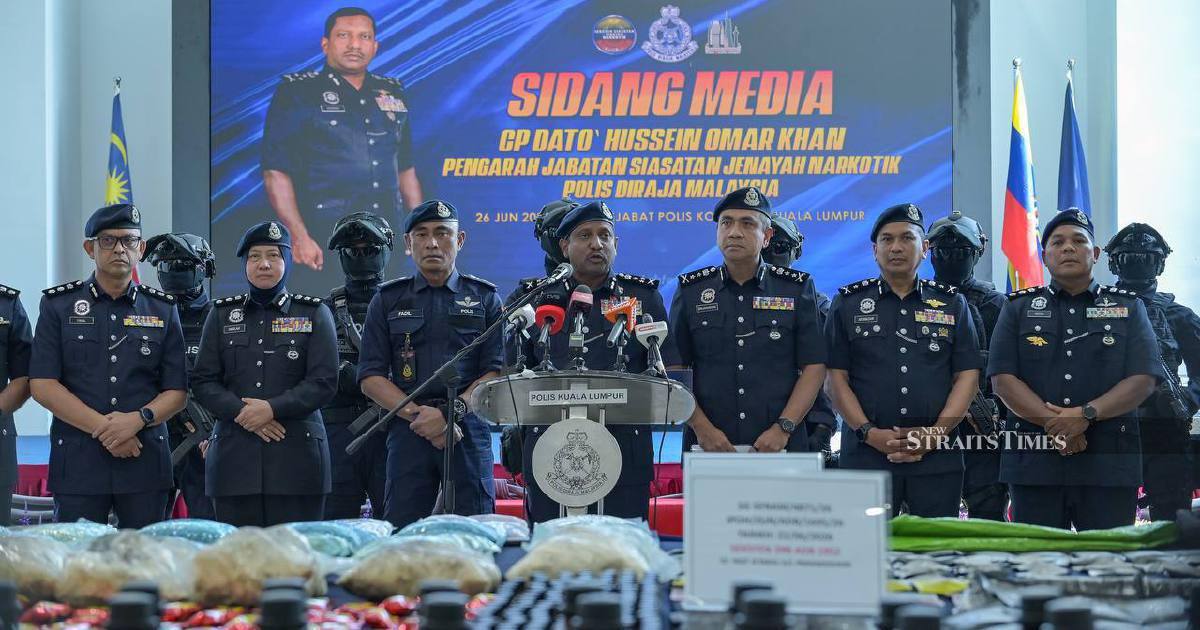
A major anti-narcotics operation in Cheras has yielded what authorities are describing as a substantial haul in their ongoing battle against organised drug trafficking. On June 20, police executed three simultaneous raids that resulted in the seizure of narcotics estimated at RM135.63 million in street value and the arrest of seven suspects connected to the operation. The coordinated enforcement action represents a significant disruption to suspected distribution networks operating within the Kuala Lumpur metropolitan area.
The scale of the confiscation underscores the sophisticated nature of drug trafficking operations currently active in Malaysia. Intelligence-driven policing has become increasingly critical as criminal syndicates adapt their methods to evade detection, utilising multiple locations and compartmentalised structures to manage their supply chains. The successful coordination across three separate venues indicates that law enforcement agencies have developed improved capabilities in tracking and intercepting these networks before they can establish deeper roots in local communities.
For Malaysian readers accustomed to headlines about drug-related crime, this operation reflects a broader pattern of enforcement priorities at the national level. The Cheras incident arrives at a time when policymakers and enforcement authorities continue grappling with the persistent challenge of preventing pharmaceutical and recreational drugs from reaching street-level markets. The estimated value of RM135.63 million represents not merely the cost of confiscated substances, but also the potential economic damage that would have occurred through addiction, lost productivity, and associated social harm had the operation proceeded unimpeded.
The involvement of seven individuals in what appears to be a coordinated trafficking scheme suggests a hierarchical structure typical of larger criminal enterprises. Such networks frequently employ tiered distribution systems, with different members assigned distinct roles ranging from procurement and storage through to street-level sales. The arrests made during the June 20 operations will likely enable investigators to develop a fuller picture of the operation's scope, financial flows, and any connections to larger criminal organisations operating regionally or internationally.
From a Southeast Asian perspective, this seizure contributes to the regional narrative around transnational drug trafficking. Malaysia's geographic position along established trafficking corridors makes it simultaneously a transit point and a destination market for narcotics produced in neighbouring countries and sourced internationally. The attempt to flood local markets, as indicated in the operational assessment, reflects the commercial logic of traffickers seeking to expand their customer base and generate rapid returns on their investment in contraband acquisition.
The enforcement success also highlights the resource investment that Malaysian police dedicate to counter-narcotics operations. Identifying, surveilling, and executing simultaneous raids requires substantial planning, intelligence analysis, and deployment of field operatives across multiple locations. The coordination evidenced in this operation suggests that relevant agencies have prioritised drug interdiction in line with broader national security objectives and public health concerns.
Community impact considerations extend beyond the immediate arrests and seizures. Drug trafficking operations frequently generate secondary effects including territorial disputes, violence, money laundering through legitimate businesses, and the corruption of public officials. By disrupting distribution networks before they fully establish themselves, enforcement actions reduce the likelihood of these cascading harms materialising in residential and commercial zones. The Cheras operation thus represents not only a tactical victory but also a preventive measure against neighbourhood destabilisation.
The timing and location of the raids deserve attention. Cheras, as a densely populated area with mixed residential and commercial character, represents the type of environment that traffickers target for retail distribution. The presence of floating populations, regular foot traffic, and multiple access routes facilitates buyer-seller contact while complicating law enforcement surveillance. The police decision to move decisively against operations in such areas reflects an understanding that prevention at the distribution stage is more cost-effective than managing the social consequences of unchecked drug proliferation.
Looking forward, the information obtained from the seven arrested individuals may prove valuable for connecting additional threads in the larger trafficking ecosystem. Interrogations frequently yield intelligence about upstream sources of supply, downstream distribution networks, money handlers, and corrupt enablers. Such information can guide future enforcement operations and contribute to developing a more comprehensive understanding of how narcotics flow through Malaysia's territory toward street-level consumption.
The successful operation also demonstrates to communities that law enforcement remains actively engaged in countering the drug trade, even as the scale and sophistication of trafficking operations continue to evolve. Maintaining public confidence in enforcement institutions requires consistent visible action against high-profile targets, combined with longer-term strategies addressing demand reduction, rehabilitation services, and prevention education.
For policy observers tracking drug enforcement trends, the RM135.63 million seizure provides a data point in ongoing assessments of whether current strategies are adequately suppressing supply. While individual operations generate headlines, the ultimate measure of success lies in whether such enforcement actions combine with other interventions to reduce overall drug availability, lower addiction rates, and decrease drug-related crime and social disorder throughout Malaysian society.

