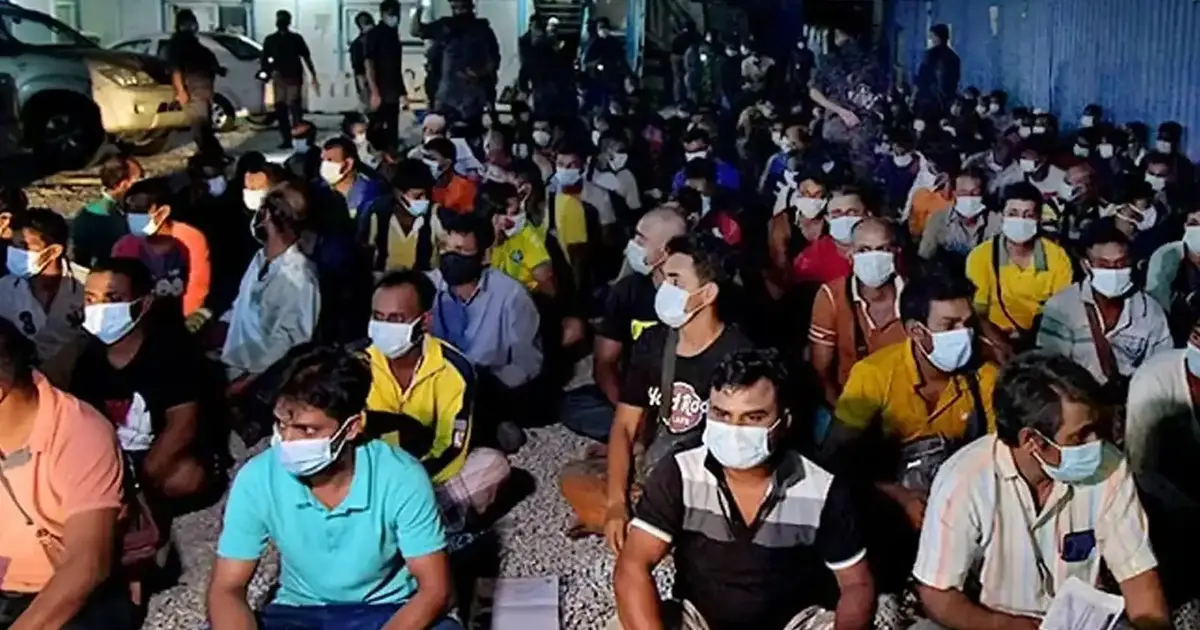
Malaysia faces considerable hurdles in moving forward with proposals to integrate refugees into the formal workforce, according to economist Yeak Kim Leng, who points to both institutional shortcomings and grassroots opposition as fundamental obstacles to progress in this area.
The path toward meaningful refugee employment remains blocked by a combination of legal ambiguities and localized resistance that policymakers have yet to adequately address. Yeak Kim Leng, drawing on years of economic analysis, emphasizes that without clear legislative frameworks and genuine community buy-in, any employment initiative risks replicating the disappointments of the past.
One of the most significant barriers is the absence of a coherent policy architecture governing refugee labor participation. Malaysia's legal system does not currently provide transparent guidelines for employing non-citizens with refugee status, creating uncertainty for both prospective employers and the refugee population itself. This regulatory vacuum leaves businesses unsure about compliance obligations, workers vulnerable to exploitation, and government agencies uncertain about oversight responsibilities.
The 2017 pilot project, intended to test feasibility and gather evidence for broader implementation, ultimately fell short of its objectives. Rather than generating momentum for expansion, that initiative exposed deep structural problems that remain unresolved. The failure was not merely a matter of execution; it reflected deeper misalignments between official intentions and the actual political will to embed refugees into Malaysia's economic life.
Local communities in areas where refugees concentrate have expressed considerable anxiety about employment competition and strain on existing services. This resistance is not merely prejudicial sentiment but also reflects genuine concerns about job displacement, wage suppression, and resource allocation in districts where unemployment and poverty already present challenges. Bridging this divide requires sustained dialogue and demonstrable evidence that refugee employment benefits the broader community, not simply the refugee population or employers seeking cheaper labor.
The economist's assessment carries particular weight in the Malaysian context, where economic arguments have historically influenced policy direction more effectively than humanitarian appeals alone. By framing refugee employment through an economic lens, analysts like Yeak Kim Leng underscore that this is fundamentally a question of structural design and institutional capacity, not merely charity or international obligation.
For Southeast Asia more broadly, Malaysia's struggle illustrates a pattern replicated across the region. Several countries hosting significant refugee populations lack coherent employment strategies, forcing displaced persons into informal economies where they face exploitation and minimal labor protections. The resulting underground labor markets often operate beyond government taxation and safety oversight, creating outcomes that satisfy neither humanitarian nor economic objectives.
The absence of clear pathways for refugee employment also perpetuates dependency on humanitarian assistance, increasing fiscal burdens on governments already stretched thin by competing social demands. When working-age refugees remain excluded from productive economic participation, they become long-term beneficiaries of aid rather than potential contributors to tax bases and economic growth.
Addressing these barriers requires action on multiple fronts simultaneously. First, policymakers must develop detailed legislative frameworks that specify employment rights, workplace safety standards, and enforcement mechanisms. Second, community engagement must begin far earlier in the process, with transparent communication about the rationale for employment initiatives and concrete measures to protect local workers. Third, any renewed pilot project must learn from the 2017 experience by building in rigorous monitoring, clear success metrics, and genuine flexibility to adjust approaches based on evidence.
The involvement of economists like Yeak Kim Leng in this debate reflects a growing recognition that refugee integration cannot remain the exclusive domain of humanitarian organizations and social workers. Economic institutions and business leaders must become invested stakeholders in finding solutions that align refugee employment with broader development objectives.
Without addressing these foundational issues, Malaysia risks perpetuating a status quo that serves no one well. Refugees remain trapped in precarious circumstances, communities harbor grievances about unmanaged change, employers circumvent regulations through informal arrangements, and government credibility suffers from repeated policy failures. The 2017 pilot project's disappointment should serve as a cautionary lesson rather than a reason for abandonment. Instead, it provides essential data about what must change for any future initiative to succeed.

