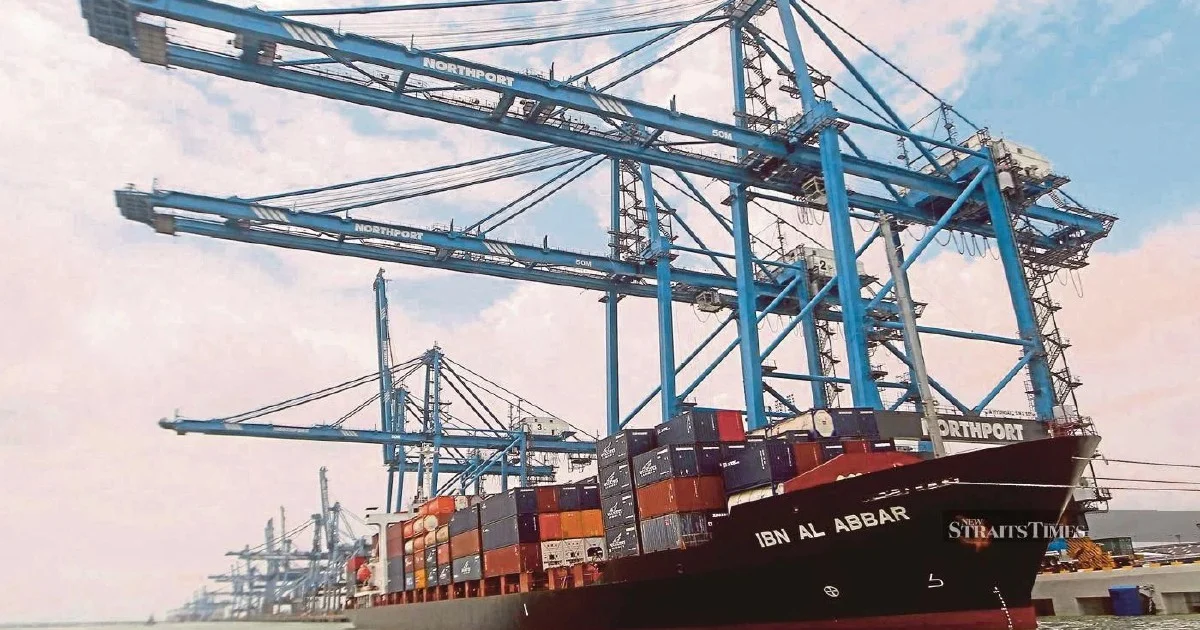
Port Klang's third terminal represents one of Southeast Asia's most significant maritime infrastructure undertakings, and Transport Minister Anthony Loke has signalled that ground-breaking remains achievable within the current calendar year once administrative hurdles are cleared. Speaking at Port Klang, Loke expressed confidence that the venture maintains its development momentum, emphasising that pending land-related complications with the Selangor state administration represent the final obstacle to mobilising construction crews and equipment.
The Port Klang 3 endeavour forms part of Malaysia's broader infrastructure modernisation agenda and reflects the government's commitment to maintaining the country's competitive standing as a major transhipment and containerised cargo hub within the Asia-Pacific corridor. The facility aims to substantially expand the nation's port capacity and position Port Klang to accommodate next-generation mega-container vessels that increasingly dominate international shipping networks. This expanded throughput capability would strengthen Malaysia's logistics competitiveness against rival regional ports including Singapore, Port Qasim in Pakistan, and emerging facilities in Bangladesh and Vietnam.
Land acquisition complexities have historically delayed numerous major infrastructure schemes across Malaysia, and the Port Klang 3 project illustrates the intricate negotiations required when development initiatives intersect with state government jurisdiction and private land ownership. Selangor's administration must balance competing interests, including environmental stewardship, existing community stakeholder concerns, and revenue optimisation from publicly-held properties. The transport ministry's willingness to characterise these discussions as progressing positively suggests both parties are genuinely motivated to reach compromise arrangements rather than allowing the matter to languish in protracted dispute.
From an economic perspective, the delayed Port Klang 3 timeline carries implications extending well beyond the port operator itself. Shipping lines evaluate port expansion capabilities when routing cargo through Malaysia, and competitors with more readily available capacity may gradually absorb market share if Port Klang cannot deliver terminal space when required. The project's completion window therefore affects Malaysia's ability to retain and expand strategic positioning within regional supply chains, particularly for petrochemicals, electronics, and automotive component distribution across Greater Southeast Asia.
The transport minister's cautious optimism reflects the delicate negotiations underway. Rather than pledging absolute commencement dates, Loke framed the timeline as conditional upon resolving land matters, acknowledging that administrative and legal complexities surrounding property acquisition sometimes develop unexpected complications. This measured language suggests the ministry recognises that overcommitting to specific dates risks credibility damage if circumstances shift. Conversely, characterising progress as genuine and achievable maintains stakeholder confidence among shipping industry participants and lenders evaluating project financing.
Port Klang's significance extends beyond commercial maritime operations. The facility serves as a crucial employment centre for port workers, transport logistics personnel, and associated service providers throughout Selangor's western corridor. Project completion would generate sustained construction employment during the development phase, followed by permanent operational positions once the terminal becomes functional. Malaysian maritime unions and port worker associations have legitimate interest in ensuring timeframes remain realistic, as project delays translate directly into postponed employment opportunities within their membership.
The regional shipping landscape has shifted substantially in recent years. Chinese ports have dramatically expanded capacity, while new facilities in Bangladesh and Myanmar seek international recognition. Singapore maintains its dominant position through superior efficiency and connectivity rather than raw volume. Port Klang 3 represents Malaysia's strategic response, attempting to leverage geographic positioning along critical transhipping routes while offering competitive feeder service capabilities. However, these advantages only materialise if the port becomes operational within a reasonable timeframe relative to emerging competitor initiatives.
Investor confidence proves essential to infrastructure projects of this magnitude. Financial institutions and project partners assessing risk exposure require transparent, achievable timelines and credible governmental commitment. Loke's comments, while deliberately non-committal regarding exact commencement dates, appear designed to reinforce the government's determination to advance the scheme while acknowledging that administrative processes require proper completion. This balanced communication helps maintain investor patience while avoiding promises that might subsequently prove impossible to honour.
The broader context involves Malaysia's national port strategy, which contemplates Port Klang 3 as integral to meeting anticipated container traffic growth across the subsequent decade. Demographic expansion, rising consumer spending within Southeast Asia, and ongoing manufacturing integration across the region suggest containerised import-export volumes will continue climbing. Without additional terminal capacity at Port Klang, Malaysia risks congestion, higher cargo handling costs, and eventual diversion of traffic to competing jurisdictions offering superior availability and faster vessel turnaround times.
For Malaysian business stakeholders dependent on efficient port operations—particularly importers and exporters in the automotive, electronics, and petrochemical sectors—Port Klang 3 completion carries direct implications for logistics costs and supply chain reliability. Manufacturing facilities throughout Selangor and the Klang Valley region depend on seamless cargo movement, and bottlenecks at existing Port Klang terminals translate into elevated inventory carrying costs and potential production delays when vessel schedules compress. This cascading effect extends throughout the economy, affecting competitiveness in export-oriented industries.
The transport ministry's task involves balancing multiple stakeholder interests: the port operator's commercial objectives, Selangor's fiscal and land-use priorities, environmental considerations, and the broader national interest in port infrastructure capability. Loke's communications strategy acknowledges these complexities rather than pretending straightforward solutions exist. His willingness to discuss timeline possibilities contingent on land resolution demonstrates realistic engagement with the administrative challenges confronting modern infrastructure development in Malaysia's federal system.