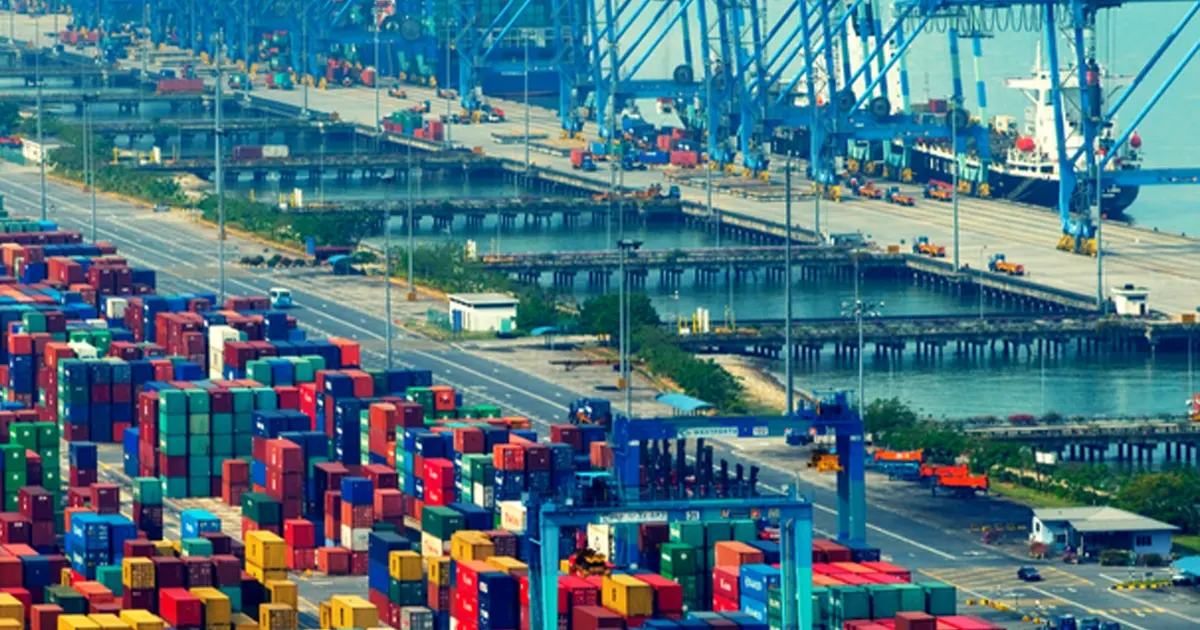
The Port Klang Free Zone has marked its recovery momentum with RM108 million in recorded revenue, demonstrating tangible progress in its ambitious reactivation programme that has now achieved 86% completion, according to Transport Minister Loke Siew Fook. This development represents a crucial milestone for the facility, which has long struggled with operational challenges and financial difficulties that overshadowed its operations for years.
Minister Loke's characterisation of the past 18 months as showing "steady, encouraging growth" reflects the measurable turnaround efforts implemented under enhanced government supervision. The metrics now being reported suggest that strategic interventions and management restructuring have begun yielding results, though analysts caution that sustained momentum remains essential for the facility to establish itself as a reliable regional logistics hub.
The Port Klang Free Zone, situated at one of Southeast Asia's busiest maritime gateways, occupies significant strategic importance for Malaysia's trade infrastructure. Historically plagued by allegations of mismanagement, corruption, and operational inefficiencies, the facility required comprehensive intervention to restore stakeholder confidence and resume meaningful commercial activity. The current reactivation phase represents an organised approach to systematically restore facilities, upgrade systems, and attract legitimate tenants back to the zone.
The 86% reactivation completion rate indicates that most physical rehabilitation and operational restructuring work has progressed substantially. This includes infrastructure improvements, security enhancements, documentation systems overhaul, and facility maintenance addressing years of neglect. Reaching this stage demonstrates administrative capability to execute complex multi-phase recovery projects, though the final 14% of work often involves the most challenging elements, including regulatory compliance, technology integration, and attaining full operational certification.
Revenue generation at this scale signals that tenants are returning to conduct legitimate commercial operations within the facility. The RM108 million figure likely encompasses warehousing fees, cargo handling charges, administrative levies, and value-added logistics services. This income stream, while encouraging, requires contextualisation against the facility's operational capacity and historical performance benchmarks to determine whether utilisation levels are meeting targets or merely reflecting initial recovery patterns.
For Malaysian companies engaged in regional trade, the PKFZ's recovery carries practical implications. A functioning free zone at Port Klang offers advantages in duty exemptions, simplified customs procedures, and proximity to Asia's maritime lanes, potentially reducing logistics costs and time for importers and exporters. The facility's rehabilitation therefore has downstream benefits for competitiveness in manufacturing, trading, and re-export sectors throughout Malaysia and the broader ASEAN region.
The government's sustained commitment to PKFZ recovery, reflected through ministerial oversight and resource allocation, addresses longstanding concerns about governance capacity. However, success ultimately depends on establishing institutional mechanisms that prevent recurrence of past failings. This includes robust auditing frameworks, transparent accounting practices, professional management recruitment, and clear performance metrics that extend beyond revenue reporting to encompass stakeholder satisfaction and operational reliability.
Comparative regional context matters here. Singapore's free trade zones operate with high efficiency and attract premium international tenants, while Bangkok's and Ho Chi Minh City's facilities compete aggressively for regional trade flows. PKFZ's recovery faces competition from these established alternatives and must demonstrate not merely survival but competitive advantage. Reputation restoration takes considerably longer than facility rehabilitation, requiring consistent performance over multiple years to convince international logistics operators and traders to prioritise the zone.
The messaging around reactivation progress serves important strategic purposes beyond financial reporting. External stakeholders—particularly investors considering major commitments to Malaysian logistics infrastructure—view PKFZ recovery as indicative of government capacity to manage complex recovery projects. Positive developments here potentially influence broader investor confidence in Malaysia's infrastructure reliability and management competence, factors that influence foreign direct investment decisions across sectors.
Looking forward, the transition from reactivation to sustainable expansion represents the next critical phase. Moving beyond the current 86% completion requires consolidating gains, expanding tenant recruitment, and demonstrating consistent operational excellence. Performance metrics should increasingly focus on throughput efficiency, cargo volumes, customer retention rates, and comparative positioning relative to regional competitors rather than merely revenue generation.
The RM108 million revenue achievement, while positive, requires interpretation within appropriate context. If this represents initial recovery-phase revenue from limited tenant activity, the trajectory becomes significant. However, if the facility operates substantially below historical capacity utilisation, revenue alone may mask underlying operational challenges. Transparency regarding comparative metrics—such as percentage of available warehouse space occupied, cargo volumes processed, and customer satisfaction indicators—would provide stakeholders clearer understanding of recovery authenticity.
Transport ministry oversight of PKFZ's recovery demonstrates government recognition that Malaysia's logistics infrastructure quality directly affects regional competitiveness. Port Klang's significance as a container gateway means PKFZ's functionality extends beyond the facility itself, influencing overall port efficiency and national trade facilitation. Continued investment in recovery and modernisation serves broader national interests in maintaining Malaysia's position within regional supply chains and trade networks.