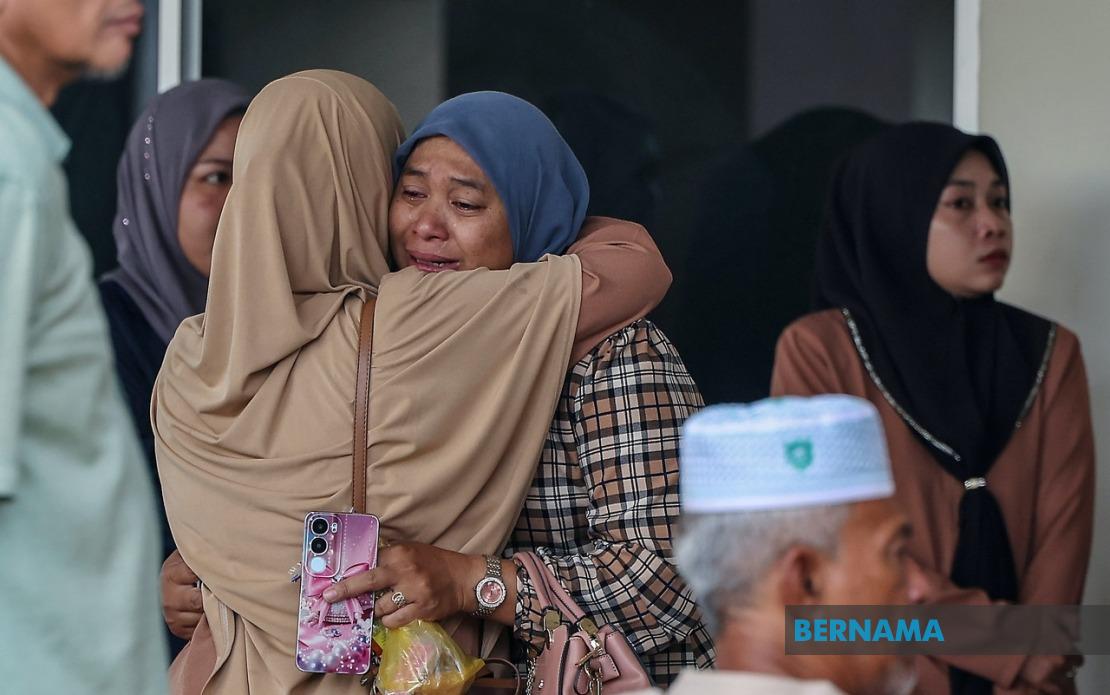
The post-mortem examination of Corporal Norazmi Abu Bakar from the 6th Battalion of the Royal Malay Regiment is expected to proceed tonight at the Forensic Department of Sultanah Bahiyah Hospital in Alor Setar, following a fatal training exercise that claimed his life at Hobart Camp in Gurun, Kedah. The confirmation came from Sulaiman Mat Saad, the deceased's cousin, who stated that the examination would commence after the body identification process was completed.
Corporal Norazmi was among two military personnel who lost their lives in the grenade-throwing training incident, which occurred at approximately 10:57 am as part of the Royal Engineers Regiment Combat Enhancement training programme. The tragic accident has raised renewed concerns about safety protocols during live weapons exercises within the Malaysian Armed Forces. Both casualties were initially transported to Sultan Abdul Halim Hospital in Sungai Petani, where they were pronounced dead upon arrival, before being transferred to the forensic facility for examination.
Following completion of the post-mortem procedures, Corporal Norazmi's remains will be transported to Masjid Al Busyra in Merbok, Sungai Petani, where he will be laid to rest in the mosque's cemetery. The family has made arrangements for the traditional Islamic burial rites to be observed, with the mosque serving as both the holding point and final resting place. Such arrangements underscore the significance of military traditions and religious observances within the Malaysian military community, where fallen soldiers are typically afforded formal ceremonial burials.
The second fatality was Private Siti Khadijah Sungip, an engineer soldier serving with the First Squadron of the Royal Engineers Regiment. Her remains are scheduled to be repatriated to her hometown in Johor, where her family will conduct their own funeral arrangements and burial ceremonies. The loss of a female soldier in such circumstances has particular resonance within Malaysia's military establishment, as women have increasingly taken on combat and combat-support roles within the armed forces.
The incident has thrust into sharp focus the inherent risks associated with live-fire and live-explosive training exercises, which are essential components of military combat readiness but carry inherent dangers. Grenade-throwing training, in particular, demands precise execution and strict adherence to safety procedures, as the margin for error remains minimal. The fact that this accident occurred during what should have been a controlled, supervised exercise suggests that deeper investigation into the specific circumstances will be necessary to understand what went wrong.
The Malaysian Army's formal confirmation of the incident underscores the military's commitment to transparency in such tragic circumstances, though detailed investigations into causative factors typically follow the immediate response phase. Preliminary assessments will likely examine whether proper safety distances were maintained, whether supervision protocols were adequately enforced, and whether the soldiers involved possessed appropriate qualification and experience for the training level they were undertaking.
Training accidents within the region's armed forces have occasionally prompted reviews of safety procedures and equipment standards. In Malaysia's case, such incidents often lead to comprehensive reviews by the relevant battalion or regiment to identify procedural gaps or equipment deficiencies that may have contributed to the tragedy. The military community has historically used such tragic events as catalysts for systemic improvements, though this provides little comfort to grieving families.
For the broader Malaysian military establishment, incidents such as these serve as sobering reminders of the physical dangers that personnel face during routine training operations, distinct from the risks associated with actual combat deployments. The psychological impact reverberates through battalion cohesion and morale, particularly when fatalities occur among close-knit training units where soldiers develop strong interpersonal bonds during extended exercises.
The families of both deceased soldiers will likely receive military funeral honours befitting their rank and service, with full ceremonial rites conducted at their respective burial locations. These formal proceedings serve not only to honour the fallen but also to provide closure and community support to grieving family members during what constitutes an exceptionally difficult period.
Meanwhile, the circumstances surrounding the accident will become the subject of formal military investigations conducted by dedicated service boards, whose findings may subsequently inform revisions to training protocols and safety guidelines across the Malaysian Armed Forces. Such investigations typically involve technical analysis of equipment failure, human factors assessment, and procedural compliance evaluation.
The incident also highlights ongoing debates within military circles regarding the appropriate balance between training intensity necessary for combat readiness and the implementation of comprehensive safety measures. These discussions extend across military establishments throughout Southeast Asia, where armed forces must maintain high operational standards while protecting their personnel from unnecessary risk during peacetime training activities.