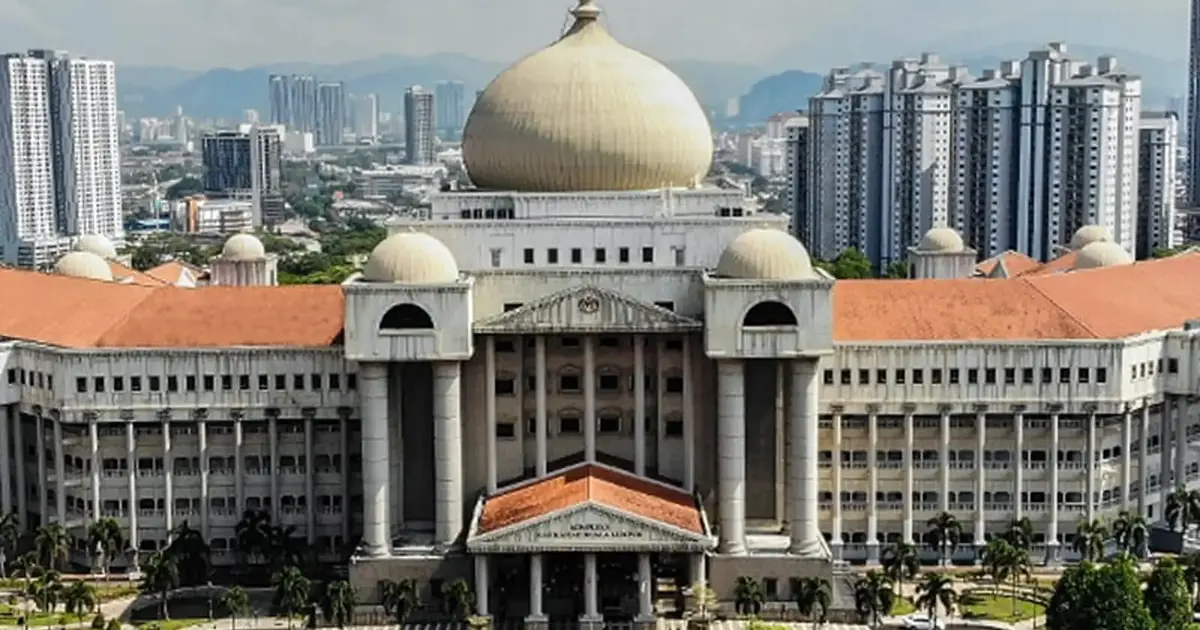
The Malaysian High Court has delivered a significant ruling on the boundaries of executive accountability, determining that the prime minister cannot be compelled to give evidence in a RM30 million civil dispute. The court's decision to strike down the subpoena represents an important clarification of judicial oversight and the doctrine of executive privilege in the nation's legal framework.
The ruling hinges on a fundamental principle of witness examination: that individuals summoned to court must have direct and material knowledge of facts central to the dispute. The High Court bench concluded that the prime minister does not occupy such a position in this particular case, lacking the requisite connection to evidence that would make his testimony essential to resolving the contested issues. This distinction between a witness who merely possesses peripheral knowledge and one whose testimony is genuinely material to the outcome carries significant implications for how future litigation involving senior government figures will be managed.
For Malaysian legal practitioners and constitutional scholars, the decision provides clarity on how courts should approach competing interests when powerful officials are drawn into litigation. The judgment signals that courts will not automatically permit the subjection of the prime minister to examination simply because legal papers have been served. Instead, there exists a filtering mechanism requiring claimants to establish that the testimony sought is genuinely probative and cannot be adequately supplied through alternative means or other witnesses.
The broader context of this case reflects patterns seen across common law jurisdictions, where courts must navigate the tension between ensuring access to justice for ordinary citizens and protecting the effective functioning of government. The Malaysian judiciary's approach here demonstrates a pragmatic middle ground: acknowledging that heads of government cannot be treated as ordinary witnesses available on demand, while preserving the principle that no one stands entirely above the law. The application of the "material witness" test provides a principled basis for this distinction.
From the perspective of governance and administrative efficiency, the ruling offers reassurance to the executive branch that courts will not lightly interfere with the prime minister's ability to discharge official duties by requiring extended periods away from government business. A prime minister consumed by litigation could face challenges in managing the nation's affairs, a consideration that courts across the Commonwealth have historically weighed when deciding whether to compel testimony from sitting heads of state or government. However, this protection is not absolute; it extends only to cases where the individual's contribution to evidence is not genuinely essential.
For the claimant in the RM30 million case, the ruling represents a setback in their litigation strategy. Those bringing civil actions involving senior officials must now satisfy a more stringent threshold in justifying why summoning the prime minister is necessary. This may force litigants to rethink their evidence-gathering approaches, placing greater reliance on documentary evidence, testimony from subordinates, or other witnesses who can speak to the relevant facts without the complications involved in bringing executive leaders to the witness stand.
The decision also carries implications for transparency and accountability in Malaysian public life. While the ruling provides a mechanism to shield the prime minister from potentially frivolous or collateral testimony, it simultaneously assumes that information will be available through other channels. The judgment's underlying logic depends on the existence of adequate alternative sources of evidence. In cases where the prime minister possesses genuinely unique knowledge—such as private conversations or decision-making processes—the material witness test might yield different results, suggesting the door is not entirely closed to such testimony in future cases.
Regionally, Malaysia's approach aligns with practices in other Southeast Asian democracies and Commonwealth jurisdictions where courts have similarly grappled with balancing judicial independence against the practical realities of governing a nation. The principle that official functions must be preserved, while individuals remain answerable to law, reflects a mature constitutional framework. However, Malaysia's approach adds a particular emphasis on the materiality test, which is more restrictive than some jurisdictions that focus primarily on whether evidence is relevant to the dispute.
The ruling also raises questions about how courts will treat other senior officials in analogous circumstances. If the prime minister qualifies for this protection based on the material witness standard, will the same logic extend to cabinet ministers, senior civil servants, or judges? The decision leaves open these questions, suggesting future litigation will provide opportunities to refine and test the boundaries of the principle in different contexts and factual scenarios.
For Malaysian citizens and those following the country's legal development, the judgment demonstrates that the courts take seriously their role in managing the scope and conduct of litigation involving powerful officials. The decision is neither a blanket exemption granting the prime minister immunity from judicial process, nor is it a rubber stamp approving every attempt to compel testimony. Instead, the High Court has established a careful calibration based on evidentiary necessity—a framework that respects both the rule of law and the practical requirements of executive governance in a functioning democracy.

