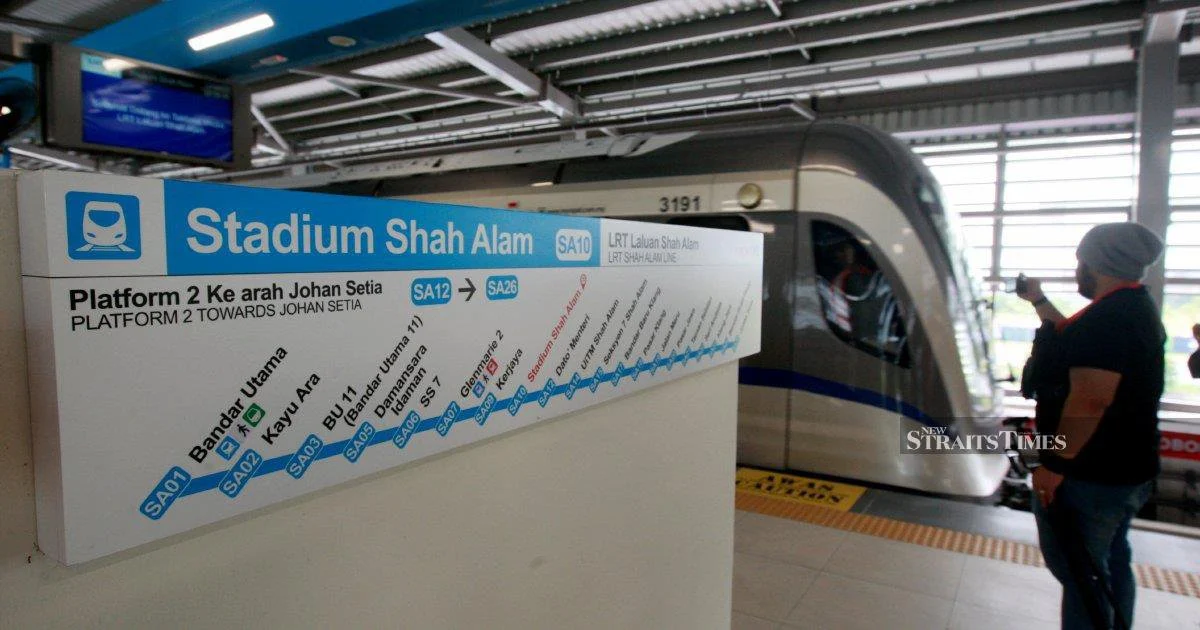
Prime Minister Datuk Seri Anwar Ibrahim is set to formally open the Light Rail Transit Line 3 (LRT3) Shah Alam extension this Sunday, marking a crucial milestone in Malaysia's public transport development. The ceremonial launch will precede the line's commencement of regular passenger services on Monday, bringing a new transport corridor to residents and commuters across the Klang Valley.
The LRT3 Shah Alam line represents one of the most significant rapid transit infrastructure projects to reach completion in the greater Kuala Lumpur region in recent years. This extension expands the existing LRT3 network, which currently operates between Bandar Utama and Klang, and adds crucial connectivity to the Shah Alam corridor—a densely populated and economically important area within Selangor. The project addresses longstanding transport challenges that have affected commuters in this belt for years.
Shah Alam, as the capital of Selangor and home to numerous industrial estates, manufacturing facilities, and residential developments, has experienced mounting traffic congestion as its economy and population have grown. The new LRT extension promises to offer an alternative to road transport, potentially easing congestion on major routes such as the Federal Highway and other arterial roads that serve the area. For commuters, the additional rail option enhances connectivity between major employment zones and residential areas.
The timing of the launch carries significance for Malaysia's transportation infrastructure narrative. Public transit projects in the Klang Valley have faced various challenges, including cost overruns and scheduling delays. The successful completion of the LRT3 Shah Alam extension demonstrates capacity for delivering major infrastructure despite such obstacles. For a government that has emphasised development and economic growth as cornerstones of its agenda, such projects serve as tangible demonstrations of commitment to urban development.
Beyond Shah Alam itself, the extended LRT3 line creates integration opportunities within the broader public transport ecosystem of the Klang Valley. The line's connections to other rapid transit systems, bus terminals, and feeder services enable greater accessibility for cross-regional travel. This interconnectivity is essential for creating a functional public transport network that can genuinely compete with private vehicle use and influence commuting patterns.
For the broader Southeast Asian context, Malaysia's continued investment in rail infrastructure positions the nation as committed to modernising its urban transport systems. While some regional peers have advanced metro networks, Malaysia's multi-pronged approach—combining LRT, MRT, and monorail systems—demonstrates tailored urban planning. The Shah Alam extension underscores that expansion of these networks remains a priority despite competing fiscal demands.
The economic implications of the new line extend beyond transport itself. Improved connectivity typically stimulates property development and commercial activity along transit corridors. Developers and investors have already shown interest in areas serviced by LRT lines, and the Shah Alam extension is likely to catalyse further urban development, potentially generating employment and tax revenue for both state and federal governments. This multiplier effect is a key justification for major transport infrastructure expenditure.
Operationally, the launch also signals important capacity and planning outcomes. Opening a new line requires coordination across multiple agencies—from Prasarana Malaysia Berhad, which operates the LRT system, to regulatory bodies and safety authorities. The readiness for Monday's service commencement indicates that final testing, staff training, and safety certifications have been satisfactorily completed, meeting stringent operational requirements for public transit systems.
For commuters in Shah Alam and surrounding areas, the practical benefits will materialize immediately once services commence. Reduced travel times, lower transport costs compared to private vehicles, and enhanced convenience for workers, students, and other regular users represent direct daily gains. During peak hours particularly, the availability of rapid transit options can substantially improve quality of life by reducing commute duration and associated stress.
The extension also addresses equity considerations in urban transport planning. Not all residents can afford private vehicles, and public transit provision is essential for inclusive urban development. By expanding rail infrastructure into areas previously underserved by rapid transit, the project enhances transport accessibility for lower-income residents who depend on public transport for economic opportunity and social participation.
Looking forward, the successful completion and launch of the LRT3 Shah Alam extension may influence broader transport infrastructure planning for the Klang Valley and Malaysia more broadly. It provides data and operational experience that informs future decisions about rail expansion priorities. Whether additional extensions or new corridors are pursued will partly depend on early performance metrics from this line, including passenger volumes, revenue generation, and integration success with other transport modes.
The Sunday ceremony will provide an opportunity for senior government officials and stakeholders to highlight the significance of the project within Malaysia's development trajectory. Such events, while ceremonial, serve important functions in public communication about infrastructure achievements and government priorities. For Prime Minister Anwar Ibrahim specifically, presiding over the launch of a major completed transport project demonstrates tangible delivery on infrastructure commitments, a significant consideration in Malaysia's current political landscape.

