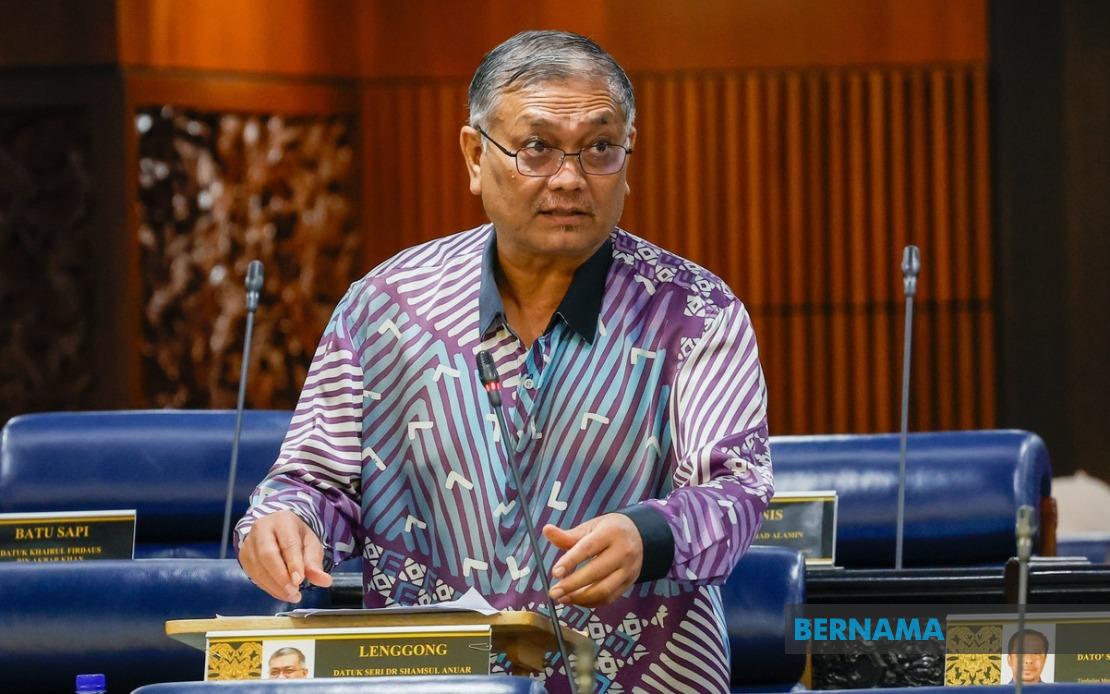
The Malaysian government has shelved plans to immediately advance the Prisons (Amendment) Bill 2026 through parliament, instead sending the contentious legislation back to two Parliamentary Special Select Committees for additional examination. Deputy Home Minister Datuk Seri Dr Shamsul Anuar Nasarah announced the decision on June 25 after heated parliamentary debate in the Dewan Rakyat, saying the measure will undergo fresh scrutiny by the PSSC on Security and the PSSC on Human Rights, Election and Institutional Reform. The move represents a tactical retreat on proposed reforms designed to ease prison overcrowding and modernise Malaysia's corrections system through electronic monitoring and expanded rehabilitation programmes.
The bill, which contains 12 clauses addressing systemic challenges within the prison service, has generated unexpected political headwinds despite initial positive feedback from the same committees months earlier. The core provisions would introduce electronic monitoring technology to track offenders and formalise a volunteer support network to assist rehabilitation initiatives under the existing Prisons Act 1995. These elements align with global trends toward rehabilitation-focused incarceration rather than purely punitive approaches. However, the legislation's journey through parliament exposed deeper concerns that had not fully surfaced during earlier technical committee deliberations, prompting the government to pause and reassess.
The flashpoint centres on a controversial new Section 63A embedded within the bill, which provides legal immunity to prison officers and individuals acting under orders from the commissioner general of prisons. This provision triggered alarm bells among parliamentarians across ideological lines, with 14 government and opposition MPs participating in debate, and the vast majority calling for withdrawal and referral back to committees. The protection clause essentially shields prison personnel from potential legal liability when following directives from senior leadership, a safeguard that lawmakers feared could enable misconduct without meaningful accountability mechanisms. This concern reflects broader Malaysian anxieties about executive overreach and the need for checks on security agencies' powers.
William Leong Jee Keen, an opposition MP from Selayang representing Pakatan Harapan, articulated the core legal anxiety, arguing that the new provision should undergo rigorous review to ensure prison officer compliance with orders remains tethered to principles of accountability and consistent with Malaysia's commitment to the rule of law. His intervention carried weight given opposition scrutiny of government proposals, but significantly, government-aligned lawmakers including Datuk Awang Hashim from Pendang and Datuk Seri Madius Tangau from Tuaran voiced identical reservations. This bipartisan concern signals that the immunity clause touches on a genuine consensus issue about proper administrative safeguards, rather than simple partisan opposition.
The legal architecture of Section 63A essentially creates a chain-of-command defence that insulates officers from personal accountability if they implement orders from above, even if those orders potentially breach procedural fairness or individual rights. In practice, this could shield officers from both civil and criminal liability in disputes over detention conditions, use of force, or disciplinary procedures. While senior leadership remains theoretically accountable for directing unlawful conduct, the practical burden of proving that orders were deliberately unlawful falls on detainees or rights advocates, a substantial evidentiary hurdle. Malaysian jurisprudence and constitutional law traditionally favour mechanisms that preserve individual redress against state action, making such blanket immunity provisions subject to heightened scrutiny.
Shamsul Anuar acknowledged that the Home Ministry had absorbed all feedback raised during parliamentary debate and would carefully consider the views and proposals submitted. The government had previously conducted briefing sessions for MPs to gather input on the proposed legislation, and both parliamentary committees had initially responded positively to the amendments when consulted separately in October 2025 and June. The disconnect between those earlier positive signals and the parliamentary pushback suggests that full chamber debate exposed nuances and concerns that technical committee review had not adequately addressed, a common phenomenon in Malaysian legislative processes where specialist committees and full parliamentary debate serve distinct functions.
The bill's core mission—tackling prison overcrowding through rehabilitation-focused reforms—enjoys conceptual support across the political spectrum. Malaysia's prisons operate substantially above capacity, creating security challenges, health risks, and obstacles to effective rehabilitation. Electronic monitoring could divert lower-risk offenders from custodial settings, reducing pressure on facilities while maintaining public safety. The volunteer programme would expand prison officers' capacity to deliver counselling, skills training, and reintegration support that government resources alone cannot sustain. These objectives align with modern penology and international best practice, explaining why committees initially endorsed the amendments.
Yet the legislative packaging created an unexpected liability. By bundling rehabilitation reforms with an immunity provision for prison officers, the government inadvertently created political space for lawmakers to challenge both elements simultaneously. Opposition politicians could frame the immunity clause as executive overreach, while government backbenchers, concerned about their own constituents' rights and the separation of powers, independently raised similar objections. The confluence of these pressures forced the government's hand, making withdrawal and recommittal the politically pragmatic choice rather than pushing a problematic clause through parliament and accepting eventual constitutional challenge.
The referral back to the two committees signals an intention to redesign Section 63A in ways that preserve operational flexibility for prison management while embedding genuine accountability safeguards. Possible solutions might include narrowing the immunity to actions taken in good faith within lawful directives, establishing an independent oversight mechanism, or requiring transparent documentation of orders and their execution. Alternative approaches used in other Commonwealth jurisdictions could provide templates—for instance, Australia and Canada have structured prison officer protections to coexist with victim redress mechanisms and judicial review rights. The parliamentary committees now face pressure to engineer a compromise that enables prison reform while satisfying rule-of-law concerns.
For Malaysia's broader governance context, the episode illustrates how parliamentary specialisation through select committees and plenary debate serve complementary but distinct roles in legislative scrutiny. Technical committees can assess policy merit and administrative feasibility, but cannot fully gauge political acceptability or constitutional resonance. Full chamber debate brings those dimensions into focus, allowing backbenchers to raise concerns that minority voices or specialist perspectives might miss. The deferral represents the system functioning as intended, with feedback loops allowing problems to be identified and addressed before final enactment. Whether the government successfully resolves the accountability concerns in subsequent committee work will shape both this bill's ultimate fate and the trajectory of penal policy reform in Malaysia more broadly.
The pause in proceedings also reflects Malaysia's evolving approach to human rights and institutional accountability in the post-2018 political context. Lawmakers across the coalition have demonstrated willingness to scrutinise security agency proposals more robustly than in previous eras, signalling that blank cheques for executive action face mounting parliamentary resistance. This development carries implications beyond the Prisons Bill itself, potentially raising the bar for future legislation affecting detention, surveillance, and law enforcement powers. The Home Ministry's willingness to step back and recalibrate suggests recognition of these shifting expectations, though whether the revised bill ultimately satisfies parliamentary concerns remains uncertain.

