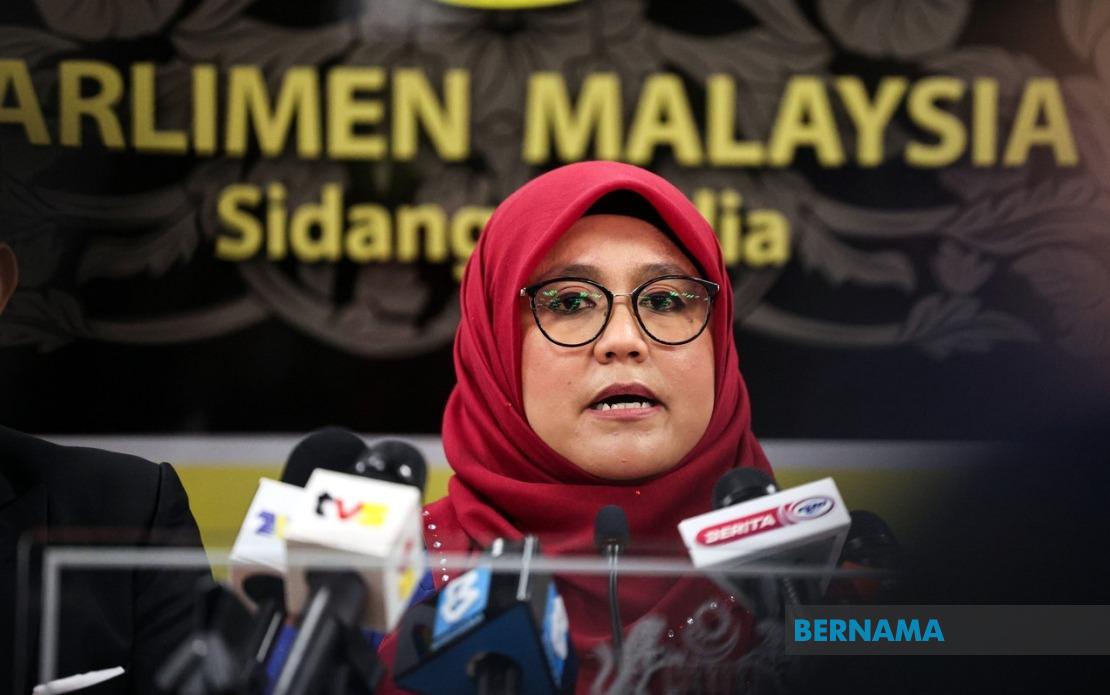
An investigation by Malaysia's Public Accounts Committee has pinpointed the real driver of surging health insurance premiums: the largely unregulated fees imposed by private hospitals for supplies, equipment, medicines and diagnostic services rather than doctors' consultation charges. Datuk Mas Ermieyati Samsudin, the PAC chairman, highlighted this critical distinction in a statement presented to Parliament on June 25, noting that while physician professional fees have been capped since 2013, hospital operators continue to set charges freely for virtually everything else.
The scope of unregulated costs extends far beyond basic medical supplies. Private hospitals are charging patients for high-technology treatments and modern medical equipment without price controls, while simultaneously bearing operational expenses—staff salaries, utilities, facility maintenance and technology infrastructure—that consistently rise year after year. The committee also identified litigation costs and defensive medicine practices as contributors to the overall expense burden, all of which eventually flow through to patients and insurers.
A particularly troubling finding concerns the complete absence of standardised billing frameworks across Malaysia's private hospital sector. This lack of uniformity has created an opaque marketplace where patients and insurers struggle to understand what services actually cost and why prices vary so dramatically between facilities. This obscurity, the PAC noted, makes meaningful price comparison virtually impossible for healthcare consumers, effectively insulating hospitals from competitive pressure that might otherwise contain costs.
The committee uncovered a widespread practice in which high medicine prices serve a dual purpose: generating profit and silently subsidising operational expenses that hospitals decline to bill separately. Rather than transparently itemising nursing care, utility costs and facility overhead, hospitals embed these charges into pharmaceutical markups. Additionally, the PAC documented instances of "unbundling," where hospitals charge separately for items that logically belong to basic service packages—clinical waste disposal, bed linens and alcohol swabs—all of which should reasonably be absorbed into room rates rather than presented as discrete line items.
Price discrimination emerged as another significant concern. The committee found evidence that patients presenting guarantee letters from insurers faced substantially higher charges than those paying cash or using the pay-and-claim system. This two-tier pricing structure effectively rewards those with insurance while penalising them through higher premiums, creating a perverse incentive dynamic that undermines the insurance mechanism itself.
The pharmaceutical supply chain exhibits its own troubling characteristics. Investigation revealed substantial markups at multiple distribution levels, with generic medications sometimes priced higher than their branded, originator-drug equivalents—a reversal of normal market logic. More critically, Malaysia's medicines market is fragmented across more than 1,500 products with sole registered manufacturers, creating de facto monopolies where price competition simply cannot function. These single-source medications can command premium prices with no competitive alternatives to constrain them.
In response to these systemic failures, the PAC submitted 17 recommendations to government. Among the most consequential is accelerating deployment of the Diagnosis-Related Group payment system, which would establish standardised pricing frameworks based on treatment types rather than allowing hospital-by-hospital pricing variations. The committee also urged legislative amendments to the Private Healthcare Facilities and Services Act 1998, specifically empowering the Ministry of Health to regulate hospital service charges beyond the already-controlled physician fees.
The PAC called upon the Ministry of Health and the Ministry of Domestic Trade and Cost of Living to jointly establish price-regulation mechanisms for medicines and medical equipment while exploring direct manufacturer procurement—particularly sourcing from domestic producers—to bypass supply chains and cartels that inflate costs. This dual approach acknowledges that Malaysia possesses domestic pharmaceutical manufacturing capacity that could be leveraged to reduce import dependency and associated markups.
Parliamentary response to the investigation crossed factional lines, with 12 Members of Parliament from government and opposition blocs calling for accelerated implementation of the DRG system, strengthened regulatory oversight of private hospital pricing and improved insurance industry transparency. Several MPs advocated for enhanced public healthcare investment as a counterweight to private sector pricing power, while others proposed freezing fee increases at university teaching hospitals pending development of adequate alternative capacity and higher taxation of private hospitals profiting substantially from medical tourism operations.
For Malaysian healthcare consumers, these findings carry immediate implications. Insurance premiums reflect hospital pricing power; without regulatory intervention, the current trajectory suggests continued annual increases regardless of inflation rates. Small and medium enterprises bearing healthcare insurance costs for employees face mounting burdens that reduce competitiveness and worker compensation. Individual policy holders—particularly those without employer coverage—must navigate a deliberately opaque system where prices bear no transparent relationship to underlying costs.
The investigation also holds significance for Southeast Asia's broader healthcare policy landscape. As other regional nations expand private healthcare capacity and insurance markets, Malaysia's experience demonstrates how the absence of robust pricing regulation allows costs to spiral beyond sustainable levels. The PAC's recommendations, if implemented, could serve as a model for more mature health systems in the region grappling with similar cost-control challenges.
Bank Negara Malaysia and the Health Ministry will require close coordination to implement these reforms effectively. Financial regulators can pressure insurers toward transparency in underwriting and claims management, while health authorities establish binding price frameworks. The coordination challenge is substantial, but the stakes are equally significant: without intervention, Malaysia risks pricing an expanding proportion of its middle-income population out of adequate private healthcare coverage while simultaneously straining public system capacity.

