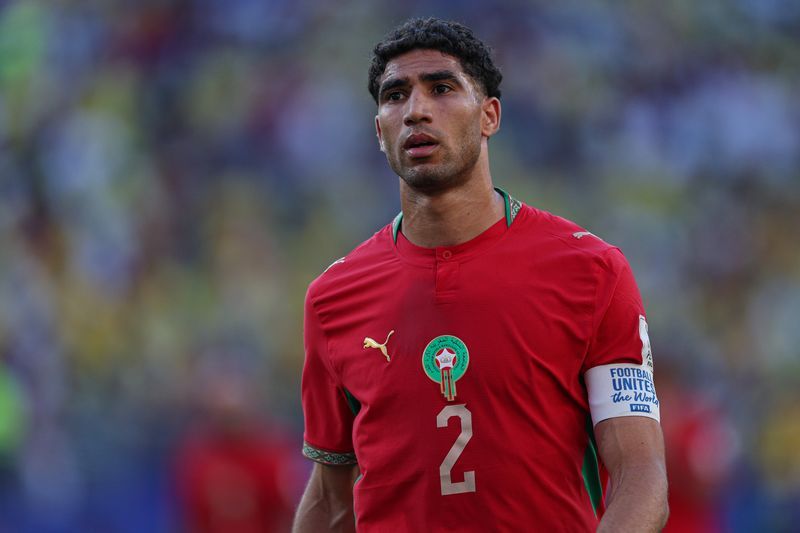
Paris Saint-Germain's Moroccan international defender Achraf Hakimi will face trial on a rape charge after the Versailles appeals court rejected his attempt to overturn a referral to criminal court. The decision clears the legal path for his case to proceed through France's judicial system, though no trial date has yet been scheduled. Hakimi's legal setback comes as he continues his international commitments with Morocco, having recently appeared in the World Cup and maintaining his place in the national squad.
The 25-year-old right-back, who has established himself as one of Europe's most promising defensive talents, disclosed the court decision through a social media post on X. In his statement, Hakimi expressed frustration at the narrative surrounding his case, suggesting he has become a convenient focal point for public scrutiny. His response signals a shift from his earlier legal strategy of challenging the charges, moving instead toward a confrontational courtroom approach where he intends to present his perspective directly.
The allegations against Hakimi emerged publicly in 2023 when prosecutors in Nanterre, a Paris suburb, initiated a formal investigation following a rape complaint. The specific circumstances surrounding the accusation have remained largely private throughout the legal process, with French authorities maintaining standard confidentiality protocols typical in sensitive criminal matters. Despite the investigation's commencement over a year ago, details about the alleged victim, the circumstances of the incident, or the evidence under examination have not been disclosed to the media.
Hakimi's decision to appeal the criminal court referral represented his initial legal strategy to prevent the case from proceeding to trial. The rejection of this appeal by the Versailles court indicates that judges found sufficient grounds to believe the case warrants full judicial examination. This development reinforces the prosecution's position that the allegations merit serious consideration within the formal criminal justice framework rather than dismissal at preliminary stages.
For Malaysian and Southeast Asian football followers, Hakimi's situation underscores the complex intersection between professional athletics and personal legal accountability in European sports. As a player of international stature competing at the highest level, his case demonstrates that even elite athletes are subject to the same judicial processes and criminal law provisions as ordinary citizens, regardless of their prominence or commercial value to their clubs.
The timing of this development carries implications for Hakimi's career trajectory and PSG's defensive planning. While the Ligue 1 champions have not issued public statements regarding their employee's legal predicament, clubs typically maintain distance from criminal matters involving players, treating such situations as personal legal issues separate from professional employment relationships. Nonetheless, a lengthy or high-profile trial could create management complications for PSG and potentially affect Hakimi's availability and mental state during the 2024-25 season.
Hakimi's statement emphasizes his desire for the opportunity to present his account in open court, suggesting confidence in his position or at minimum a strategic pivot toward challenging the allegations directly. By framing his social media post around seeking truth and fairness, he appears to be building a narrative aimed at supporters and the broader public while his legal team prepares substantive courtroom arguments. This dual approach of public messaging and judicial process management is increasingly common among high-profile defendants navigating contemporary media landscapes.
The lack of a scheduled trial date suggests that French criminal courts remain occupied with existing caseloads, a common challenge within European judicial systems. Cases involving serious allegations such as rape typically proceed through multiple preliminary stages before reaching full trial, including further investigation periods, pre-trial hearings, and possible plea discussions. The interval between court referral and actual trial commencement could extend considerably, meaning Hakimi may need to manage his football career amid ongoing legal uncertainty for a substantial period.
For Morocco's national team, Hakimi's legal situation presents a secondary consideration to his on-field contributions. National football associations typically do not exclude players based on pending criminal charges unless internal disciplinary codes are violated or contractual obligations are breached. Morocco's football federation has not indicated any intention to distance itself from the defender, and his continued participation in World Cup qualifiers suggests the federation views him as available for selection throughout the legal process.
The broader context of this case within French professional football reveals an institution grappling with accountability mechanisms alongside commercial pressures. PSG, as Europe's most expensively assembled squad, operates within a competitive environment where losing a starting defender to legal proceedings creates both practical and reputational complications. The club's response—or apparent lack thereof—reflects a wider tendency among elite organizations to compartmentalize criminal matters from professional operations until circumstances demand otherwise.
Hakimi's willingness to proceed to trial rather than pursuing settlement negotiations or quiet resolutions indicates either strong confidence in his defense or strategic advice that fighting the charges publicly presents fewer long-term consequences than alternative approaches. His statement's emphasis on personal vindication and truth-telling suggests he intends to use the courtroom as a platform for clearing his reputation comprehensively rather than managing the matter through conventional dispute resolution.
As this case develops through France's criminal justice system, it will inevitably attract attention from sports media, legal analysts, and football observers across Southeast Asia and globally. The proceedings may establish precedents regarding how French courts handle allegations against international athletes, particularly those representing foreign nations while residing and working in France. The outcome will have implications not only for Hakimi's career and personal circumstances but also for understanding how contemporary professional football navigates the intersection of elite athletic competition and serious criminal liability.

