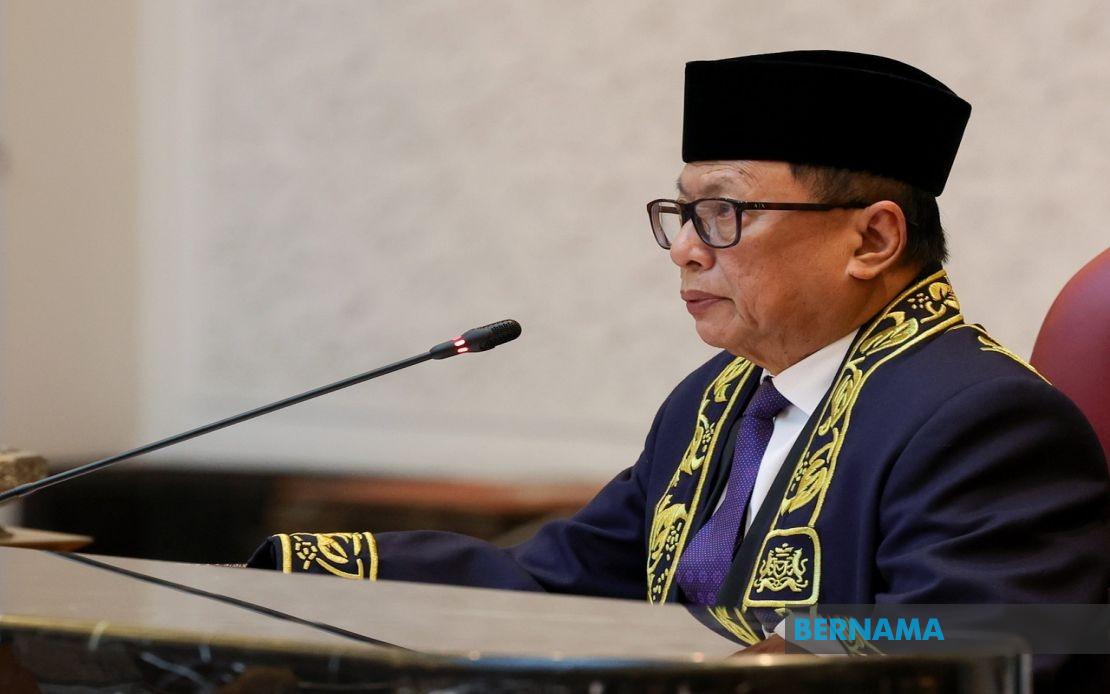
In a dramatic departure from Malaysia's largest Malay-Muslim political party, Datuk Dr Mohd Puad Zarkashi announced his resignation from UMNO effective immediately on June 25, 2026. The move, disclosed through a Facebook statement, marks a significant rupture for the veteran politician who has held multiple prominent positions within the party hierarchy and government apparatus. Puad Zarkashi, the incumbent assemblyman for Rengit in Johor, framed his exit as a deliberate act of political conscience rather than an impulsive decision.
The timing of Puad Zarkashi's departure carries particular weight given the upcoming Johor state election cycle. His resignation comes after he earlier revealed concerns about irregularities in the Barisan Nasional candidate selection process for the state polls. This sequence of events suggests his exit reflects deeper institutional tensions within UMNO's Johor machinery rather than a simple personal disagreement. By resigning proactively, he circumvented the possibility of formal party disciplinary action, a tactical move that signals his determination to pursue an independent trajectory without remaining tethered to party constraints.
The crux of Puad Zarkashi's grievance centres on his characterisation of Johor Chief Minister Onn Hafiz as a "pak turut"—a Malay term denoting a subordinate or yes-man lacking genuine autonomy. According to his statement, this dynamic has effectively transformed Johor UMNO into what he describes as a "tethered puppet," suggesting that decision-making authority has been concentrated in external hands rather than residing with elected party leaders. This allegation carries implications beyond mere internal party squabbling, potentially indicating fragmentation within Johor's political establishment that could affect governance and legislative harmony in the state.
Puad Zarkashi's framing of his resignation as an exercise in "political courage" reflects a deliberate effort to reposition his departure as principled dissent rather than factional defeat. He emphasised that stepping away from UMNO would liberate him to voice criticisms and alternative viewpoints without facing accusations of party disloyalty or internal sabotage. This rationale resonates with a broader pattern observed in Malaysian politics, where internal critics often find themselves marginalised or expelled for voicing concerns. By leaving voluntarily, Puad Zarkashi has attempted to seize the narrative and establish himself as a truth-teller rather than a disgruntled former member.
The former Batu Pahat Member of Parliament carries substantial political credentials that lend weight to his allegations. His career trajectory includes senior government positions such as Deputy Education Minister from 2009 to 2013 and leadership of the Special Affairs Department (JASA) from 2015 to 2018. These roles provided him with insider knowledge of both federal administration and party mechanics. His status as a former State Legislative Assembly Speaker adds another layer of institutional authority to his pronouncements. Such credentials mean his criticisms cannot easily be dismissed as the complaints of a marginal figure or novice activist.
Puad Zarkashi's parliamentary history reveals a mixed electoral record that contextualises his current positioning within party ranks. He successfully captured the Batu Pahat parliamentary seat in the 12th General Election with a majority of 12,968 votes over his PAS opponent Muhammad Abdullah. However, his attempt to retain that seat in the subsequent general election ended in defeat when PKR's Datuk Mohd Idris Jusi prevailed by a narrower margin of 1,524 votes. This electoral setback may have contributed to his current political marginalisation, though his continued tenure as Rengit assemblyman demonstrated his ability to maintain a state-level constituency.
Notably, Puad Zarkashi had previously announced his intention to relinquish the Rengit seat rather than contest it in the forthcoming state election, citing a desire to provide opportunities for younger candidates. This decision to step aside voluntarily—before resigning from UMNO entirely—suggests a measured withdrawal from frontline politics rather than a desperate scramble for relevance. His willingness to facilitate generational transition, if genuine, indicates a politician attempting to manage his political legacy with grace. However, the subsequent party resignation complicates this narrative, suggesting that internal conflicts may have accelerated or precipitated his broader disengagement.
The specific allegations regarding candidate selection irregularities take on additional significance in light of Puad Zarkashi's departure. His prior hints about normative breaches in the BN nomination process, followed by his resignation and pointed criticism of party leadership, imply systematic problems rather than isolated incidents. Such selection controversies in Malaysian politics typically reflect power struggles between competing factional interests seeking to control candidate access and parliamentary representation. Puad Zarkashi's public airing of these grievances may embolden other dissidents within UMNO-Johor to voice similar concerns, potentially destabilising the party apparatus ahead of state elections.
For Malaysian political observers, Puad Zarkashi's resignation exemplifies the persistent tension between party discipline and individual conscience that characterises Malaysia's competitive yet hierarchical political system. UMNO, despite its half-century dominance, faces recurring cycles of internal revolt and factional conflict as ambitious politicians navigate competing loyalty claims. The Johor chapter's apparent instability—manifested through concerns about concentrated decision-making power and candidate selection improprieties—mirrors broader institutional challenges facing the party nationally. Such internal fracturing, when public and high-profile, potentially weakens UMNO's electoral prospects by signalling disunity to voters.
Puad Zarkashi's characterisation of his former party leadership as operating under external control raises questions about UMNO's structural independence and the locus of actual authority within Johor's political ecosystem. If credible, such allegations suggest that formal party hierarchies may mask alternative power networks. This phenomenon, common in Malaysian politics, complicates efforts to understand genuine decision-making mechanisms and can contribute to governance inefficiency when policy directions shift according to factional rather than programmatic considerations. For state-level constituencies like Rengit, such institutional instability can translate into inconsistent advocacy and resource allocation.
Looking forward, Puad Zarkashi's departure may influence UMNO-Johor's internal dynamics during the critical pre-election period. His resignation removes one voice from the party's deliberative processes while potentially emboldening other sceptics who share his concerns about leadership autonomy and procedural integrity. The timing, coinciding with candidate selection controversies, suggests this may not be an isolated departure but rather the most visible manifestation of deeper organisational strain. Political analysts will monitor whether additional resignations or defections follow, as such cascading exits can signal broader institutional failure requiring leadership intervention and reform.
The broader Southeast Asian context provides perspective on Puad Zarkashi's dilemma. Across the region, dominant political parties struggle to accommodate dissenting voices while maintaining organisational coherence. Malaysia's experience with UMNO reflects patterns visible in Thailand, Indonesia, and the Philippines, where powerful parties periodically expel or lose members to internal conflicts between principle and discipline. Puad Zarkashi's choice to resign rather than remain and fight for internal reform represents one response to this recurring dilemma, reflecting a calculation that the party had become unreformable from within.

