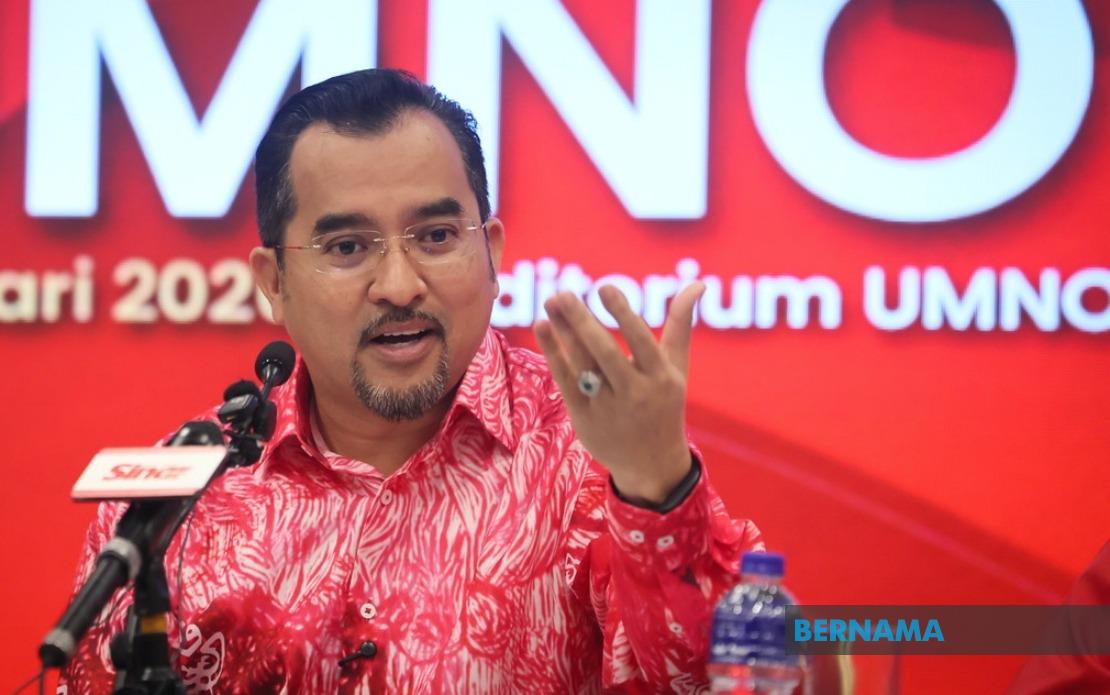
The departure of UMNO Supreme Council member Datuk Dr Mohd Puad Zarkashi from Malaysia's oldest political party can be traced directly to internal disagreements over candidate selection for the upcoming Johor state election, according to party secretary-general Datuk Dr Asyraf Wajdi Dusuki. In a Facebook statement released on June 25, Asyraf Wajdi addressed the circumstances surrounding Puad's announcement that he was relinquishing his UMNO membership effective immediately, framing the resignation as rooted in personal disappointment rather than principled political opposition.
According to Asyraf Wajdi's account, Puad had previously submitted written correspondence to party leadership outlining an ultimatum: if the party hierarchy refused to consider his son as a candidate for the Rengit state assembly seat, he would publicly criticise UMNO and withdraw his membership. The secretary-general characterised these communications as threatening in tone, suggesting that Puad had made his continued association with the party conditional upon the acceptance of his son's candidacy. Asyraf Wajdi acknowledged that while Puad's son possesses youth and potential for future political development, UMNO's candidate selection process requires consideration of multiple variables beyond individual capability or family connections.
This confrontation with Puad represents a broader pattern within UMNO's internal dynamics, according to Asyraf Wajdi's disclosure. He revealed that during the earlier tenure of Datuk Seri Najib Tun Razak, Puad had similarly threatened to abandon the party if he were not renominated as Member of Parliament for Batu Pahat. The repetition of such ultimatums, Asyraf Wajdi suggested, demonstrates a troubling precedent of senior party figures attempting to leverage threats as a negotiating strategy with leadership, potentially setting a destabilising example for the broader party membership.
Furthermore, Asyraf Wajdi used the occasion to firmly reject accusations that Puad had directed toward UMNO and the institution of the Johor royal palace. Puad had alleged that the palace wielded controlling influence over Johor UMNO's decision-making structures and had orchestrated the dissolution of the State Legislative Assembly. Asyraf Wajdi categorised these claims as slanderous and politically inflammatory, suggesting they were motivated primarily by personal grievance rather than substantive institutional critique. The secretary-general's response underscores the heightened sensitivity surrounding the relationship between UMNO, state leadership, and royal institutions in Johor.
In articulating the party's broader philosophical position on candidate selection, Asyraf Wajdi emphasised that UMNO distinguishes itself as a non-hereditary political organisation. Unlike family-controlled enterprises or dynastic structures, he contended, UMNO's internal mechanisms are designed to prevent the consolidation of power along kinship lines or through favouritism toward relatives of senior members. This stated principle reflects an attempt by party leadership to establish clear boundaries around what should and should not constitute legitimate grounds for candidate nomination, thereby preventing the party's grassroots legitimacy from being compromised by perceptions of nepotism or insider privilege.
The secretary-general's statement articulated a hierarchical ordering of values within UMNO's institutional framework, positioning the party's collective mission and overarching political objectives above the satisfaction of individual preferences or personal ambitions. Asyraf Wajdi argued that the party's historical significance—its contribution to Malaysia's independence movement, nation-building efforts, and provision of platforms for countless leaders to develop their careers—obligates current members to prioritise party interests over personal disappointments. This framing attempts to transform the dispute from a narrow personnel matter into a question of broader institutional integrity and devotion to national purpose.
Ashraf Wajdi further emphasised that UMNO's foundational commitment centres on advancing race, religion, and nation—the party's longstanding ideological trinity. He maintained that the party cannot afford to compromise these core principles by submitting to pressure from individual members whose demands conflict with the party's broader strategic objectives or systematic processes. This rhetorical move situates Puad's departure within a larger narrative of external and internal pressures threatening UMNO's coherence, suggesting that yielding to personalised demands would undermine the party's capacity to function as a unified political force.
Puad's resignation takes on heightened political significance given the immediacy of the Johor state electoral contest. The State Legislative Assembly was dissolved on June 1, with the Election Commission subsequently announcing June 27 as the nomination day for the state election and July 11 as the polling date. The timing of Puad's departure and the underlying disputes over candidate selection reflect the intense competition for nomination slots within UMNO ahead of this significant electoral exercise, where state-level outcomes will carry implications for the party's national positioning and leadership dynamics.
The candidate selection controversy illuminates the persistent tension within UMNO between meritocratic aspirations and factional interests, between party loyalty and individual ambition. While Asyraf Wajdi's articulation of party principles emphasises rational, inclusive processes, the pattern of ultimatums and threats suggests that informal power dynamics, family connections, and personalised negotiations continue to shape candidate determination within UMNO's internal apparatus. The public airing of such disputes, through Facebook statements and counter-statements, reflects the increasing visibility of previously internal party conflicts in Malaysia's digitally mediated political environment.
For Southeast Asian observers monitoring Malaysian politics, the Puad-UMNO rupture demonstrates how even established parties with deep institutional roots must constantly negotiate between formal rules and informal patronage networks. UMNO's ability to retain senior members while maintaining coherent candidate selection processes remains a critical test of its organisational effectiveness and legitimacy as Malaysia heads toward further electoral contests. The party's public insistence that it subordinates personal considerations to party discipline and national interest, even as such conflicts emerge, will influence both internal morale and external voter perceptions of UMNO's institutional health and governance capacity.

