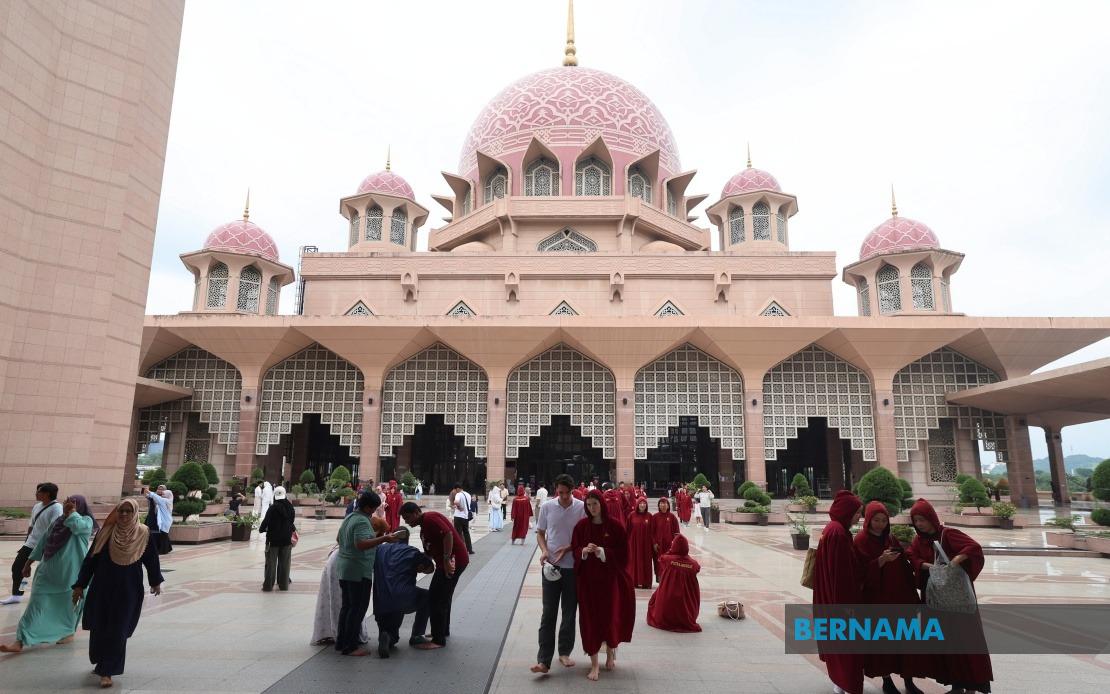
Putrajaya's Putra Mosque is set to become the focal point of Malaysia's National Maal Hijrah celebration, drawing approximately 5,000 attendees from within the country and abroad. The event marks the Islamic New Year commemoration, with Sultan of Perak Sultan Nazrin Shah scheduled to officiate proceedings and deliver a royal address to guests. The gathering represents one of the nation's most significant annual religious observances, reflecting Malaysia's commitment to honouring the Islamic calendar and the historical significance of Prophet Muhammad's migration to Medina.
The celebration will showcase the breadth of Malaysia's political and religious leadership. Deputy Prime Ministers Datuk Seri Ahmad Zahid Hamidi and Datuk Seri Fadillah Yusof will join Cabinet ministers, foreign diplomatic representatives, departmental heads and senior government officials in attendance. This high-level participation underscores the national importance accorded to Maal Hijrah observances and demonstrates government recognition of Islam's role in Malaysian society and public life.
One of the ceremony's centrepieces will be the presentation of the National and International Tokoh Maal Hijrah Awards, a prestigious recognition programme honouring individuals whose achievements extend across multiple dimensions. The awardees are selected based on rigorous criteria encompassing profound expertise within their professional and scholarly domains, demonstrated moral integrity, and substantive contributions to Islam's advancement both domestically and on the global stage. These awards reflect Malaysia's efforts to celebrate Muslims who have distinguished themselves through service and intellectual leadership.
The Department of Islamic Development Malaysia (JAKIM) deliberately selected this year's theme to encourage the nation's Muslim population to reconnect with the spiritual essence of the Prophet's Hijrah. Beyond its historical significance as a pivotal moment in Islamic history, the migration represents a profound transformation and the establishment of the Islamic civilisation's foundational structures. By focusing on this theme, organisers aim to inspire contemporary Muslims to view their own life journeys through a similar lens of purposeful change and spiritual development.
Adding an innovative dimension to the festivities, organisers introduced the Tausiyyah @ Maal Hijrah programme, which took place at Putra Mosque the day before the main celebration. This initiative transcends traditional religious observance by emphasising tadabbur—a contemplative reflection on Quranic verses and their meanings. Participants engaged with recitations delivered by accomplished qari while simultaneously developing deeper understanding of the textual messages, embedded wisdom, and practical guidance contained within the verses. The programme encourages Muslims to translate scriptural learning into actionable conduct within their daily routines and relationships.
This pedagogical approach represents a significant shift in how Malaysia's religious institutions frame Maal Hijrah observances. Rather than positioning the celebration as a purely ceremonial or historical commemoration, the Tausiyyah programme presents Hijrah as a contemporary catalyst for personal and community transformation. Participants gain not merely passive exposure to Islamic teachings but active engagement with how those teachings might reshape their perspectives and decisions moving forward.
Following the main Putra Mosque event, the National and International Tokoh Maal Hijrah Lecture 1448H/2026 will convene the subsequent day at Putrajaya Islamic Complex Auditorium from 9 am. This continuation programme provides a platform for award recipients to address attendees, sharing their accumulated knowledge, lived experiences, and insights from their respective fields of endeavour. The lecture format transforms award recipients from passive honourees into active educators, potentially inspiring attendees to pursue similar paths of excellence and service.
The extended programming structure—spanning multiple days and venues—reflects considered planning to maximise engagement and accessibility. Rather than compressing all activities into a single occasion, the staggered schedule permits different segments of the Muslim community and international visitors to participate meaningfully. The inclusion of both high-state ceremony at Putra Mosque and subsequent educational lectures demonstrates Malaysia's balanced approach to religious observance, combining formal state recognition with scholarly discourse.
For Malaysia's Muslim population and the broader Southeast Asian region, these celebrations carry particular resonance. The participation of international guests alongside domestic officials signals Malaysia's positioning as a moderate Islamic nation that welcomes cross-cultural dialogue while maintaining religious traditions. The emphasis on tokoh or exemplary figures suggests that the nation is actively identifying and celebrating role models whose achievements span academic, professional, and spiritual domains. Such recognition potentially influences younger generations' aspirations and demonstrates that religious commitment and worldly excellence are complementary rather than contradictory pursuits.
The Maal Hijrah observance also provides an opportunity to examine how Malaysia's religious institutions engage with contemporary challenges. The Tausiyyah programme's focus on tadabbur and personal transformation suggests institutional recognition that scriptural learning must address modern life's complexities. For a nation with Malaysia's demographic diversity, where Islam plays a central cultural and constitutional role, such thoughtfully designed religious observances help navigate the balance between tradition and contemporary relevance. The participation of government leaders reinforces that Islamic observance enjoys institutional support and remains integral to national identity and public discourse.