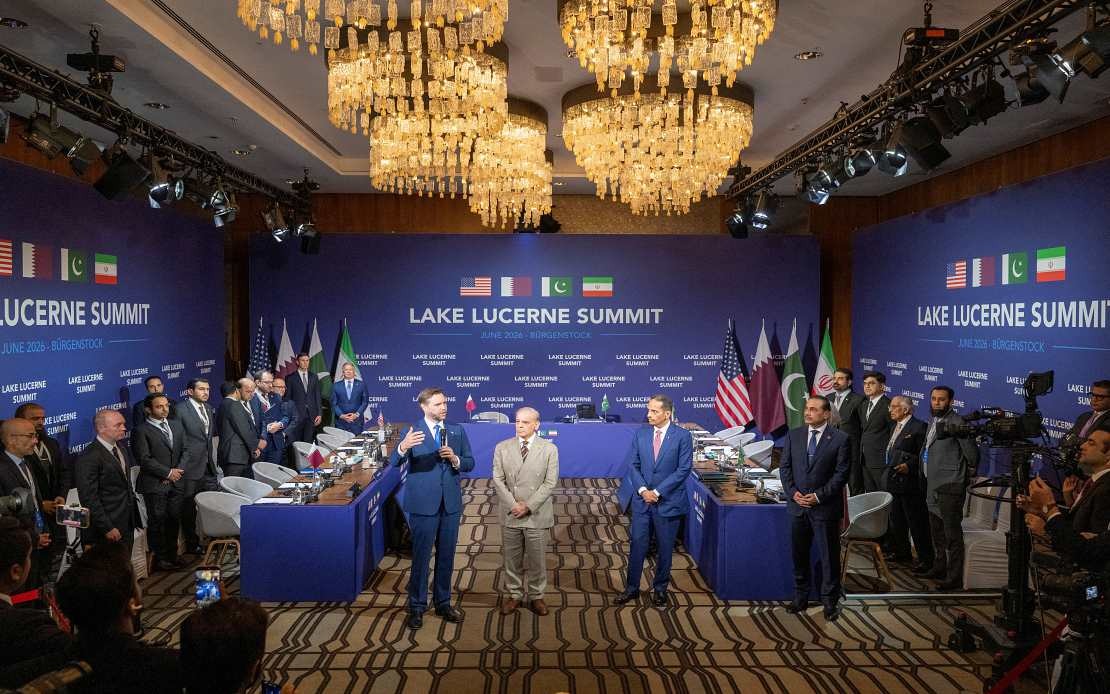
A significant diplomatic breakthrough has emerged from the Lake Lucerne Summit in Switzerland, where Qatar and Pakistan jointly announced that the first round of high-level negotiations between the United States and Iran has produced what both nations characterise as constructive momentum. The development marks a notable shift in efforts to bridge longstanding tensions between Washington and Tehran through multilateral mediation, with the two Gulf and South Asian intermediaries pledging continued engagement in the intricate process.
The joint statement released following the opening session emphasised that talks unfolded within a positive and collaborative environment, contradicting earlier concerns about the fragility of direct engagement. Central to this progress was the establishment of dedicated mechanisms designed to sustain technical dialogue between negotiating teams, preventing the talks from stalling during critical junctures. Such structural arrangements have historically proven essential in complex international negotiations where trust remains limited and symbolic gestures carry significant weight.
Among the concrete institutional innovations agreed upon was the creation of a high-level committee tasked with overseeing the political dimensions of the mediation initiative. This body will function as a supervisory apparatus, receiving regular briefings from lead negotiators and maintaining oversight of several specialised working groups. The committee structure reflects a recognition that technical discussions on narrow issues require parallel political management to ensure that agreements at the technical level translate into binding commitments at the policy level.
Three primary areas of technical focus have been formally designated for sustained discussion: the Iranian nuclear programme, the architecture of sanctions regimes affecting Iran, and the mechanisms by which any eventual understanding would be implemented and enforced. These three pillars represent the core contentious issues that have prevented normalisation between the two adversaries. The nuclear dimension remains particularly sensitive, given international concern about Iran's enrichment capabilities and verification protocols. The sanctions question encompasses decades of American economic coercion and Iranian counter-measures, creating intricate dependencies that cannot be unravelled quickly. Dispute resolution procedures, the third pillar, acknowledge that any agreement will require mechanisms for addressing alleged violations without immediately triggering escalation.
A critical timeline has been established with explicit ambitions for substantial progress. Both parties have committed to pursuing a final agreement within 60 days, according to the joint announcement. This compressed timeframe reflects an understanding that extended negotiations risk losing political momentum and allowing spoilers on both sides to derail proceedings. For Malaysia and other Southeast Asian nations with economic stakes in regional stability, such a deadline carries immediate relevance, as unresolved tensions between Washington and Tehran directly constrain shipping through the Strait of Hormuz and regional investment climate.
The establishment of a dedicated communication channel between the United States and Iran represents another pragmatic achievement, particularly concerning maritime safety. The accord explicitly addresses the secure passage of commercial vessels through the Strait of Hormuz, which remains one of the world's most strategically vital waterways for global energy and trade flows. Any deterioration in US-Iran relations typically manifests in threats to shipping, raising insurance costs and deterring merchants from transiting the passage. Malaysian trading companies and shippers relying on this route benefit directly from any arrangements that reduce the risk of maritime incidents or deliberate disruptions.
The role of Qatar and Pakistan as intermediaries deserves particular attention, as their joint positioning reflects distinct regional calculations. Qatar's mediation efforts align with its broader foreign policy emphasis on conflict resolution and its deepening ties with both Washington and Tehran despite historical tensions. Pakistan's involvement reflects its long-standing strategic relationships with both the United States and Iran, alongside its own nuclear concerns that make the Iranian enrichment question relevant to its security calculations. The partnership between Doha and Islamabad in this context demonstrates how smaller powers can aggregate diplomatic influence when larger nations reach impasse.
The memorandum of understanding referenced in the joint statement, reportedly signed in the preceding week, provides the foundational framework upon which the Lake Lucerne discussions are being constructed. While full details remain undisclosed, this document apparently contains the broad parameters that both sides have deemed minimally acceptable. The 60-day roadmap effectively constitutes an agreement to operationalise the preliminary understanding into a comprehensive settlement, suggesting that both delegations have achieved sufficient alignment on fundamental principles to justify accelerated negotiations on implementation details.
For Southeast Asia more broadly, the diplomatic progress carries implications extending beyond immediate maritime concerns. A stabilised US-Iran relationship could reshape regional geopolitics by reducing the zero-sum competition that has characterised Middle Eastern affairs for decades. It could also create space for reduced tensions in the broader Indo-Pacific region, where American-Iranian antagonism has historically complicated strategic considerations for countries seeking balanced relationships with both Washington and regional powers. Malaysia's role as a bridge nation between different geopolitical blocs makes it particularly attentive to shifts in global power dynamics.
The success of these negotiations remains contingent on numerous factors, including the maintenance of political will in both Washington and Tehran despite domestic opposition to compromise. The establishment of robust technical working groups and high-level political supervision suggests that the mediators recognise the need for sustained institutional architecture. However, the 60-day timeline, while ambitious, acknowledges that protracted negotiations risk failing as political circumstances shift and spoiler factions gain influence.
As talks progress, Malaysian policymakers will likely monitor developments closely, particularly regarding any provisions affecting shipping, energy markets, and broader regional stability. The diplomatic investment by Qatar and Pakistan demonstrates that multilateral mediation remains viable even in seemingly intractable disputes, a precedent that extends beyond the US-Iran context to other regional tensions. Should these negotiations succeed, they would represent a significant recalibration of Middle Eastern geopolitics with ramifications extending across Southeast Asia's vital economic and strategic interests.

